
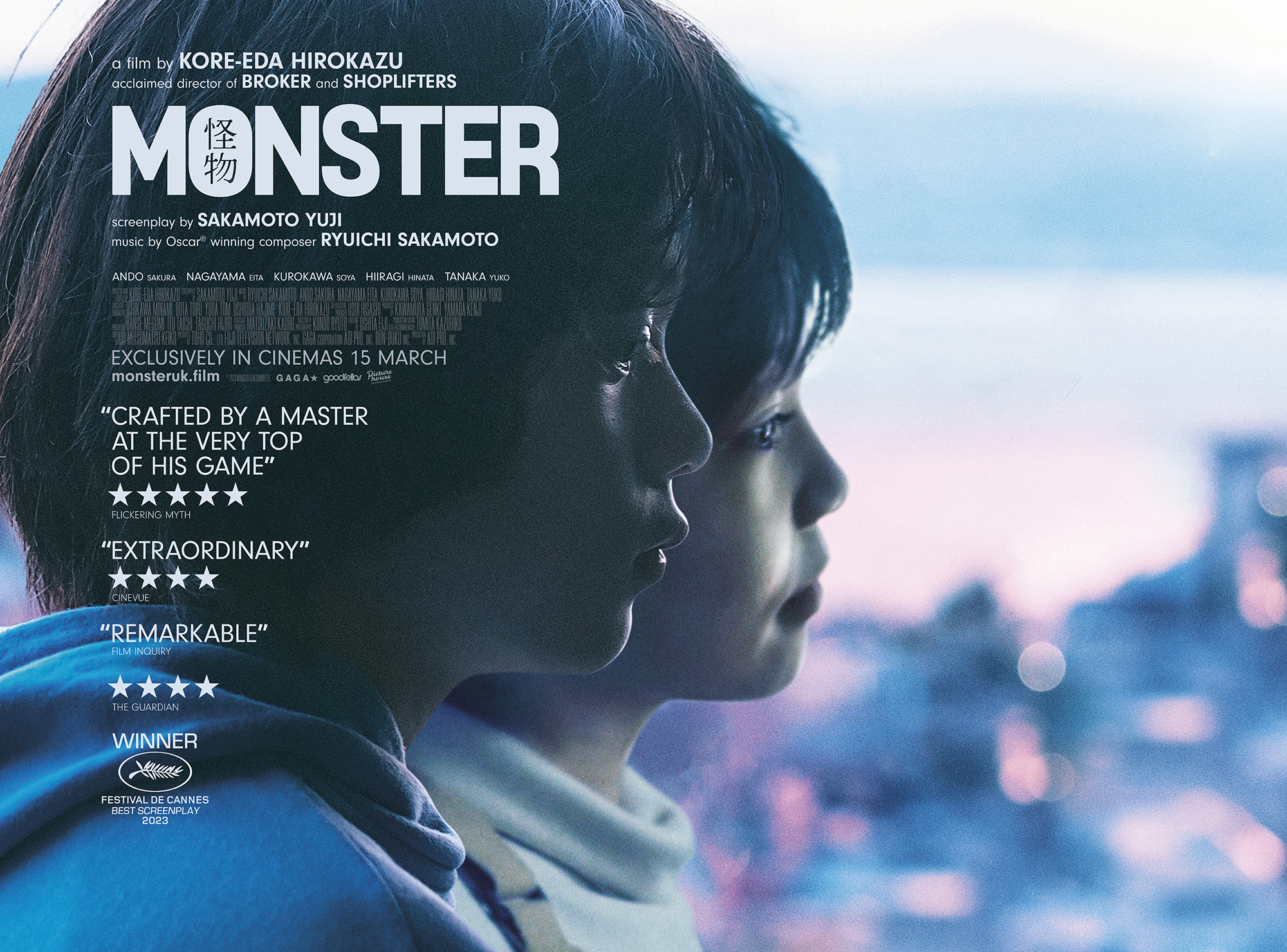
Hirokazu Koreeda has shown, time and time again, a gift for understanding the nature of family relationships and friendship, and with Monster he proves that nucleus of family at the heart of his films doesn’t need to be a big one. This rich tale of a boy and his single mother attempting to navigate the difficulties of school and life is filtered through grief and personal introspection and sits proudly in the higher reaches of Koreeda’s body of work.
Minato (Sōya Kurokawa) is struggling at school, much to the concern of his mother Saori (Sakura Andō). She’s attempting to raise him alone after the untimely death of her husband but can’t initially work out what’s at the root of his odd behaviour. When it appears that it’s his teacher Mr Hori (Eita Nagayama) who may be responsible, she confronts him and the rest of the school staff, only to find more odd behaviour from the teachers and the school principal (Yūko Tanaka), herself also dealing with a recent bereavement. Saori has more questions than answers, questions which come to a head when Minato disappears from school.
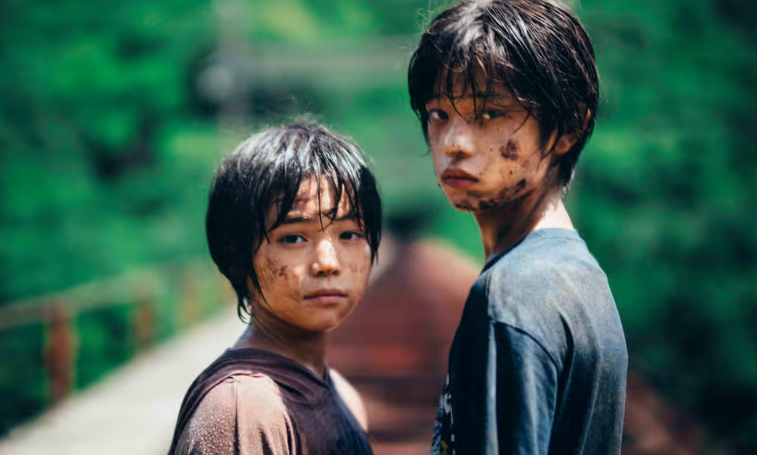
It’s the first time since his debut feature Mabaroshi, nearly thirty years ago, that sees a Koreeda film not from his own script, writing duties this time falling to the director’s former schoolmate and Japanese TV writer Yuji Sakamoto. It’s also the first time in five years, since Shoplifters, that Koreeda is working in his native language, having made the English/French language The Truth and Korea-set Broker since his 2018 triumph. While neither of his excursions outside Japan could be considered a disappointment, there is a comforting familiarity about the director returning to contemporary suburban Japan, and that’s a comfort that affords him and Sakamoto the opportunity to be more experimental with their story structure.
Comparisons to Rashomon will be inevitable but the story here takes three perspectives, and rather than unreliable narrators it’s the characters’ differing perspectives that provide misunderstandings and thus layers to be cut through. There’s no on-screen titles or captions to indicate the shifts in perspective and the rewinding of time to begin the narrative again; instead, the story is framed by drama. A fire at a nearby building opens the sequence each time, while a monsoon marks the climax, these and other cues providing essential context as to how far along we are each time.
The shifting perspectives as the story is revisited through fresh eyes change sympathies and ask the viewers to reconsider their own preconceptions. It’s the gift of Koreeda’s gentle direction that we can empathise with all of the characters, even if initially their actions seem crass or misjudged. Monster also speaks to those unspoken moments we all experience, those personal effects in our life we need to keep hidden, that colour our actions and change the flow of the narrative here in subtle and satisfying ways.
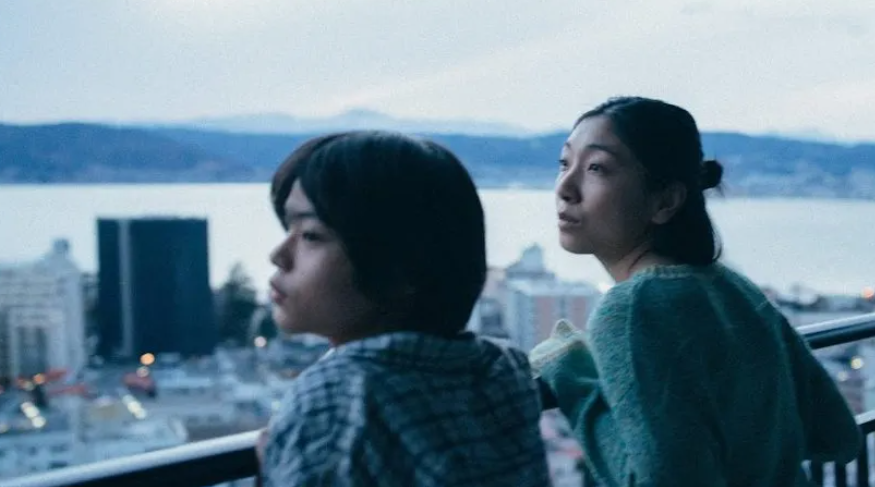
It’s also a Shoplifters reunion for Koreeda and Andō, who carries the weight of the first chapter. Her earnest angst and frustration in the face of the school staff’s inexplicable apathy help to ground the narrative for the unpicking that lies ahead. Less a film of twists and turns, more a gradual peeling back of the onion-like layers to reveal the simple truths of human friendship in the face of adversity. The misunderstandings feel real, and the revelations earned as we come to understand the true nature of both teacher and pupil.
While there is a certain farcical comedy to the revelations around how Mr Hori is being handled by his colleagues, it’s the final chapter, where the true nature of the relationship between young Minato and his classmate Yori (Hinata Hiiragi) is finally revealed, where Monster bares its soul. There’s an innocence and a believability to the dynamic between both them and their classmates, and where these revelations could have felt forced, the two young actors craft tender moments of childhood joy that make the whole journey worthwhile.
With revelations dotted about among the three parts of the story and no feeling of requirement to tie everything up in neat bows, it may take a little time to put together all of the pieces of this rewarding puzzle. With a score from Ryuichi Sakamoto – featuring two of the composer’s final pieces plus some earlier works – that underscores the gentle humanity so common in Koreeda’s films, Monster is one of the director’s finest works and shows his grasp of the best of human nature, despite all of our flaws, is undiminished.


![Unquiet Guests review – Edited by Dan Coxon [Dead Ink Books]](https://criticalpopcorn.com/wp-content/uploads/2025/10/ug-reddit-ad-e1761690427755.jpg?w=895)
![Martyrs 4K UHD review: Dir. Pascal Laugier [Masters Of Cinema]](https://criticalpopcorn.com/wp-content/uploads/2025/10/image-1-e1761586395456.png?w=895)


![Why I Love… Steve Martin’s Roxanne [1987]](https://criticalpopcorn.com/wp-content/uploads/2016/11/roxanne.jpg?w=460)


 Critical popcorn
Post your thoughts