
Addiction is a complicated psychological scenario, with more circumstances and narratives than I’d ever be able to simplify and, thankfully, Writer/Director Michel Franco’s Memory knows this reality as well, but it remains an important character trait within the life of Jessica Chastain’s Sylvia, an adult day care centre worker, who is 13 years ‘clean’ and follows a structured day-to-day life with consistent patterns and measured self-control.
Drama based in and around dependence and trauma can often bury itself in the melodrama, and while such worlds certainly can be heavy in emotion, Memory is distinctively gentle with its characters and it’s a refreshing shift in approach. We initially follow Sylvia, and learn a little of her life, her close relationship with her sister Olivia (a fine co-starring performance from Merritt Wever), and her daughter Anna (an excellent, authentic portrayal from Brooke Timber).

On one evening, Sylvia goes along with her sister Olivia to a High School reunion (where they both attended) but spends the evening away from the crowds. After being casually approached by Peter Sarsgaard’s Saul at the gathering, she leaves and heads home but is followed by Saul all the way to her front door. While the feeling is certainly unease at this setup, it takes an unconventional turn when he ends up sitting outside her flat in Brooklyn. Like Sylvia, we don’t know why he’s there but overnight, through the rain and cold, he doesn’t move until she approaches him the next morning, asleep outside her door. Eventually, she learns that he has onset dementia – and Saul doesn’t know why he’s there either. This is the start of an encounter that’ll shift both of their lives into directions that neither of them saw occurring.
After these first events, Sylvia connects the High School reunion and Saul to a trauma she’s been holding within, and is related to her alcoholism. She decides to meet up with him and discuss what happened, and also discloses she believes he was one of the boys who sexually assaulted her when she was 12 years old. Releasing her reasonable internalised anger on him, she takes his dementia identity card as a trophy and heads off into the NYC afternoon but, just as she’s about to jump on the Subway train, her humanity and empathy kicks in and the reality and guilt of her actions leads her back to Saul. While this seems like the end of their relationship, some truths and timelines revealed to her by her sister, means she’s actually made an unfortunate mistake with her assumptions – and in turn will visit Saul again, this time to apologise.

But the thing is, with everything we see, Saul and Sylvia are two troubled souls for different reasons, and both are damaged by the nature of where life has taken them. The depth of their characters is unveiled to us in certain moments, and each unravelled layer gives us a deeper understanding – and especially for Chastain’s Sylvia. As well as the trauma of youth, and her struggles with addiction, she’d also estranged from her Mother, Samantha (Jessica Harper), who has been denying the truth her daughter has been telling her, and these dismissive actions come to a head after the mask of middle-class denial and personal responsibility is driven out of the dark and into the light, in a fraught family get-together.
To enhance the absolute core of the story is fine performances from Peter Sarsgaard and Jessica Chastain who offer their characters to us openly and without restrain. We see all their flaws and personal fears out on display, even though they’re controlled and almost desperately delicate, you can believe they’re looking for something a little better in their lives, but are equally in fear of losing it if they push too hard.
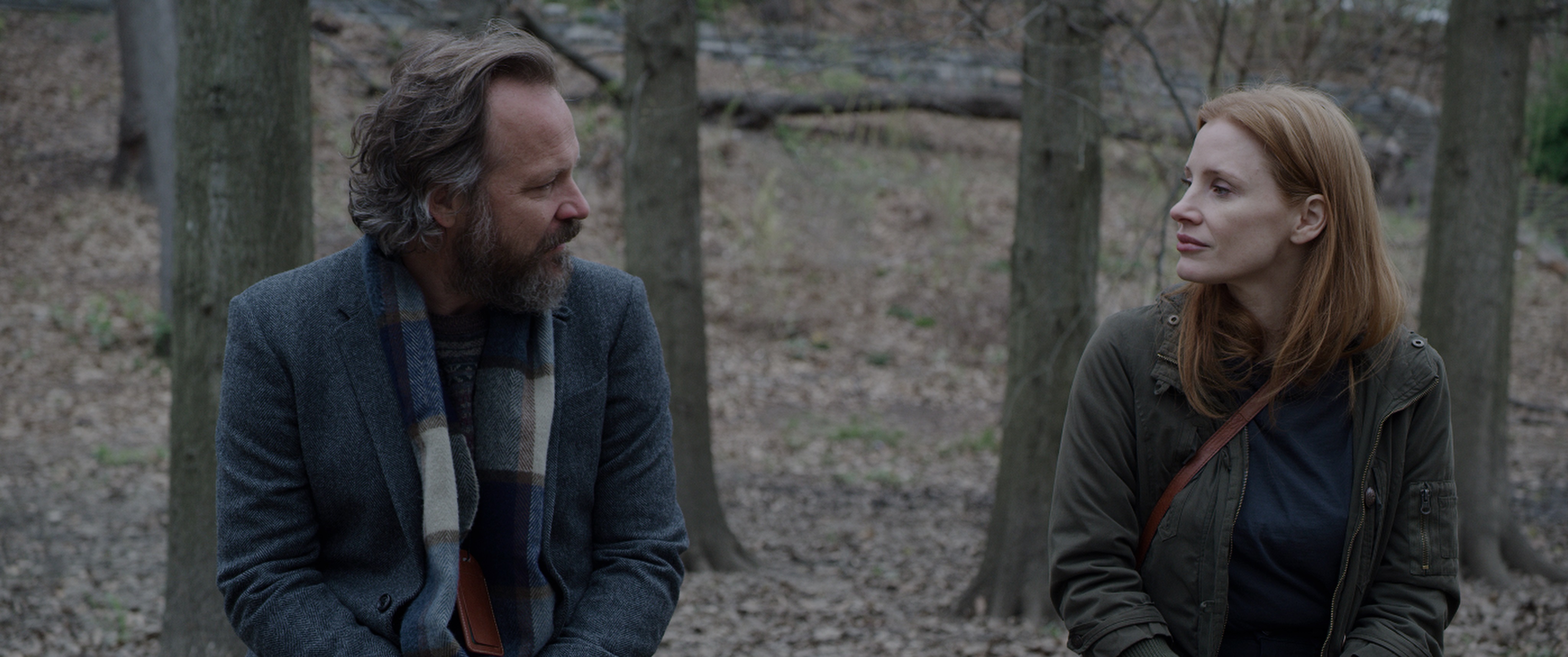
In a sense of how it’s filmed, many conversational shots remain set back, taking in the circumstances from a comfortable space, offering a way into the moment as if sat watching it, partly involved. Personally, I love this type of cinematography that trusts in the actors to deliver without the need for excessive cuts or resets. It creates exquisite acts that lets time play out. That lets the drama unfold. It’s deep, it’s calculated, it’s smart and also heartbreaking but both performances are at high end.
In a dramatic world, with a traumatic story underlying the characters, Memory is a gentle story that is bound by hope and progression, which for me outweighs for the drama that delves into extreme emotional responses and, instead, celebrates a study of our individual humanity that even after traumatic/tough events, reminds us that the spirit can prevail, and new connections can begin the long journey of a hopeful recovery. Curiously touching.






![Unquiet Guests review – Edited by Dan Coxon [Dead Ink Books]](https://criticalpopcorn.com/wp-content/uploads/2025/10/ug-reddit-ad-e1761690427755.jpg?w=895)

![Martyrs 4K UHD review: Dir. Pascal Laugier [Masters Of Cinema]](https://criticalpopcorn.com/wp-content/uploads/2025/10/image-1-e1761586395456.png?w=895)




![Why I Love… Steve Martin’s Roxanne [1987]](https://criticalpopcorn.com/wp-content/uploads/2016/11/roxanne.jpg?w=460)



 Critical popcorn
Post your thoughts