The second part of Denis Villeneuve’s adaptation of Frank Herbert’s science fiction epic hits the ground running, and the result is epic in scope and laser-focused on the central character. In terms of sheer spectacle, Dune: Part Two is an awe-inspiring experience, and in some places arguably transcends the source material.
Picking up exactly where the previous film ended, with both Paul Atreides (Timothee Chalamet) and his mother Jessica (Rebecca Ferguson) attempting to join the Fremen in bringing down the brutal Harkonnens, who are continuing to harvest spice from the Fremen homeworld. As they do, Paul has to balance his blossoming romance with the Fremen warrior Chani (Zendaya) with his increasingly disturbing visions of his future.

Despite looking and sounding like a sprawling epic, what Villeneuve has created with this sequel is much closer to a character study. The emphasis is squarely on Paul and his reluctant journey to become Lisan al-Gaib, the savior of Arrakis and emperor of the galaxy. Early in the first film, Chani asks “Who will our next oppressors be?” and it seems like the answer is much closer to home than she might suspect.
What I liked most about the first film is the way the story effectively begins in medias res. The world-building is incredible, and there’s very little in the way of exposition, or at the very least it is integrated into the story without drawing attention to itself. Terms like “Bene Gesserit,” “Shai-Hulud” and “Kwisatz Haderach” are casually dropped into dialogue and Villeneuve largely trusts his audience to go with it. The sequel has fun paying off some of the things we learned in the first film, such as the value the Fremen place on water, to the extent that even tears are valuable commodities.
The sequel has a tougher job to do, as the plot itself is quite subtle, but Villeneuve and Chalamet navigate Paul’s journey beautifully. It’s easy to write “Paul raises an army” but Villeneuve takes the time to make this feel believable, spending a great chunk of the runtime showing Paul status rise within Fremen society, and the growing affection that emerges between him and Chani. And it is a touching, realistic romance, beautifully played by both actors. You get the impression that despite his repeated protestations, Chani can’t quite comprehend, or doesn’t believe in Paul’s foresight, making their final scene truly poignant.
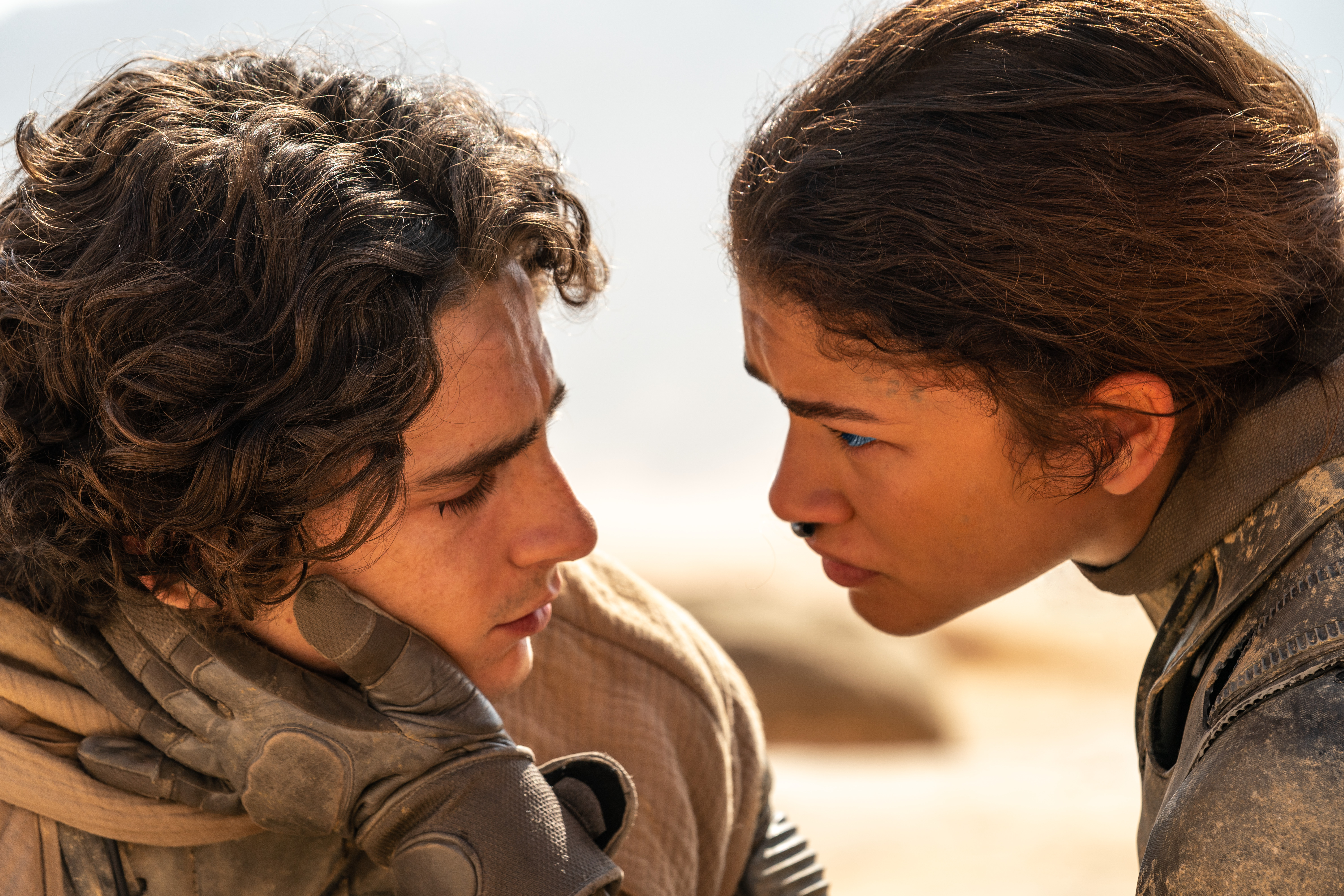

Paul spends most of the film fighting against the path that he knows will lead to genocide, but when he has a vision of the alternative, he reluctantly gives in to the prophecy he knows has been engineered for centuries by the Bene Gesserit. Knowing that his salvation comes via the manipulation of others is a heavy burden to bear, but Chalamet manages to hit some quite subtle beats perfectly, palpably conveying his inner conflict, and making each beat plausible.
Embodying the superstitious belief in the Lisan al-Gaib is Javier Bardem as Stilgar, whose unwavering faith in Paul demonstrates the growing support he has within the Fremen. There was a dry humour to Bardem’s performance in the first film, but here he emerges as an incredibly endearing character, and effectively serves as the comic heart of the film.
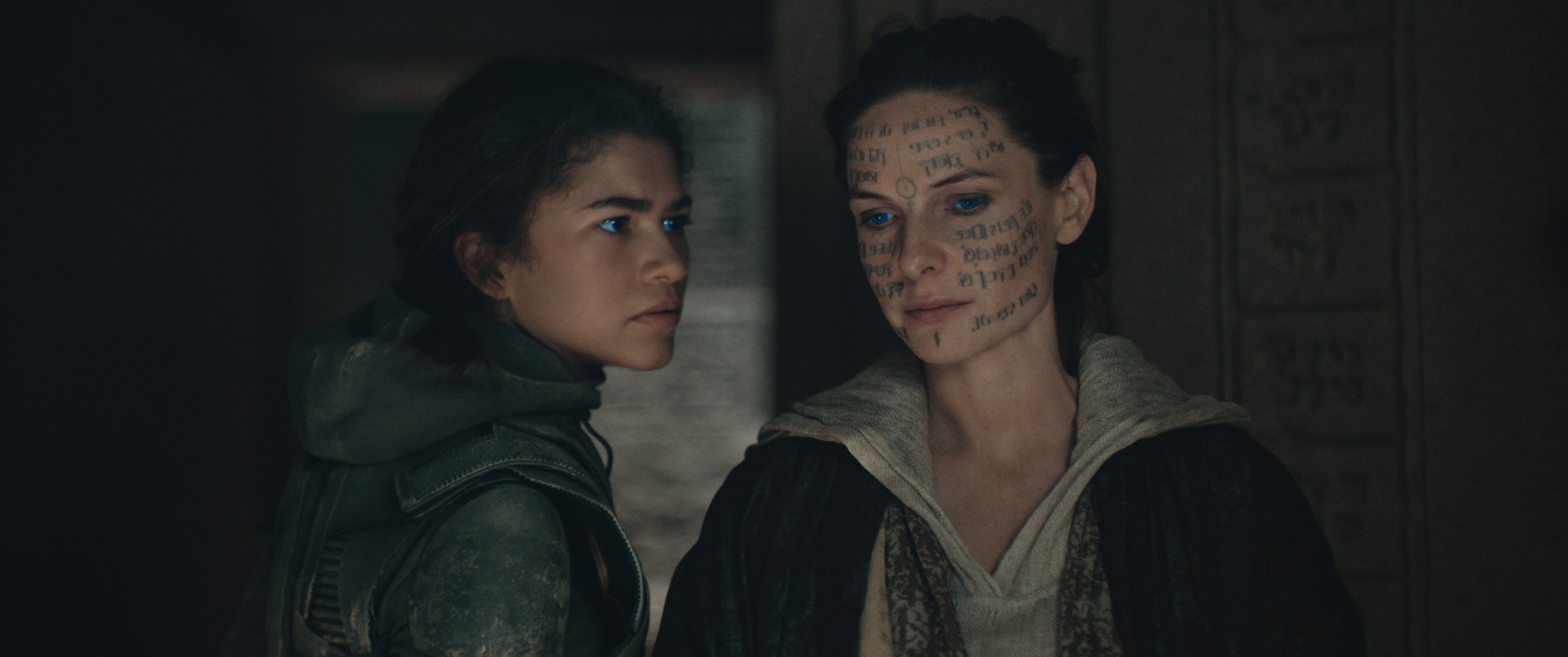
Rebecca Ferguson is more removed from the action than in the previous film, but even as she takes a backseat, her role takes on more significance. Working in the shadows, she insidiously lays the groundwork for the Lisan al-Gaib myth among the Fremen, now accompanied by Paul’s as-yet-unborn little sister, with whom she has creepy conversations. It’s an unnerving alteration to the book that works really well, bringing an additional eerie presence in the story.
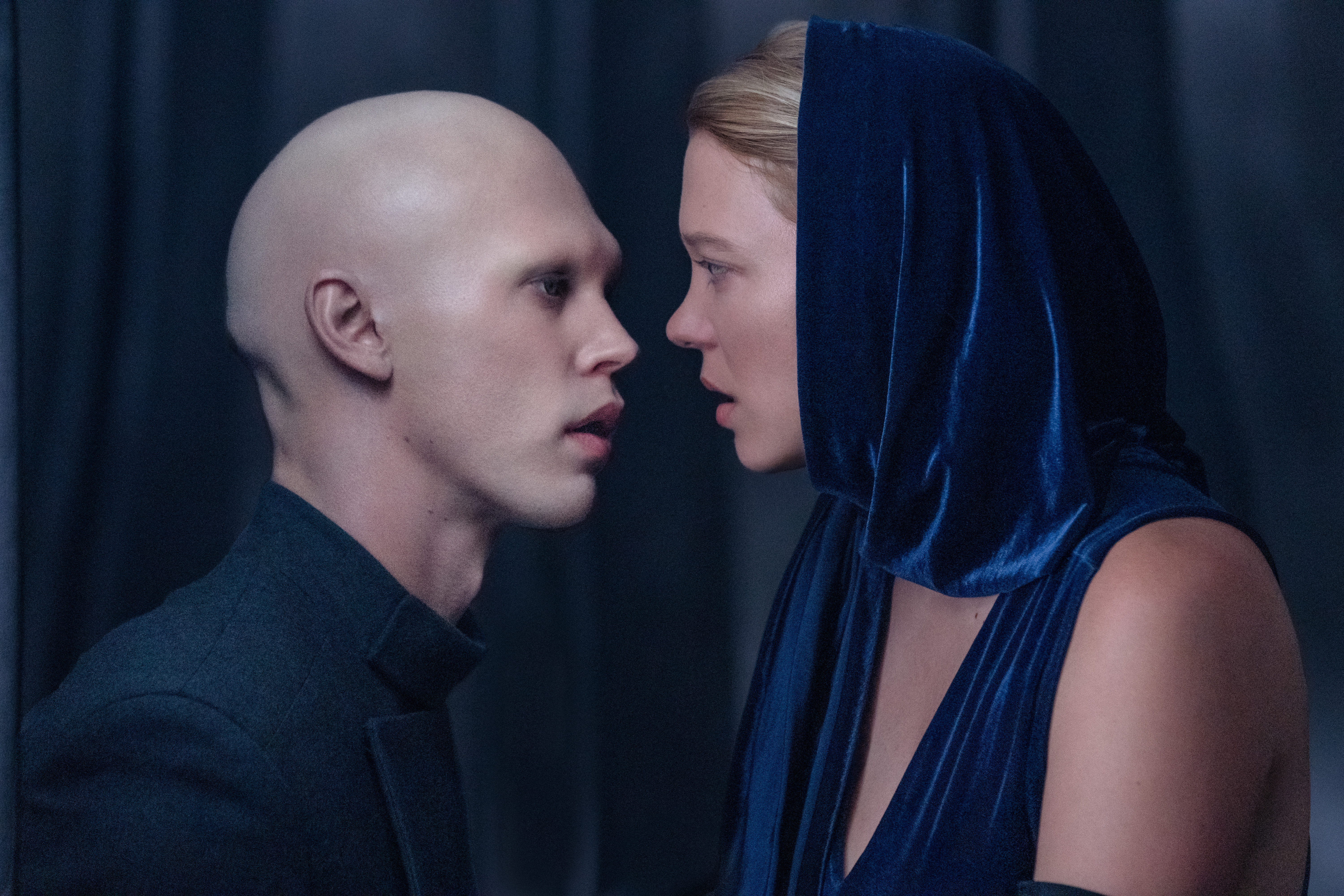
In terms of the villains, the formidable Baron Harkonnen (Stellan Skarsgard) suffers from a lack of screentime, but thankfully there is new blood in the form of Austin Butler as the psychotic Feyd-Rautha. Introduced in a breathtaking black and white sequence set in a gladiatorial arena, he’s immediately shown to be a potent threat, a subtle knife as opposed to the sledgehammer approach of his brother Rabban (Dave Bautista). The fact that Butler can believably intimidate a figure as imposing as Bautista tells you all you need to know. Butler stays just about the right side of comic book villainy – there are a few little tics here and there, but for the most part he makes a fascinating villain, and an inspired foil for Chalamet.
One of my few gripes with the first film was that the condensing of the story during the adaptation meant that certain key characters were given exceptionally short shrift. Them’s the breaks when you’re adapting a novel as dense as Dune, but there are a few omissions in the sequel that still hurt. Thufir Hawat, a major character in the book, and played with such warmth by Stephen McKinley Henderson, is one such excision, presumably dead after the decimation of House Atreides. Weirdly he was credited in the first trailer so this absence can potentially be attributed to rewrites, but it’s a shame to lose him with no mention of his fate. Similarly, Lea Seydoux’s appearance as Lady Fenring is very brief, if impactful. The result is an efficient adaptation, but at the expense of personality in some areas. But then again we also have Gurney (Josh Brolin) finally playing his baliset (albeit briefly) in a moment that should satisfy most readers of the novel!
Elsewhere, it feels as if Villeneuve is relying on his impressive cast to bring to life some not-particularly-well-fleshed-out characters. Christopher Walken is an especially egregious example. He is as brilliant as you would expect but only really gets a chance to sink his teeth into the material at the very end of the film. His exchange with Paul about Leto is full of menace, but this is comes too late to really create much of a character. Similarly, Florence Pugh as Princess Irulan emerges as more a narrator than anything approaching a real character, but she will presumably have more to do in the proposed third film.
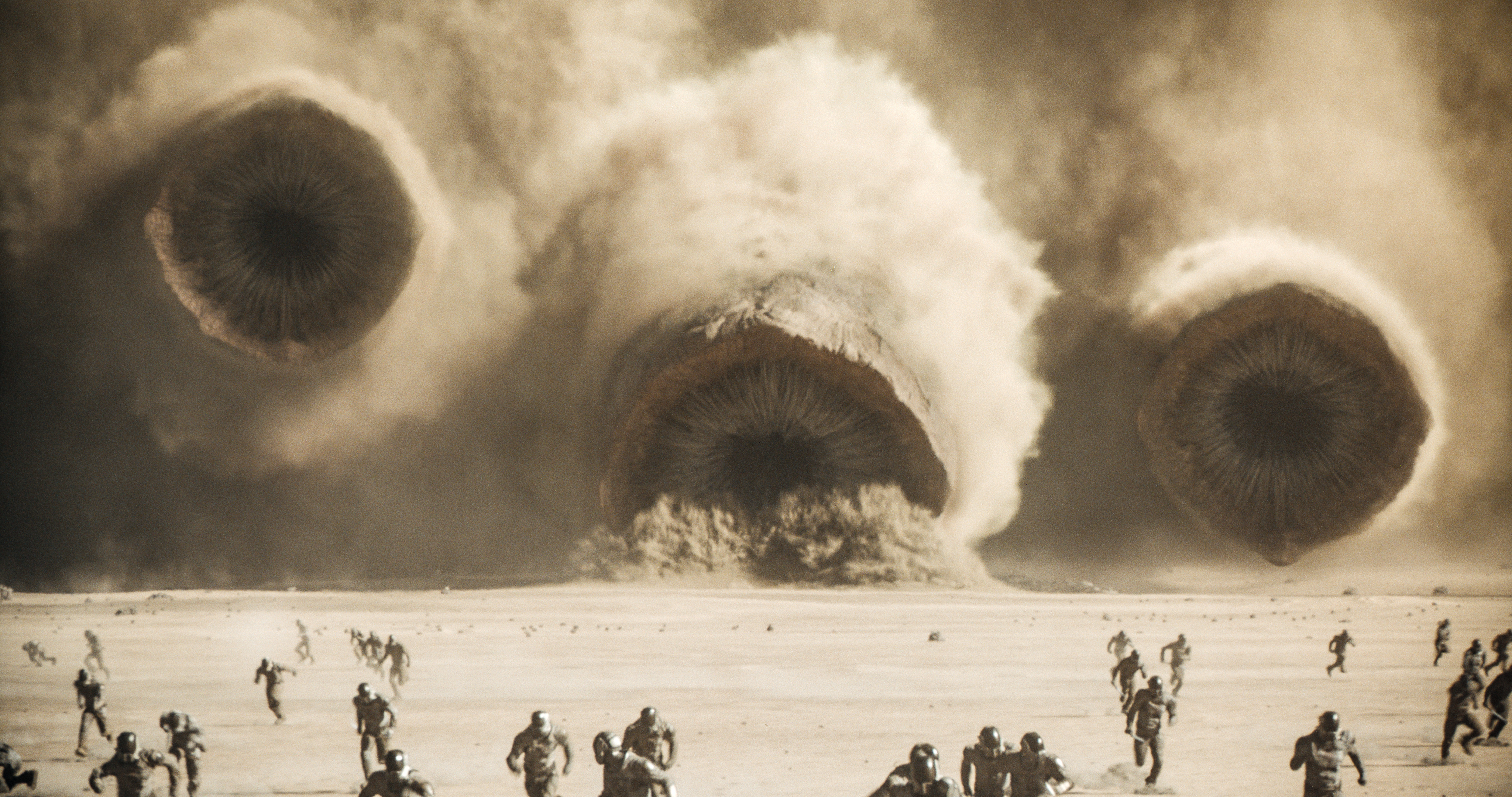
Greig Fraser’s cinematography is incredible, and as with his work in The Creator and Rogue One, he brings a real sense of scale to the sweeping vistas and the frenetic action sequences. It’s telling though, that the two most impressive action sequences for me were two that had very little bearing on the actual plot. The opening attack on the Harkonnen soldiers and the Fremen ambush on the spice harvester are both clearly edited, thrillingly shot set-pieces that inform the characters. It’s a shame that some of the more important scenes aren’t necessarily edited with the same clarity. In particular two big confrontations are choppily edited to the extent that it feels a little bit unclear as to what is happening, and the results are a little anticlimactic.
While Villeneuve has been quite open about his intention to adapt Dune: Messiah, I was still surprised at how open ended the conclusion was. That being said, Villeneuve effectively delivered the first half with no guarantee of a second film, so ending this one the same way is hardly unprecedented, and all the significant narrative arcs are concluded by the end. In any case it’s nowhere near as abrupt an ending as the previous film!
It might seem like I’m praising with faint damns, but the fact is that in all the areas where it really matters, Dune: Part Two delivers. It’s evident that Villeneuve perfectly understands his source material, and shows remarkable focus in his direction. Visually breathtaking and thematically rich, this is a near overwhelming cinematic experience, and combined with the first film, marks the definitive adaptation of Herbert’s novel.

Dune Part Two opens in cinemas on 1st March


![Unquiet Guests review – Edited by Dan Coxon [Dead Ink Books]](https://criticalpopcorn.com/wp-content/uploads/2025/10/ug-reddit-ad-e1761690427755.jpg?w=895)
![Martyrs 4K UHD review: Dir. Pascal Laugier [Masters Of Cinema]](https://criticalpopcorn.com/wp-content/uploads/2025/10/image-1-e1761586395456.png?w=895)
![Why I Love… Steve Martin’s Roxanne [1987]](https://criticalpopcorn.com/wp-content/uploads/2016/11/roxanne.jpg?w=460)


 Critical popcorn
Post your thoughts