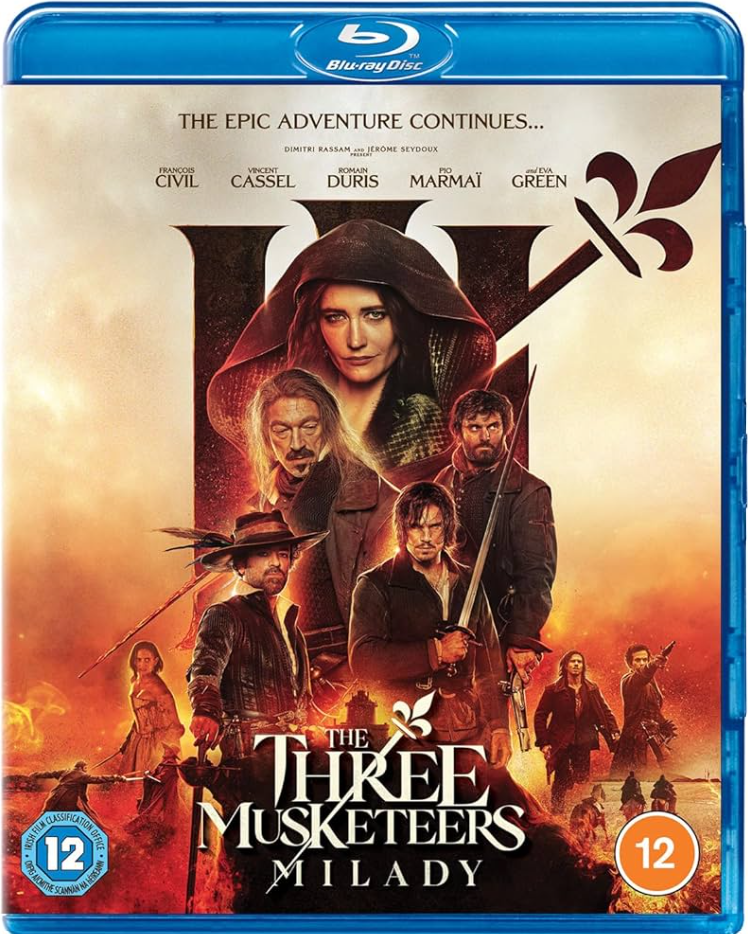
The Three Musketeers: D’Artagnan, was one of the most surprising films of last year; a genuine swashbuckling adventure with real heart and personality – read my review here. This sequel, following the immediate events of the first film, might not deliver on all the same fronts, but it’s undoubtedly cut from the same cloth.
Picking up where we left off, D’Artagnan (Francois Civil) has been kidnapped by some sinister figures in his attempts to track down his love Constance (Lyna Khoudri). Though unsuccessful, he unearths a plot to kill the king, and discovers the somehow still alive Milady DeWinter (Eva Green) amidst a civil war between the Catholics and Protestants that is drawing all the musketeers into its orbit.
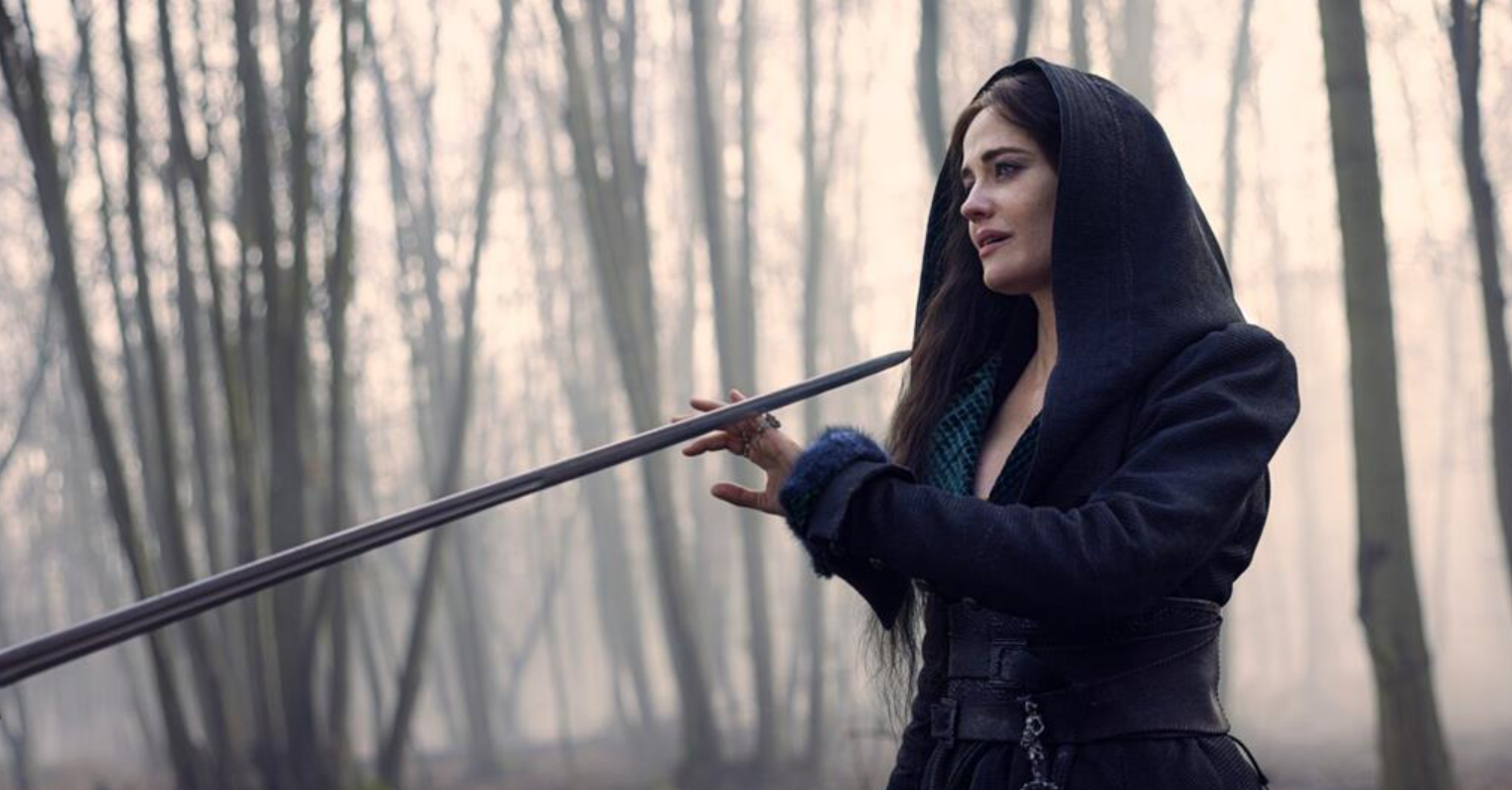
Firstly, this film will not work if you haven’t seen the previous. There is a helpful recap but the character dynamics are pre-established so watching the first is essential! More than any other version I’ve seen, it recreates the moral pragmatism of the novels. Milady may be a villain, and an antagonist for the musketeers, but they all serve France, and often find themselves aligned in their efforts. So it is that in the opening moments D’Artagnan and Milady form a brittle alliance.
While the previous film was more focused on the cloak and dagger intrigue and politics at court, this sequel is more action based. Larger in scale than its predecessor, and focused more on set-pieces than characters, and it unfolds at a frenetic pace, never losing momentum as D’Artagnan races to rescue Constance.
Of course the subtitle is Milady, and as such Eva Green takes centre stage for a large portion. Aside from being convincing in the action sequences (choreographed to within an inch of her life), she gives a more nuanced performance than the outright villainous portrayals in earlier adaptations, and the few moments where she seamlessly slips from French to English are perfectly in character. The trouble is, Martin Bourboulon’s efforts to make Milady a more layered character come at the expense of other characters’ intelligence and a climax with real stakes. Rather than Milady escaping through her own ingenuity or cunning, the changes to the plot mean she manages it due to another characters’ unbelievable lack of guile. This has the knock-on effect of draining the climactic showdown of the necessary emotion, since she is not directly responsible for the tragic events leading to the finale. This doesn’t detract too much from the story, and while the adjusted plot mechanics feel a little contrived, the culmination of this storyline remains devastating.
The unfortunate side effect of focusing so much on D’Artagnan and Milady is that the more interesting characters are largely relegated to the background. The world-weary Athos (Vincent Cassel) remains my favourite part of the two films, and he at least gets a bit more depth this time, but anyone hoping for more Aramis (Romain Duris) and Porthos (Pio Marmai) may be disappointed. They spend most of the film on a side mission to restore the honour of Aramis’ sister – which provides the one genuine belly laugh of the film, but aside from that just fleshes the characters further. All three are given bits of business to do, but generally take a backseat to the epic war story that Bourboulon is telling. Porthos get especially short shrift which is unforgivable since Marmai’s exuberant performance is one of the best parts of the original film. Similarly, the characters at court barely make an impression here after being the focus of the first film, which is a serious waste of acting talent. If you have Vicky Krieps and Louis Garrel at your disposal, use them!
Where the film succeeds is in the characterisation of D’Artagnan. Bourboulon manages to portray D’Artagnan’s infidelity in a much more sensitive light than in Richard Lester‘s version where it’s all played much more casually. Francois Civil‘s D’Artagnan is a much more straitlaced character than Michael York’s comically promiscuous version, and this adds a level of poignancy to the relationship between him and Constance.
The characters are given the most superficial level of characterisation, but the plot at the centre of the film is incredibly convoluted. The reveal of who is behind the plot to assassinate the king is well executed, if not particularly surprising, but there is no sequence as suspenseful as the big finale from the previous outing, and the resolution of this plot point is muted, without much in the way of closure. There is a spectacular set-piece in the form of the Siege Of Larochelle, but it comes far too early in the film to serve as the climax. In its place we have a showdown between Milady and D’Artagnan, but the result is ambiguous – this is where Lester’s version comes up trumps. The conclusion of those films is perfectly executed, with a brutal duel between D’Artagnan and Rochefort (a character sadly omitted from these films). It seems apparent that Bourboulon was hoping for a third film, and there seems to be a reluctance to actually kill off any of the more high profile characters, which is an instinct I understand but it has the unfortunate effect of leaving the film unresolved.
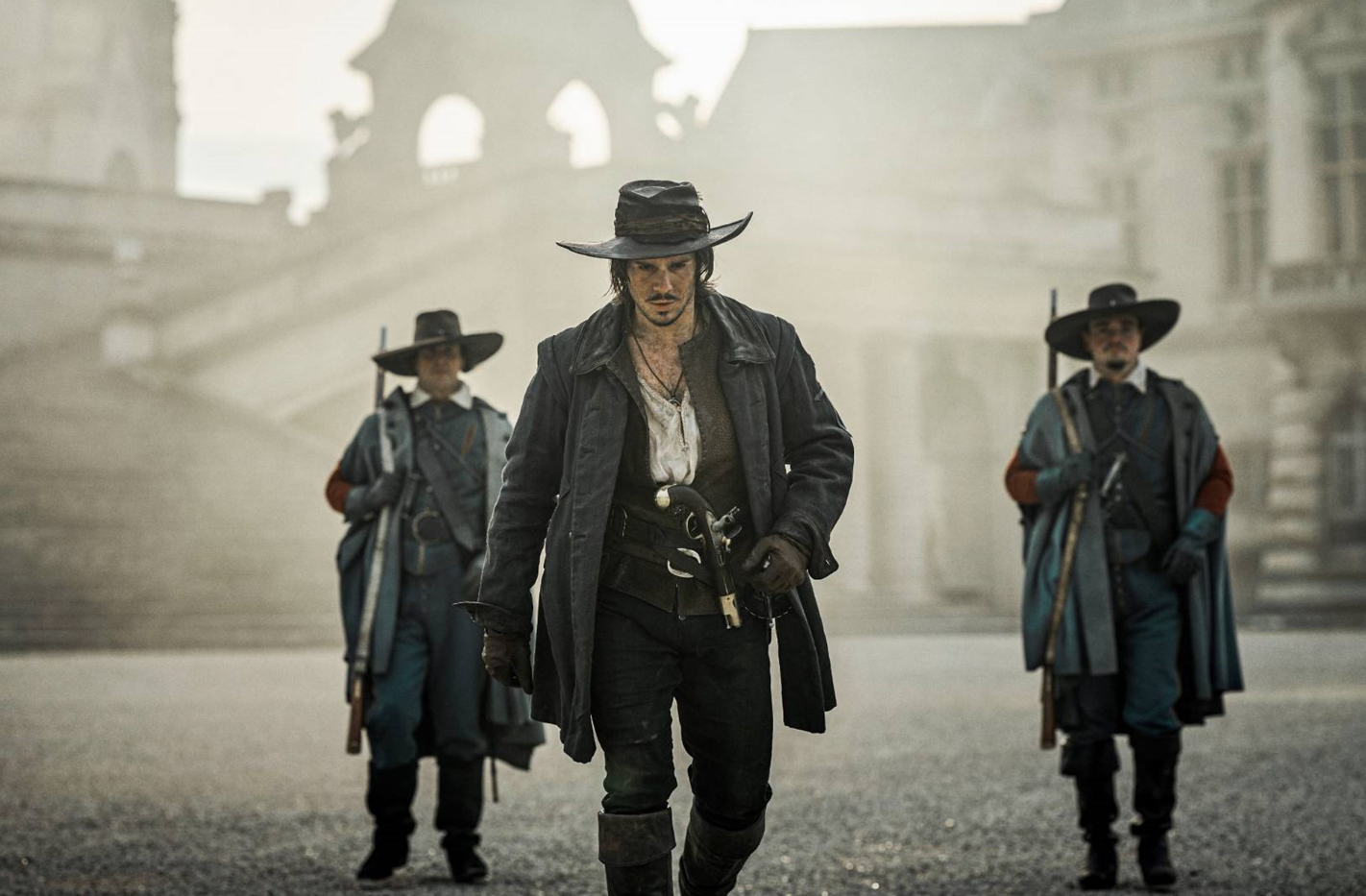
The best compliment I can pay is that it feels like a simple continuation of the first film. Everything I liked about the original is here, from the easy interplay between the actors to the perfectly judged tone – dryly comic but with a serious drama at its core. The cinematography by Nicolas Bolduc is stunning, making use of sweeping long shots and moody interiors, with evocative locations and use of natural lighting and smoke-filled landscapes create some indelible images.
Bourboulon’s talent for extended single-take action sequences remains undaunted, and unlike the numerous showy examples that we get nowadays, they rarely draw attention to themselves. The priority is always to draw the audience in, not to show off how clever the camerawork is, and the opening sequence is masterfully constructed, culminating in a breathtaking jump into a moat.
Like D’Artagnan, this doesn’t set the world alight, but it’s a well made, action packed adaptation of the story. However, while their is no dip in quality regarding the look of the film or the performances, the story is a lot less engaging. While the first film ended on a cliffhanger, this is more open-ended, which makes the lack of a planned sequel all the more frustrating. Hopefully there is a third film in the works (I don’t mean the reported proposed TV series) because while this is a thrilling second instalment, it doesn’t quite succeed as a final chapter.


![Unquiet Guests review – Edited by Dan Coxon [Dead Ink Books]](https://criticalpopcorn.com/wp-content/uploads/2025/10/ug-reddit-ad-e1761690427755.jpg?w=895)
![Martyrs 4K UHD review: Dir. Pascal Laugier [Masters Of Cinema]](https://criticalpopcorn.com/wp-content/uploads/2025/10/image-1-e1761586395456.png?w=895)
![Why I Love… Steve Martin’s Roxanne [1987]](https://criticalpopcorn.com/wp-content/uploads/2016/11/roxanne.jpg?w=460)

 Critical popcorn
Post your thoughts