“Welcome bad memories, you are my youth”
So begins Army Of Shadows, the magnum opus of Jean Pierre Melville. Known predominantly today for his existential gangster films – such as Le Samourai, Le Cercle Rouge and Le Doulos, his niche was very much in making beautifully shot, stoic films about men in long coats and wide-brimmed hats. What is less well known to the casual movie fan is that Melville was a member of the French resistance during World War 2. The French occupation was a period of history close to his heart, and dominated his early work, with films like Le Silence De La Mer, and Leon Morin, Priest covering personal stories from this period of history.
With Army Of Shadows though, Melville touched on his own experience more than any other film. Ostensibly an adaptation of Joseph Kessel’s novel of the same name, Melville strips the story right back, to the point where really the final third is the only part that remains faithful to the book. However, he brings a personal perspective to the film, adding several specific little character touches that makes the story feel even more authentic. As with the Georges Courteline epigram that opens the film though, he makes the story notably more pessimistic than the novel, focusing more on the failures of the resistance than any triumphs.
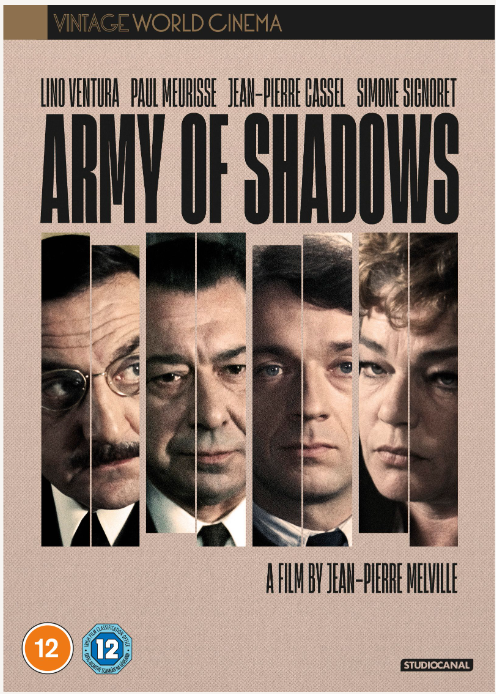
What is still remarkable about the film is the complete lack of mythos for the characters. Despite being made by a man who was part of the resistance, there is an admirable restraint when it comes to romanticising the film’s heroes. Melville actively demystifies his characters, portraying them in exactly the same way as the gangsters in trenchcoats that populate his other films. The protagonist is Philippe Gerbier (Lino Ventura) the head of one branch of the resistance, and while he is depicted as level-headed and composed, he is also ruthless, showing no hesitation in sacrificing others when necessary.
Melville stays away from depicting his characters actually doing all that much to further the war effort. Instead he focuses more on little acts of defiance, on the daily strain and pressures of living a life under an oppressive occupying force, where eyes are everywhere. He shows the murkier side of the resistance, as they evade the Nazis, execute traitors, and attempt to free captives. What Melville does really well is show the strain of the war on these men, and gives the characters a subtle humanity seldom seen in French cinema.
There’s one scene in particular that perfectly sums up the feeling of paranoia that pervaded every aspect of life in Nazi occupied France. On the run from the Germans, Gerbier dashes into a barbershop as they are closing. Despite a portrait on the wall of Vichy prime minister, he is forced to trust the barber, allowing the man to shave him with a cutthroat razor, placing his fate entirely in the man’s hands.
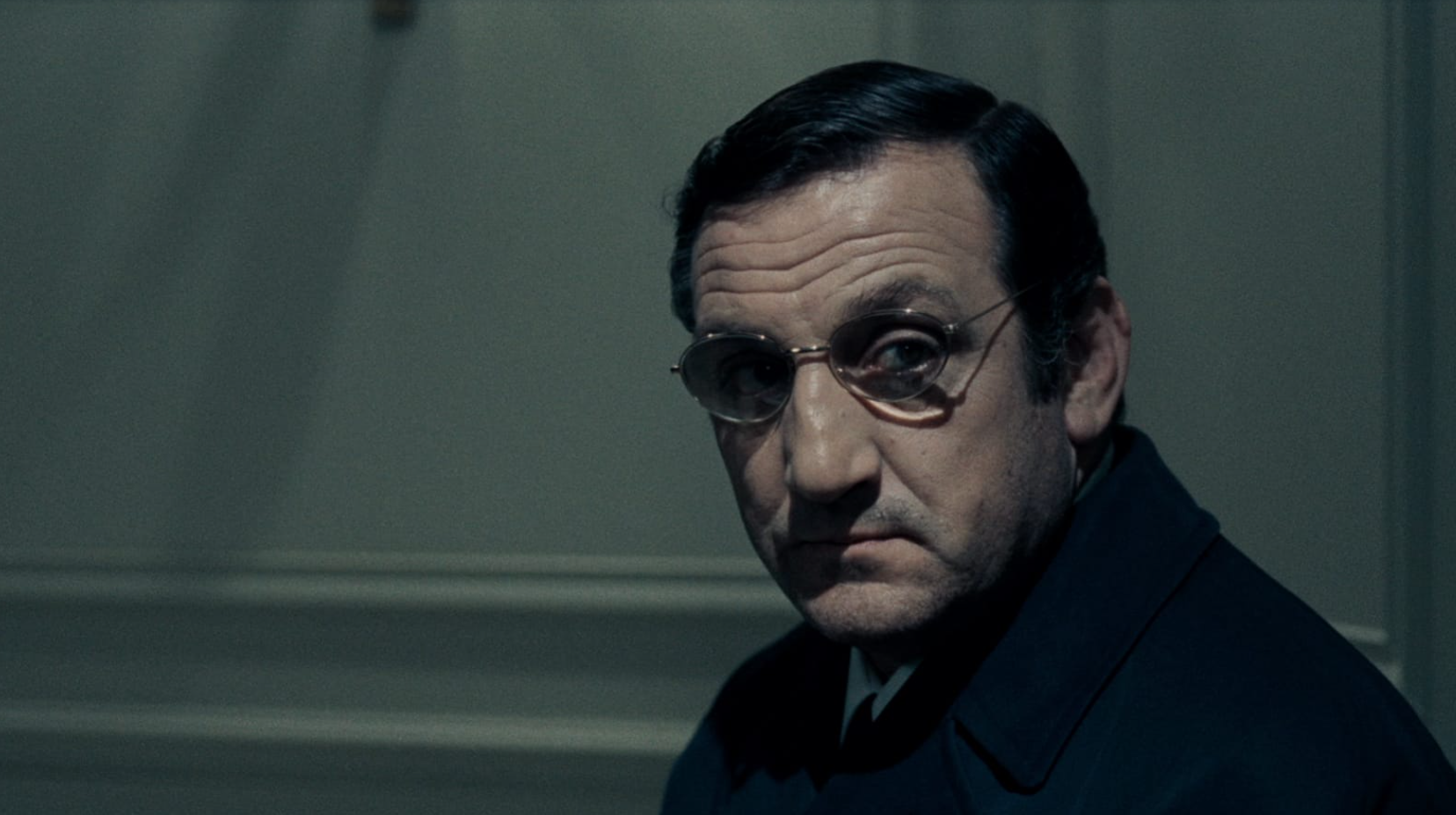
Ventura makes a wonderfully unconventional hero. He had previously worked with Melville on Le Deuxieme Souffle playing a brutal criminal with a sense of honour. His wire-rimmed glasses and taciturn, mild-mannered exterior masks a resolve as cold as ice and an iron will. This is demonstrated a number of times as he clinically assesses the potential usefulness of various potential allies, his deferential outward persona completely at odds with his callous inner monologue. Ventura is so natural, so effortless in his subtle performance style – he’s a little reminiscent of Robert DeNiro, in his offhand mannerisms and the way he casually owns the screen.
In the impressive supporting cast, Simone Signoret is a stand out as the formidable Mathilde. Signoret has so much screen presence, and is one of those actors who has an uncanny ability to convey a wealth of meaning with almost imperceptible changes in her expression. The moment of parting between her and Ventura upon his escape is loaded with significance without a word being uttered. Jean Pierre Cassel is similarly great as the dashing pilot whose heroic plans are simply not how things work in the resistance. The scene between him and his older brother Luc (Paul Meurisse) is a wonderful depiction of two siblings who don’t understand each other at all. There’s a tragic irony to the idea of two ideologically opposed brothers not realising that they are secretly on the same side, and never being open enough with each other to admit it. It’s a great demonstration of the paranoia that was necessary for the resistance to function effectively, and beautifully performed by both actors.
Similarly, any acts of conventional heroism are shown to be hopelessly doomed, as demonstrated with brutal economy in one scene where one characters misguided attempt to be a hero ends in muted disaster. It’s all handled with a matter-of-factness that still feels devastating today. There are no daring rescue attempts – the organisation is more valuable than any one member.
Despite this there are some moments of almost unbearable tension. Principally the scene where Gerbier and other prisoners are lined up with a machine gun trained on them and told to to run to the furthest wall. As Gerbier tries to find the courage to face his end with dignity, he is betrayed by his own body. It’s an utterly nail-biting sequence, and beautifully edited, as we see brief flashes of Gerbier’s happy memories as he walks to what he believes will be his execution. It also leads to one of cinemas most poetic, melancholy pay-offs in the film’s postscript.
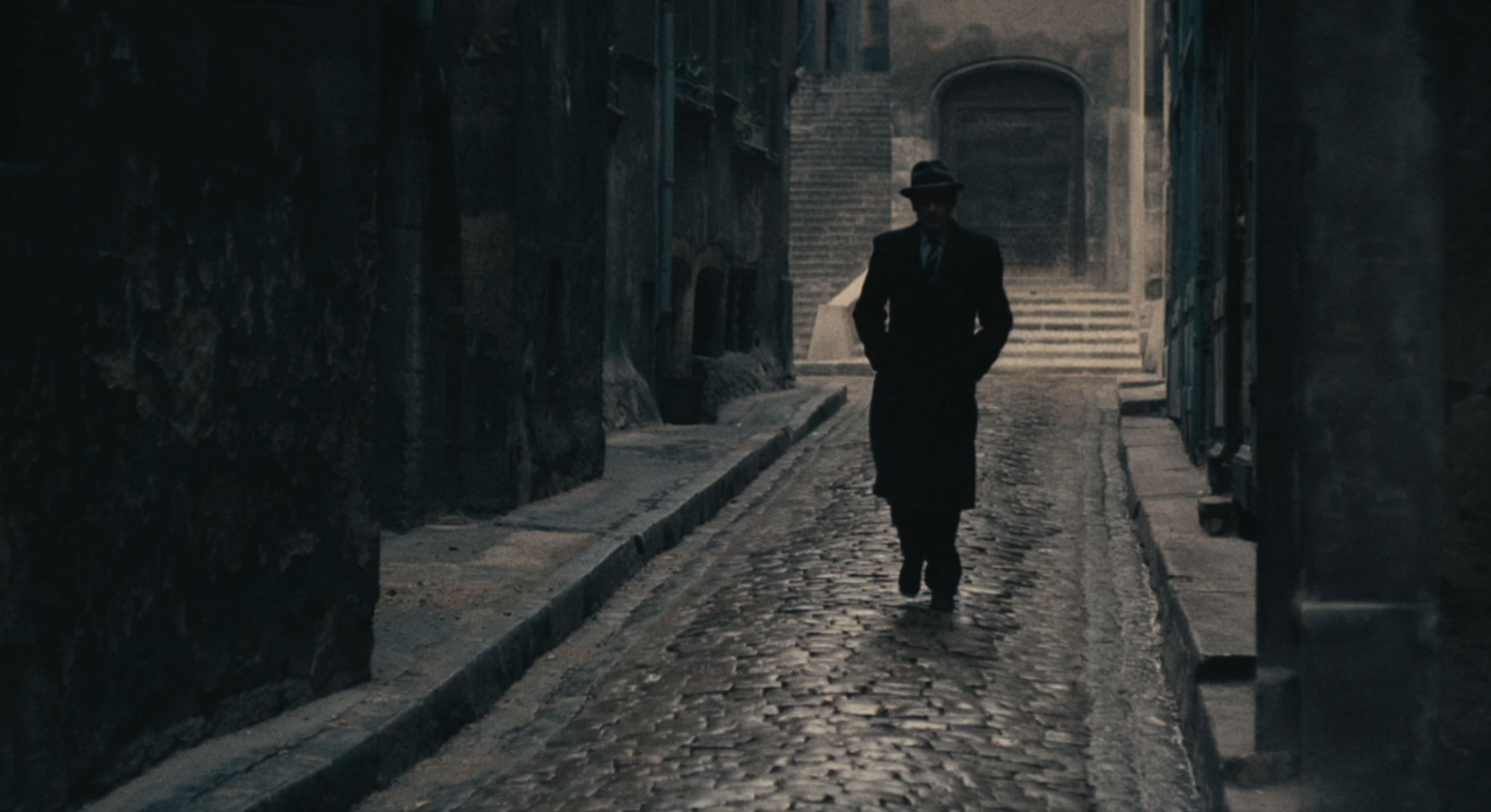
The film had the potential to be a slog, but it’s so beautifully made that it never feels like it. Melville was a master of composition and framing, and Army Of Shadows contains some of his most indelible images, such as that iconic opening shot of the Nazis marching past the Arc De Triomphe. It’s the perfect introduction to the film, and a bold statement of the driving force behind the resistance – seeing a national monument surrounded by Nazi uniforms feels like a transgression even today.
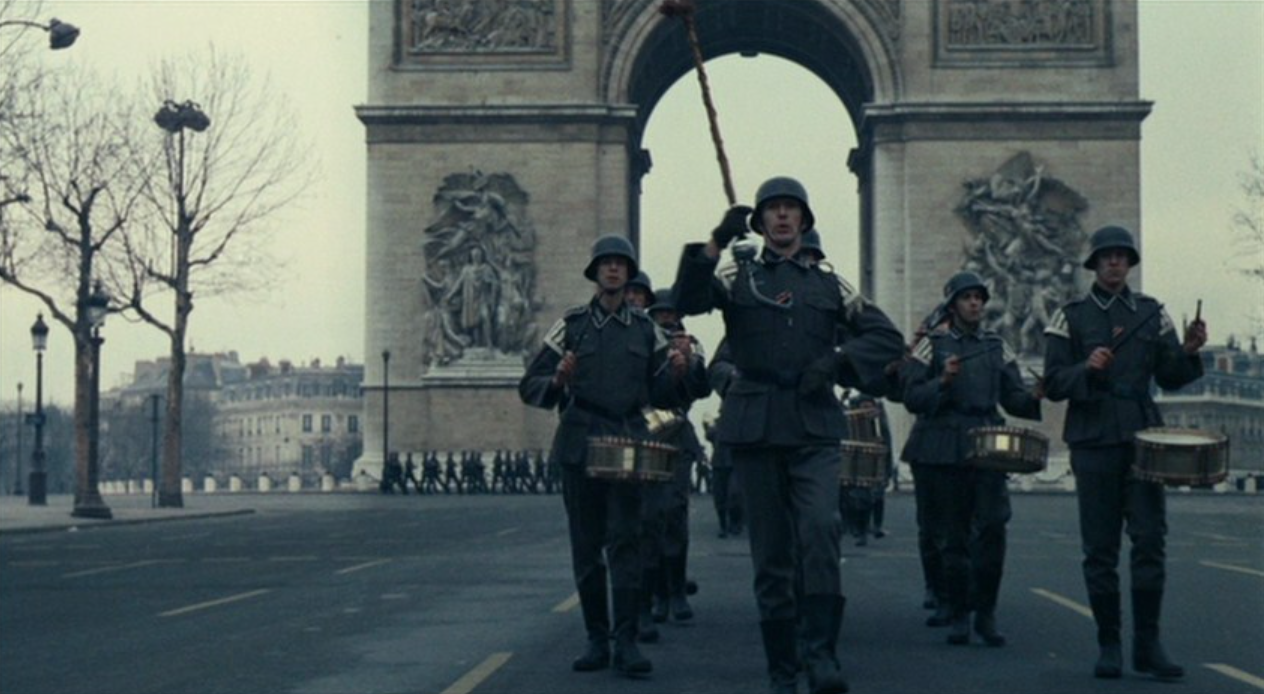
This 4K restoration is magnificent, with Melville’s meticulous use of shadows, silhouettes, and the dispassionate, cold colour palette feeling entirely in keeping with the murky morality of the resistance. This release means that his characteristic, crisp cinematography has never looked better.
It might not be my personal favourite Melville film (that would be Le Samourai) but Army Of Shadows is almost certainly his most profound film. A true masterpiece of French cinema, and perhaps the most subversive war film ever made. It’s a fatalistic, thought-provoking war film, and essential viewing.
Special Features
The extras are admittedly a little on the sparse side, with only two new featurettes on Melville, specifically on his time with the French Resistance, one entitled Army Of Shadows… the hidden side of the story and the other Jean Pierre Grumbach aka Cartier, aka Melville – Resistance Fighter and Filmmaker. Both offer a fascinating insight into Melville’s filming style, and context for why the politics of the day that meant the film was not successful on it’s original release.


![Unquiet Guests review – Edited by Dan Coxon [Dead Ink Books]](https://criticalpopcorn.com/wp-content/uploads/2025/10/ug-reddit-ad-e1761690427755.jpg?w=895)
![Martyrs 4K UHD review: Dir. Pascal Laugier [Masters Of Cinema]](https://criticalpopcorn.com/wp-content/uploads/2025/10/image-1-e1761586395456.png?w=895)
![Why I Love… Steve Martin’s Roxanne [1987]](https://criticalpopcorn.com/wp-content/uploads/2016/11/roxanne.jpg?w=460)


 Critical popcorn
Post your thoughts