Brian De Palma‘s rock opera Phantom Of The Paradise turns 50 this month, and for my money it’s the best cult rock opera ever made – an eclectic mix of musical styles and pop culture references, with an unforgettable soundtrack written and composed by the legend that is Paul Rainbow Connection Williams. A unique blend of Phantom Of The Opera (well, duh), Faust, and The Picture Of Dorian Grey, and with cinematic nods to such classic movies as Psycho, Frankenstein and Touch Of Evil, Phantom Of The Paradise is a thrilling mash of cultural touchstones and yet simultaneously 100% a De Palma film. It’s a vibrant, uniquely odd film; once seen, never forgotten.
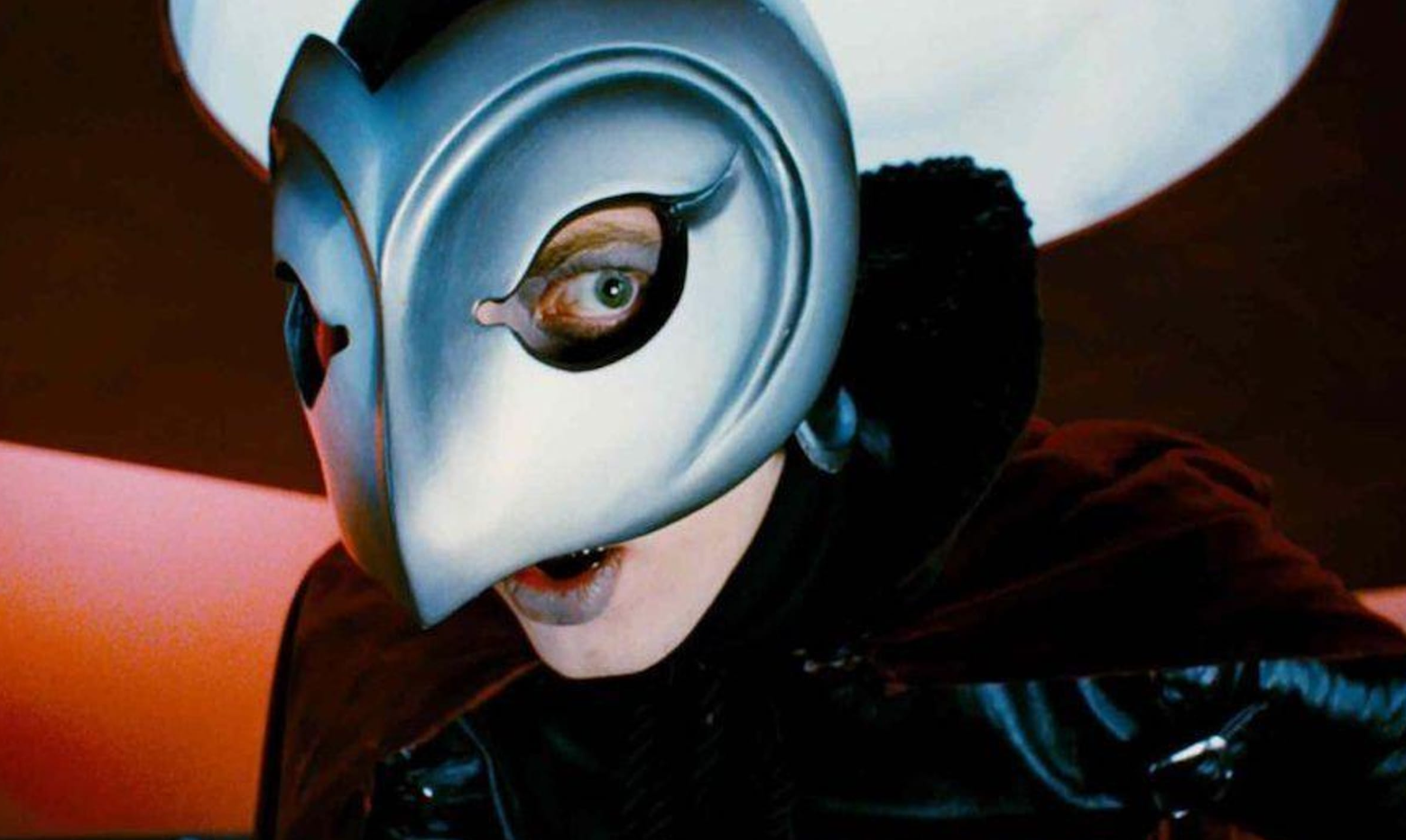
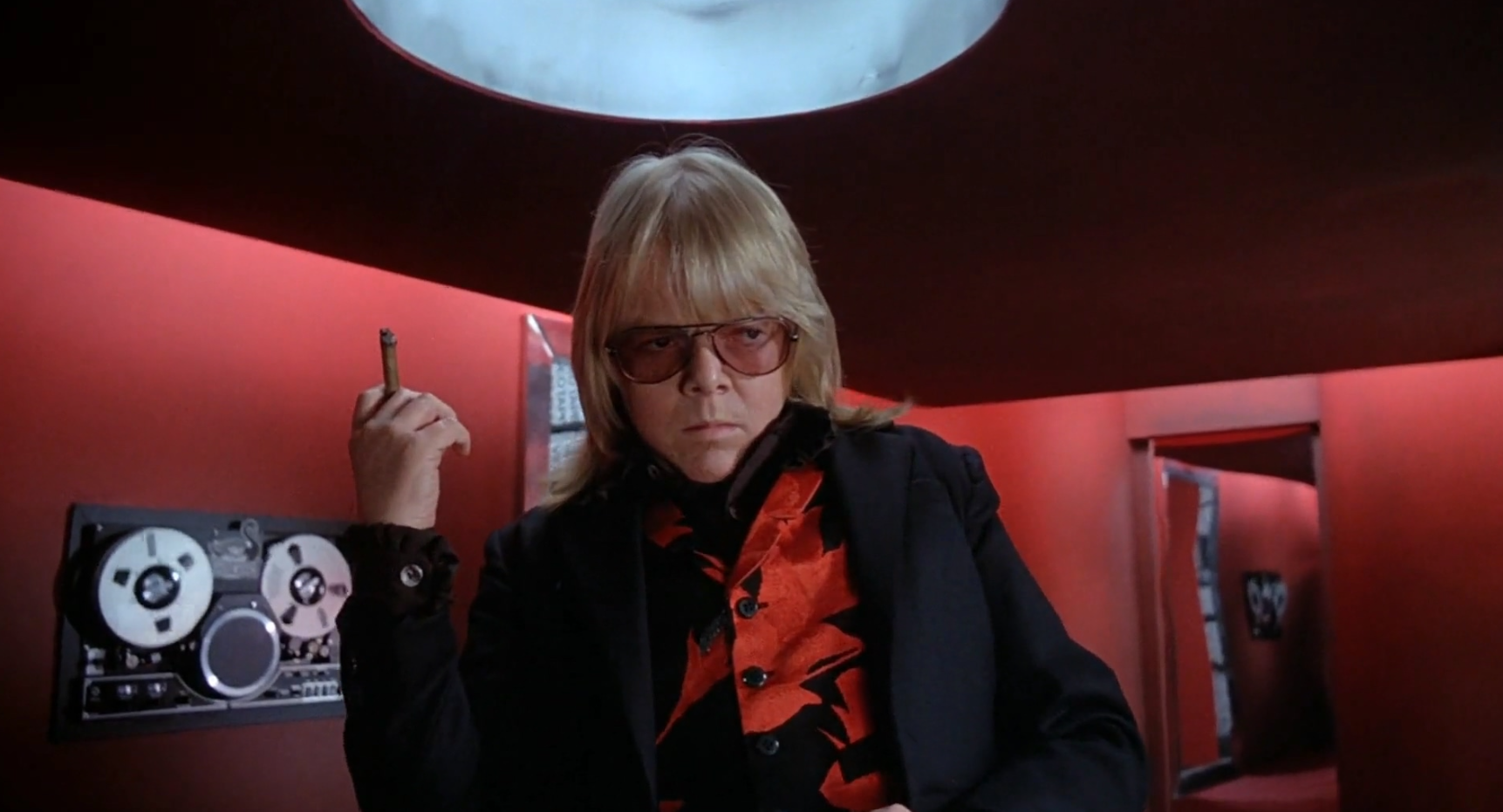
It tells the story of Winslow Leach (William Finlay), an idealistic upcoming musician, whose music is stolen by powerful record producer and Svengali Swan (Paul Williams) who also ruins him and indirectly causes him to be horribly disfigured and presumed dead. Seeking revenge, Winslow assumes the identity of The Phantom, and terrorizes Swan’s theatre, murdering anyone who dares perform his music. Eventually, he and Swan strike form a brittle truce and strike a pact involving the young singer Phoenix (Jessica Harper), though Swan has nefarious plans of his own.
Williams wrote all ten songs on the soundtrack, and each one brings something fresh to the story. It’s a playful, deceptively complicated soundtrack, as Williams effortlessly leaps from genre to genre. To celebrate the anniversary of this genuine cult classic, we are taking a deep dive into what makes the soundtrack so impressive…
10. “Never Thought I’d Get To Meet The Devil”
Okay, so maybe not every track is incredible, as this throwaway contribution confirms. There’s a reason this is the only song that didn’t make it onto the soundtrack album! There’s nothing wrong with it, a chirpy little song about Winslow meeting Swan, but it’s the only song in the film that’s non-diegetic / not part of the narrative, or performed within the context of the story. It might rank higher if there was a complete version of the song, but at a couple of lines long, it’s a little to slight to really make much of an impression. All it really does is transition from one scene to the next.
9. “Special To Me”
Right, here we go. The first great song on the list. Phoenix’s audition song is the perfect introduction to the icon that is Jessica Harper. Best known today for her roles in Suspiria and Stardust Memories (and to a lesser extent Shock Treatment) she is sensational as Phoenix, the innocent muse to Winslow’s tortured genius. This poppy song is perhaps the most similar to Williams’ other output as a writer, and sounds the most suited to the era in which the film was made. That’s not a criticism, but the other songs are so timeless and distinct that this one can’t help but feel a little conventional by comparison.
Singing directly into the camera, Harper carries herself with such confidence that it’s mad to think this was her first film role. Particularly mad is the bizarre chicken dance she does at the end of the song, something she regularly recreates at conventions and reunions.
8. “Somebody Super Like You“
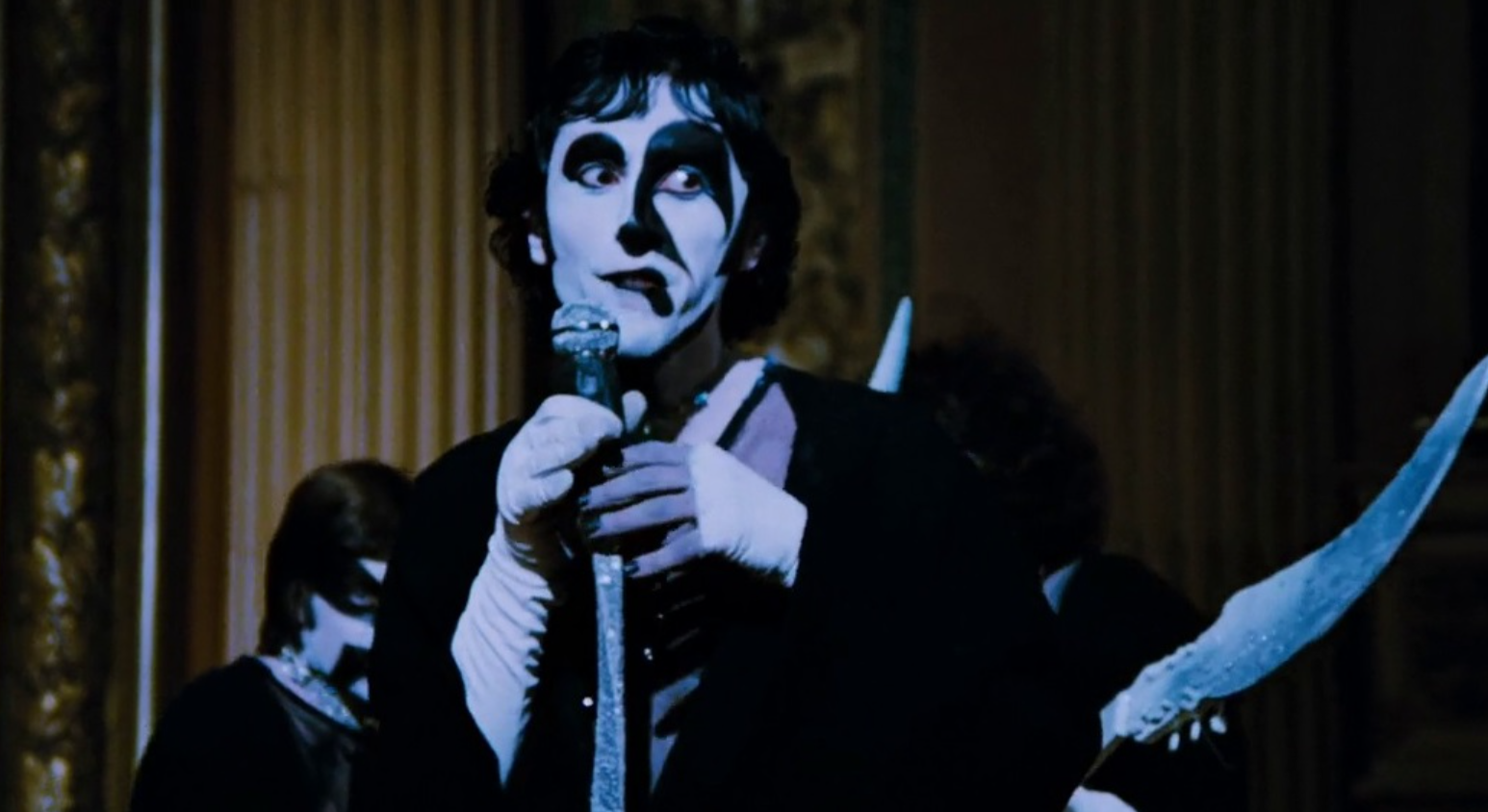
You could reasonably make the claim that over the course of the film Paul Williams predicted numerous trends in the music industry. With Somebody Super Like You, he seemed to pre-empt the theatre of bands like Kiss and Goth Rock. Throughout the film, Swan’s group The Juicy Fruits pop up in a variety of guises, performing variations of the Phantom’s work. For this song the group are all dressed as somnambulist Cesare from The Cabinet Of Doctor Caligari, with a stage set that recreates the German expressionist mise en scene. Now called The Undead, this Frankenstein-inspired anthem celebrates an ideal man, assembled from various body parts, creating a campy, terrifying experience. The bone-chilling screams from singer Harold Oblong are incredible, as are his distinctive vocals, full of little tics – “Somebody sssssuper like you!”
Incidentally, this was the highest charting song from the soundtrack. The entire album went gold in Canada, and curiously, this song proved incredibly popular in Winnipeg, something Oblong is rightly proud of!
7. “Upholstery”
The entire premise for Phantom Of The Paradise originated from Brian De Palma hearing a Beatles song rendered into Muzak in a elevator. This informs the songwriting throughout the film, with Swan repeatedly taking emotionally deep songs and gutting them, replacing the soul with tacky ear worms.
The first indicator of this idea, and Williams’ playful approach to his own songs, Upholstery is a poppy, vacuous reorchestration of Winslow’s cantata, that highlights the soullessness of manufactured pop music. Sung by Swan’s band, now called The Beach Bums (in a not-so-subtle parody of The Beach Boys) it takes all the depth of Faust and replaces it with mind numbingly prosaic lyrics (“Carburettors man! That’s what life’s all about!”) Ironically though, it’s still incredibly catchy, as Williams alters the slower arrangement to create a more commercial sounding track.
It’s an incredible sequence in the film too, as De Palma attempts to outdo Orson Welles‘ virtuoso single take shot from Touch Of Evil. Here the camera follows a car with a bomb in the trunk, but the endlessly ambitious DePalma goes even further, splitting the screen in two, one camera following the car, the other focused on the band playing the song, while the bomb ticks down toward detonation.
6. “Life At Last“
Gerrit Graham’s Beef is one of the standout characters in the film, a flamboyant, pill-popping pseudo thespian / rocker hired by Swan to sing the Phantom’s cantata to spite his chosen singer, Phoenix. Beef’s song, Life At Last, comes at the peak of the Phantom plot, as Beef is coerced into performing despite the direct threat from the Phantom in the shower (in a nod to Psycho) that anyone who sings it will die.
Beef’s voice was dubbed by singer Ray Kennedy, although after hearing Graham sing on camera in the shower scene, both De Palma and Williams expressed regret at not letting him perform the song himself. It’s a great punky anthem, beautifully filmed by DePalma as Beef peacocks and struts across the stage, with Graham bringing an unforgettable energy to the performance.
5. “Faust”
The song that lands Winslow in trouble in the first place, Faust is performed repeatedly over the course of the film. Firstly as the introduction to the naive, sweet-natured Winslow, and later as the over-produced version by Swan. The most memorable is the one where Swan repairs the Phantom’s mangled voice box, essentially giving him his own voice (in a telling little moment, the egomaniacal Swan calls his new voice “perfect”). The subsequent sequence, where Swan manipulates the sound levels is one of the most satisfying scenes of the film, on a par with John Travolta splicing frames of film together in Blow Out. Swan’s modulation of Winslow’s voice is a chilling moment, another high point in the film’s exploration of ego and exploitation.
4. “Goodbye Eddie Goodbye“
The film’s opening number is an energetic, loving doo-wop homage to ‘50s greaser pop, a macabre tale of a songwriter who comes up with a novel way to ensure his sister receives money for a life-saving operation. Originally conceived as a song for Sha Na Na, it ended up being the first song we hear from Swan’s house band, The Juicy Fruits, and it’s the perfect way to kick off the film.
Taking lead in this song is Archie Hahn, perhaps known best for his appearances on Whose Line Is It Anyway and Gremlins 2, as well as providing vocals for Bugsy Malone. Aside from that incredible falsetto, Hahn apparently was supposed to sing the verses, but decided to speak the lyrics in a puerto rican style accent, to more closely emulate the genre, which would often weave these melodramatic narratives into the songs themselves.
3. “The Phantom’s Theme“
The film’s unofficial theme, this doesn’t seem to be as fondly remembered as some of the more showy songs, perhaps because it isn’t performed onscreen, but rather on the soundtrack itself. It’s a shame though because this is one of the film’s most beautifully constructed pieces of music, a reflective, thoughtful piece that captures Winslow’s tragic arc.

It’s a melancholy, haunting song, with mournful vocals from Williams, and wonderfully elegiac lyrics. The song plays over a montage of time passing, a meticulously constructed sequence that incorporates, time-lapse, stills, onscreen graphics and a fun little digression where Swan auditions various other styles of music to perform Winslow’s cantata.
2. “Old Souls“
Jessica Harper’s moment to shine, Old Souls is another rearrangement of a previous song, this one almost a reprise of Life At Last. It’s a beautifully melodic ballad that showcases Harper’s soulful, uniquely low voice, and feels reminiscent of The Carpenters (fittingly since Williams wrote a good number of their best known songs) in the way she sings to a rapt audience.
Old Souls captures the wistful idea that “great love is born before us and lives on after us,” inadvertently recalling Past Lives and the concept of inyeon (fate) in the way it invokes ideas of souls meeting in different lives. Williams cites this as his personal favorite from the film, and it’s easy to hear why.
1. “The Hell Of It“
“Though your music lingers on, all of us are glad you’re gone”
Only Brian De Palma would tuck the films best song away in the end credits. This song was originally conceived as playing over Beef’s funeral procession, a scene that was eventually cut. Thankfully De Palma recognised how great this song was, and that it *had* to be incorporated into the film somehow.
The favourite track of superfan Edgar Wright, this jaunty, morbid tune is a fitting and darkly funny farewell. A scathing eulogy to someone you can’t help but despise. Williams’ gritty vocals are wonderful; resonant and full of character – you can feel the hate in each pejorative he spits at the listener. The soft-shoe shuffle style outro is just as great as the song that preceded it, giving the whole film the feel of a piece of theatre, complete with tap-dancing sound effects. It’s an almost vaudevillian piece that is the most reminiscent to his work on Bugsy Malone. It’s catchy, full of character, and delightfully irreverent, and perhaps most importantly, impossible to listen to without tapping your feet.

![Unquiet Guests review – Edited by Dan Coxon [Dead Ink Books]](https://criticalpopcorn.com/wp-content/uploads/2025/10/ug-reddit-ad-e1761690427755.jpg?w=895)
![Martyrs 4K UHD review: Dir. Pascal Laugier [Masters Of Cinema]](https://criticalpopcorn.com/wp-content/uploads/2025/10/image-1-e1761586395456.png?w=895)
![Why I Love… Steve Martin’s Roxanne [1987]](https://criticalpopcorn.com/wp-content/uploads/2016/11/roxanne.jpg?w=460)

 Critical popcorn
Post your thoughts