I always have to remind myself that Richard Lester was American. His anarchic sense of irony seems so uniquely British that it led to Pauline Kael saying of him “Is there anybody more British than an American convert?” All of his films contain understated, dry humour and a deep sense of irony that rightly or wrongly feel inherently British. Juggernaut might be a more straightforward film than his usual anarchic material (no doubt a byproduct of him being effectively a director for hire rather than originating the idea himself) but it still retains his distinct sense of humour.

Often lumped in with the big disaster movies of the 1970s, coming out the same year as The Poseidon Adventure, The Towering Inferno, Earthquake and Airport 1975, Lester’s film has an energy and irreverence beneath the surface that makes these look positively formulaic even by the standards of the time.
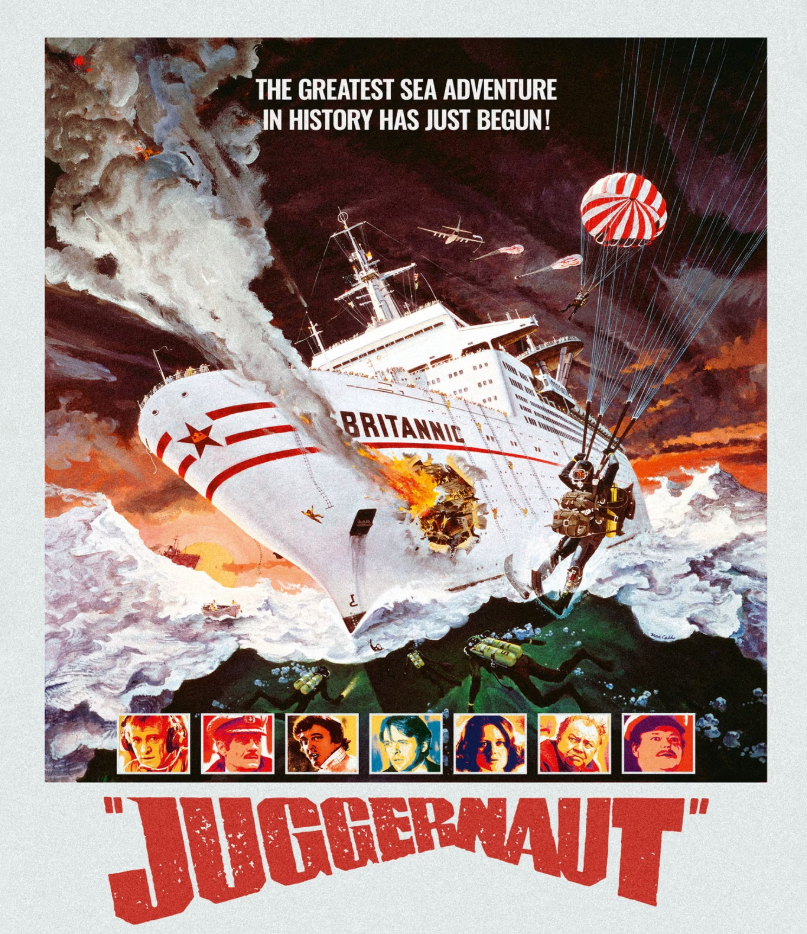
It’s actually a bit misleading to describe Juggernaut as a disaster film. It has much more in common with hijack thrillers like The Taking Of Pelham One Two Three or even Speed in it’s story of a cruise liner held hostage. The North Atlantic voyage of The Britannic (Ian Holm) is interrupted when the managing director of the company is contacted by an enigmatic voice, calling himself “Juggernaut,” and telling him he has planted seven bombs on the ship, and that unless he is paid £500,000 he will detonate all of them, killing everyone on board. Since paying the money is ruled out by the ruthless government representative (John Stride), a bomb disposal unit led by Anthony Fallon (Richard Harris) is deployed to deactivate the explosives and save the passengers.
I’m a huge Richard Lester cheerleader, particularly his subversively playful Musketeers films and his surreal (if not particularly PC) apocalyptic comedy The Bed Sitting Room, and it’s refreshing to see him attempt a more straitlaced, conventional narrative while still undercutting the tension with little comic flourishes throughout. After all the pomp and circumstance of the ship setting sail, Lester hangs back and observes the poor cleaners having to clear up all the debris, chatting amongst themselves. (“Right Humphrey, my place or yours?” one offscreen voice mutters.)
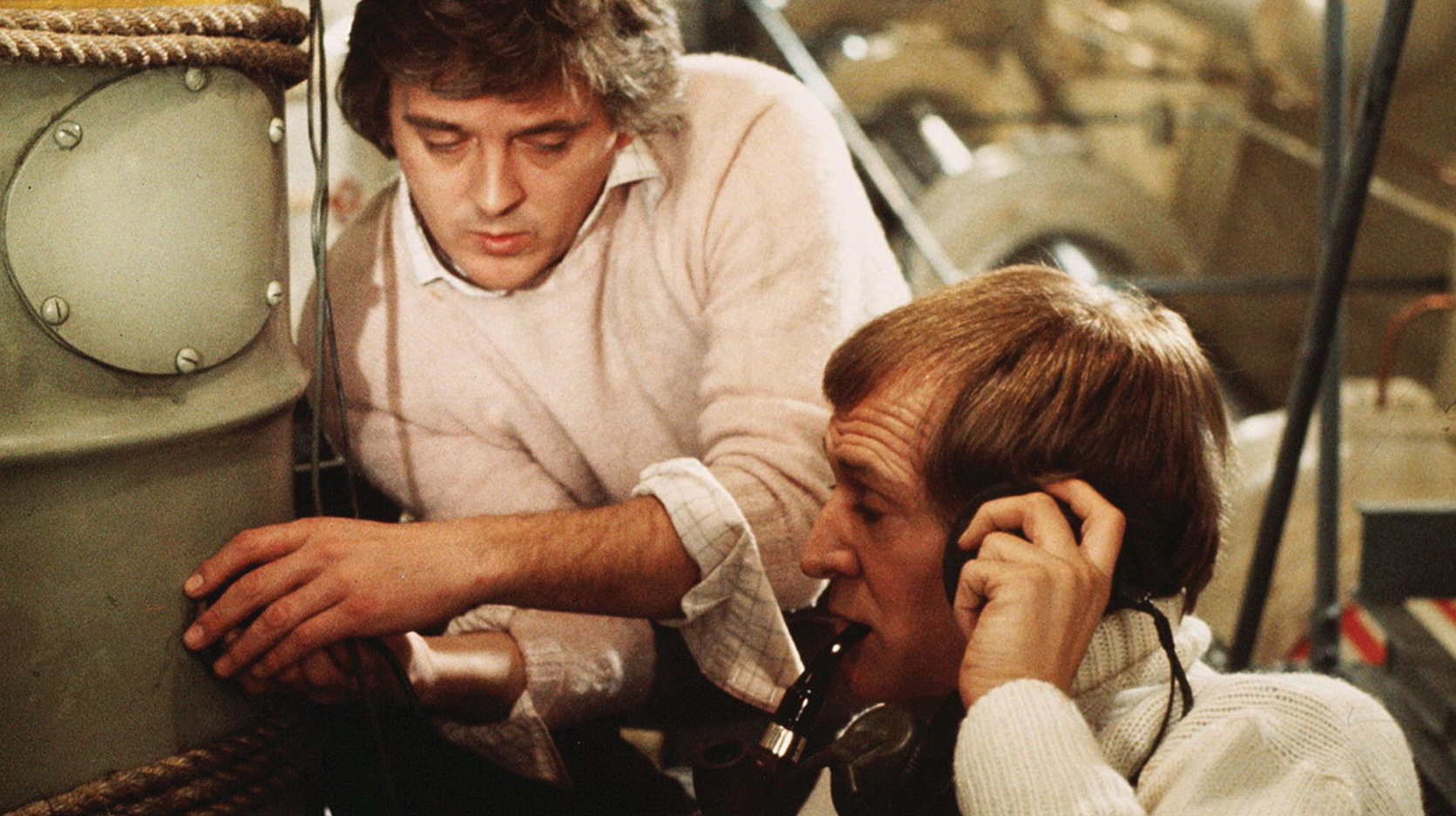
“Not a steely determination, but a particularly British sanguine “Oh, well…”
There is a sense of irony and a cynical streak running through it that makes Juggernaut stand apart from the Irwin Allen produced disaster epics of the 1970s. In the special features for this release from Eureka, film historian Sheldon Hall described the Britishness on display as distinct from the 1940s idea of the “Stiff Upper Lip” and instead embodies a much more mundane trait:
It’s true, and an argument could be made that the reason Juggernaut stands up so well today is due to the very realistic reactions of the way characters react to the imminent threat. Lester coaxes natural, unshowy performances from his cast – there is very little in the way of grandstanding or big emotional moments, and death is handled in a very matter of fact, emotionally detached way, yet this serves to make the big moments resonate all the better.
As with his earlier films, Lester deploys striking visuals which are understated but memorable, with inventive use of framing and camera placement. He uses wide shots to dwarf the people on the ship itself, and plays around with focus and shot composition to fully immerse the audience in the narrative. One fade to red is particularly striking, while elsewhere there are match cuts and overlayed dialogue, all of which keep the up the pace of the story.

If the film falters at all, it’s in the scenes where it tries to emulate the more conventional sides of the genre film – and this is particularly true of Omar Sharif as the increasingly impotent captain, embarking on a doomed romance with a passenger (Shirley Knight). Sharif gives a stoic performance but it feels a bit too earnest when compared to the more dryly ironic work being done by the British cast. Where Lester feels more comfortable is in the more subversive side of things. The Government man smarmily telling Holm that “No, we won’t be paying,” the Irish accent used by “Juggernaut,” a clear reference to the IRA (which is later shown to be a canny bit of misdirection) or Roshan Seth’s steward slipping in and out of a broad Indian accent depending on who he’s speaking to. Lester subverts expectations throughout the film. Even in the final, nerve-wracking “blue wire / red wire” sequence (one of the earliest examples of this trope) Lester manages to find a way to wrong foot the audience with his execution of it.
Richard Harris is great and natural as the bomb expert – he is one of those actors who has a natural bearing and commanding presence, and yet you can count his genuinely great film appearances on one hand. He was quite dismissive of this film, but for me it’s up there with his most impressive performances. He is superficially quite cavalier about his job, but there’s a steel to him that is evident from his first scene, and his friendship with his second in command (David Hemmings) is genuinely touching. In the supporting roles, Anthony Hopkins gives an incredibly understated performance as the lead detective – his farewell to his family as they leave on the ship is beautifully observed, and their presence onboard gives him a personal investment in finding “Juggernaut” as soon as possible.
The whole film is populated with vivid character sketches from a cast with a daunting acting pedigree – Cyril Cusack gives a wonderful performance as an imprisoned bomber, whose casual disinterest in the situation is more unnerving than any overt villainy. It’s maybe a minute of screentime but he makes a vivid impression, unassuming and yet full of menace. Freddie Jones is another standout as a suspect in the case – he has one of the best voices ever committed to film, and his final scene is wonderfully performed. It also features at least three Imperial officers from the original Star Wars films – Julian Glover, Kenneth Colley and Andrew Bradford.
Best of all though, is Roy Kinnear as the ship’s entertainment officer. Giving what Steven Soderbergh called “the definitive Roy Kinnear performance,” he adds a particularly meta element to the film, essentially a deconstruction of the comic relief character. His descent into hysteria onstage while the rest of the passengers ignore him is one of the film’s highlights. He really throws himself into the performance, belting out Roll Out The Barrel in an attempt to keep everyone’s spirits high, despite his growing panic before resignedly commenting “Oh sod ’em” when he gets no reaction. Even then he’s not purely a figure of fun, gaining a level of dignity when telling a guest to stop patronizing him, admitting to being “s*** scared.”
Lester has an unconventional, distinct style that might make him an unlikely choice to helm a disaster movie, but Juggernaut remains one of the most uniquely idiosyncratic British films of the 1970s. The delicate balance of humour, tension, and character-driven storytelling makes Juggernaut a standout, a film that feels both of its time and ahead of it.
Special Features
Audio commentary with British cinema expert Melanie Williams, a new interview with film historian and Eureka fixture Neil Sinyard, another new interview with film historian Sheldon Hall, and a collector’s booklet featuring new writing on the film by film scholar Laura Mayne.



![Unquiet Guests review – Edited by Dan Coxon [Dead Ink Books]](https://criticalpopcorn.com/wp-content/uploads/2025/10/ug-reddit-ad-e1761690427755.jpg?w=895)

![Martyrs 4K UHD review: Dir. Pascal Laugier [Masters Of Cinema]](https://criticalpopcorn.com/wp-content/uploads/2025/10/image-1-e1761586395456.png?w=895)



![Why I Love… Steve Martin’s Roxanne [1987]](https://criticalpopcorn.com/wp-content/uploads/2016/11/roxanne.jpg?w=460)


 Critical popcorn
Post your thoughts