
As well being Radiohead’s legendary bassist, Colin Greenwood is an all-round creative soul who also loves his photography. For How to Disappear: A Portrait of Radiohead, he’s collated around 20 years of renegade snaps of the band behind-the-scenes – from rehearsals to gigs and beyond – to offer a candid, unique view inside one of the biggest groups in the world from the last 30 years.
Using a Yashica T4 Super, these photographs cover the collectives ‘middle years’ that includes all the “joy and doubt and confidence and uncertainty we would oscillate between” – and offer an understanding that most definitely wouldn’t be seen by us everyday folk, and I mean that in a truly respectful sense.
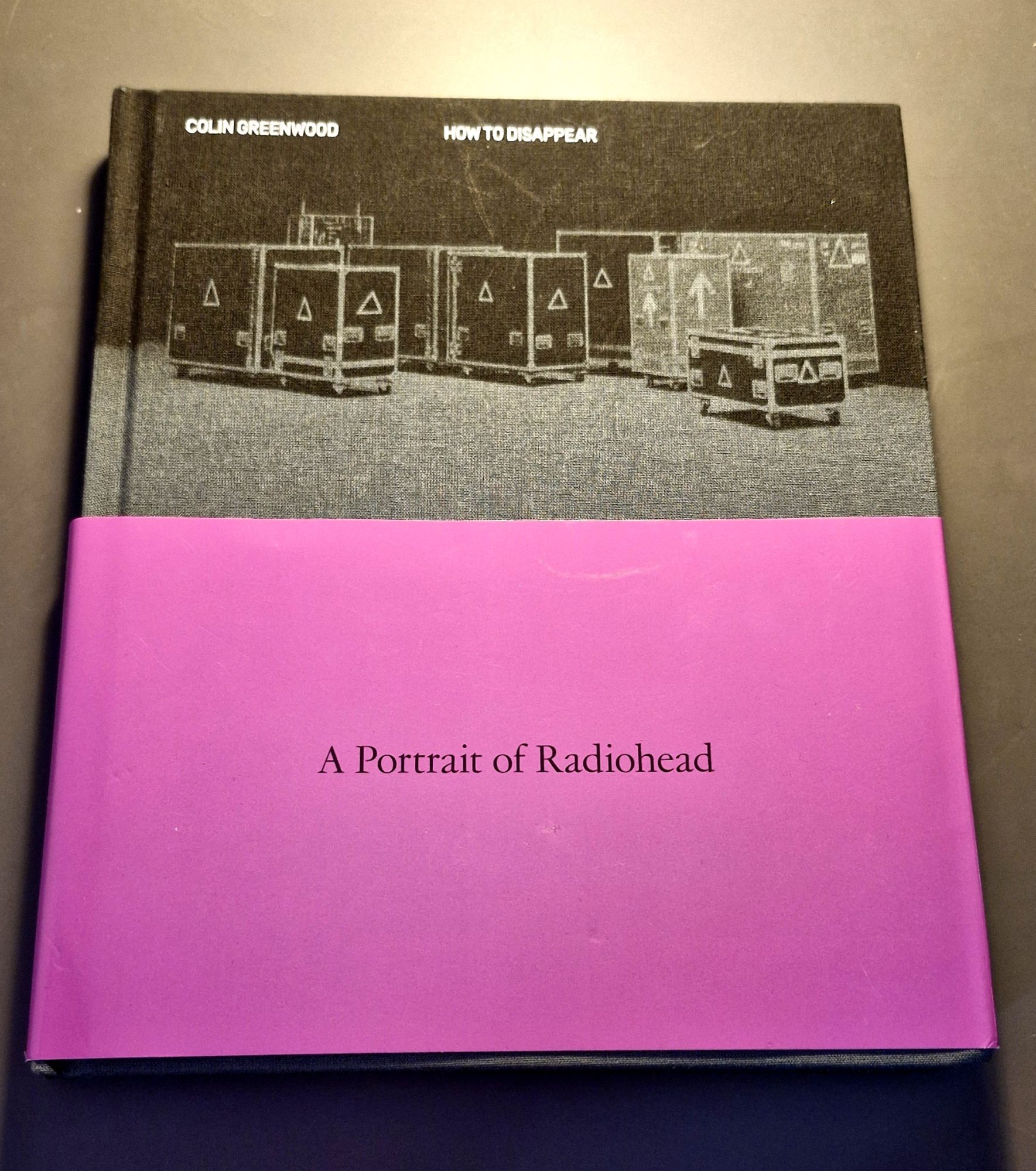
As well as features like this, I’ve been a photographer in various guises for about the same time as I loved the band, that’s also over 30 years, so I entered with an equal measure of interest and fascination to see where Colin would take us, as we slip behind the velvet curtain of such an enormous band – inspirationally. From my perspective, I’ve never been a deeply technical camera user, I’ve learned from working in and around the profession, so have my own love for certain types of styles of processes – and this was a highly enjoyable venture, where the photos aren’t, and don’t need to be, over stylised.
Showing their creative processes doesn’t necessarily have to give you everything you need to know, but it does illustrate their focus, their fluctuating spaces of creativity and while it may not always be the rock and roll lifestyle that many might think it is, it displays that out of all types of surroundings, that pure epic music can be created. This is an informal journey across the Globe, from a sincere viewpoint out in the countryside, to huge stadia, through their studio setup, to the satisfaction of the everyday sofa, across collaborating with Stanley Donwood (and his book is also glorious), all the way to sitting on a deckchair at Glastonbury with only a small fence separating them from the crowds, as the Pyramid Stage lingers in the background.
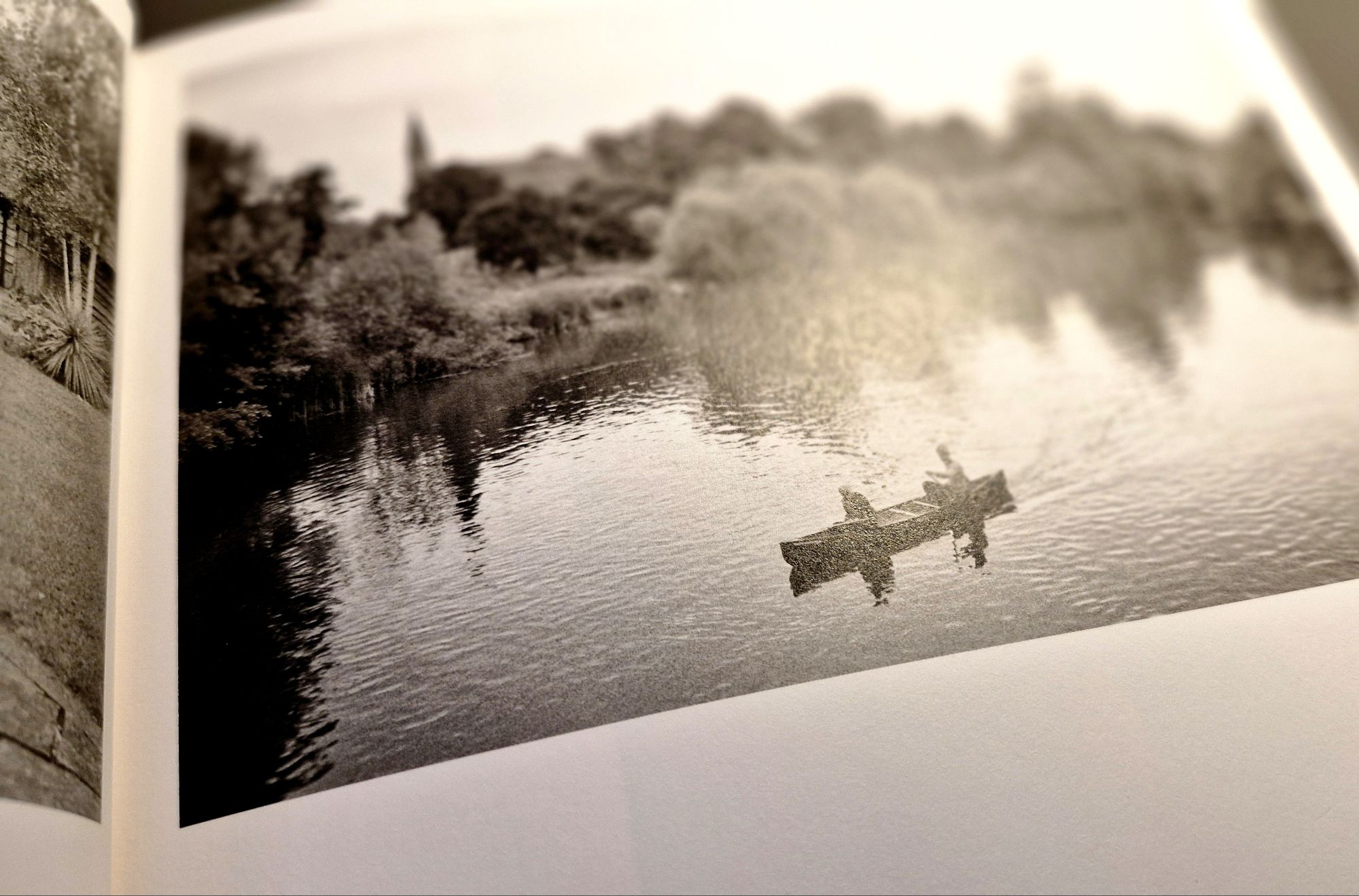
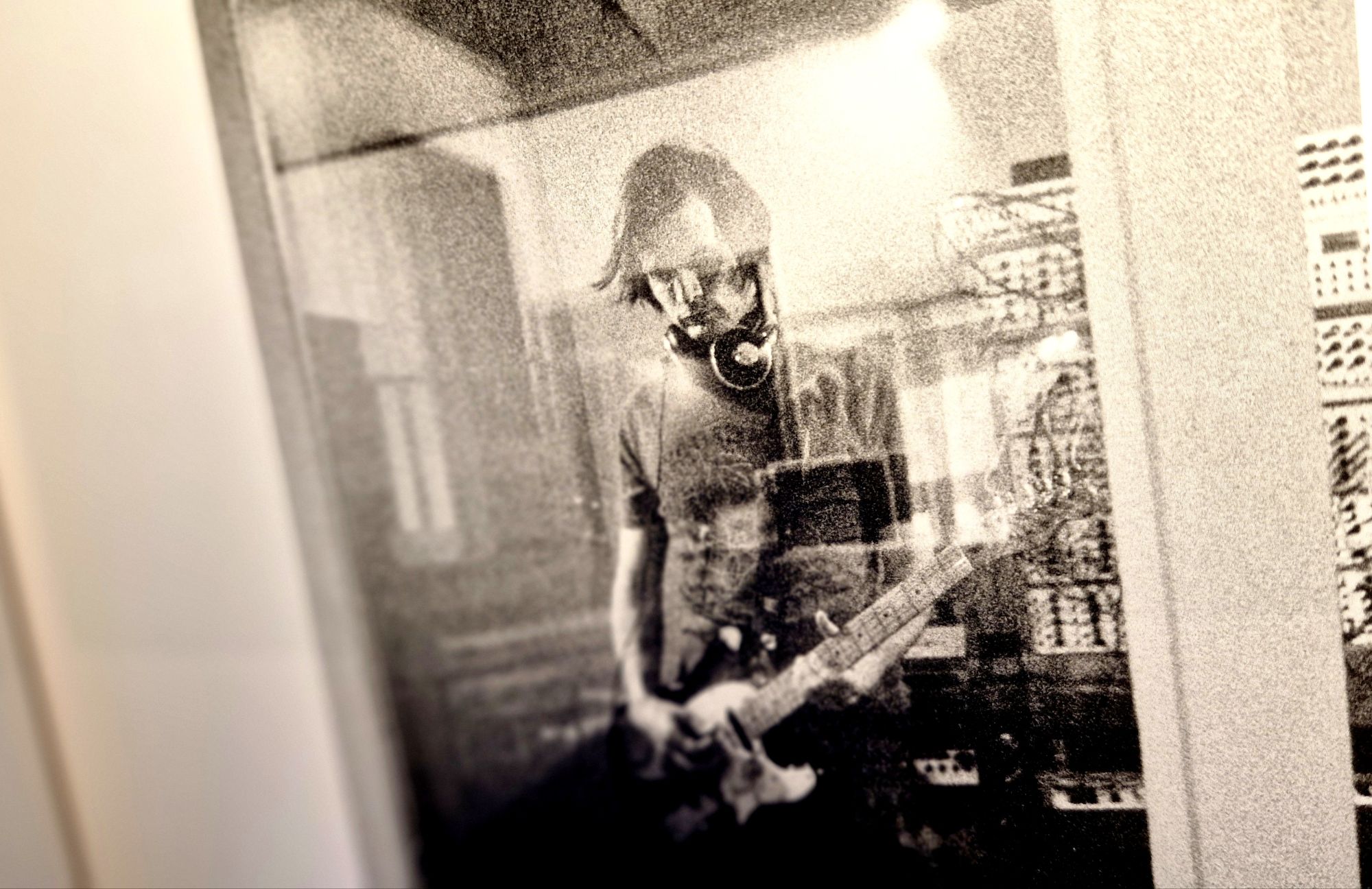
Covering 2003 onwards, it’s Colin’s essay that’s segmented through the book that opens up his – and thus our – point of view into these photos. It offers a reminder that the band don’t really see each other when they’re doing other projects, or existing in other life situations, but when they do come back together it’s like “plunging into the latest season of a long-running box set: everything essentially the same just that little bit older,” and that’s peculiarly reassuring to hear – straight from the horses mouth, if you were.
His essay is also a cue to moments when these photographs were captured, through the ‘endless downtime’, and trapped in ‘time-killing coping routines’, which I relate to in my day-to-day work, which isn’t even this either – it’s office work – and you find ways to live your life in the middle – yet in Colin’s case he’s also an epic musician, which is through hard work as well, it must be noted. Colin also discusses the influence of Tim Barber’s website ‘Tiny Vices,’ and his use of 35mm, and quite famous Yashica T4 itself, which sparked my brain into thinking… do I need another camera?
There’s also an excellent discussion about his photography and the music experimentation, which do link, in a sense of never perfection but instead trying to capture those edges of sound and light, each in their own way. In-between these photos, we’re also given his story of the beginnings of the band, how they were signed, and his recurrent pre-gig rituals, not forgetting remembering his first bass guitar, plus his musical influences which included obsessive listening to the likes of Joy Division and The Fall, which is a magnificent way to dig into music when you’re a young teenager.
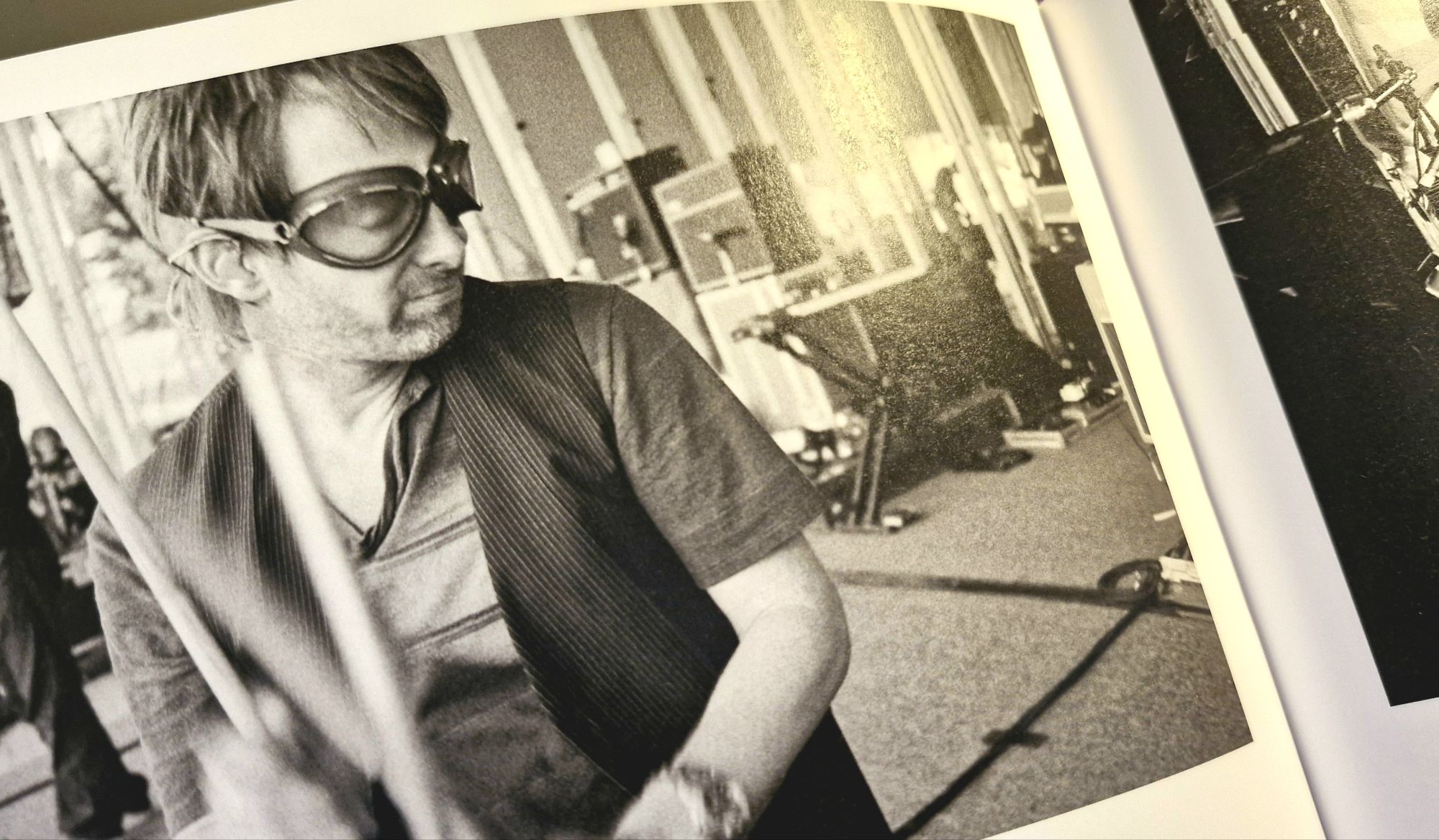
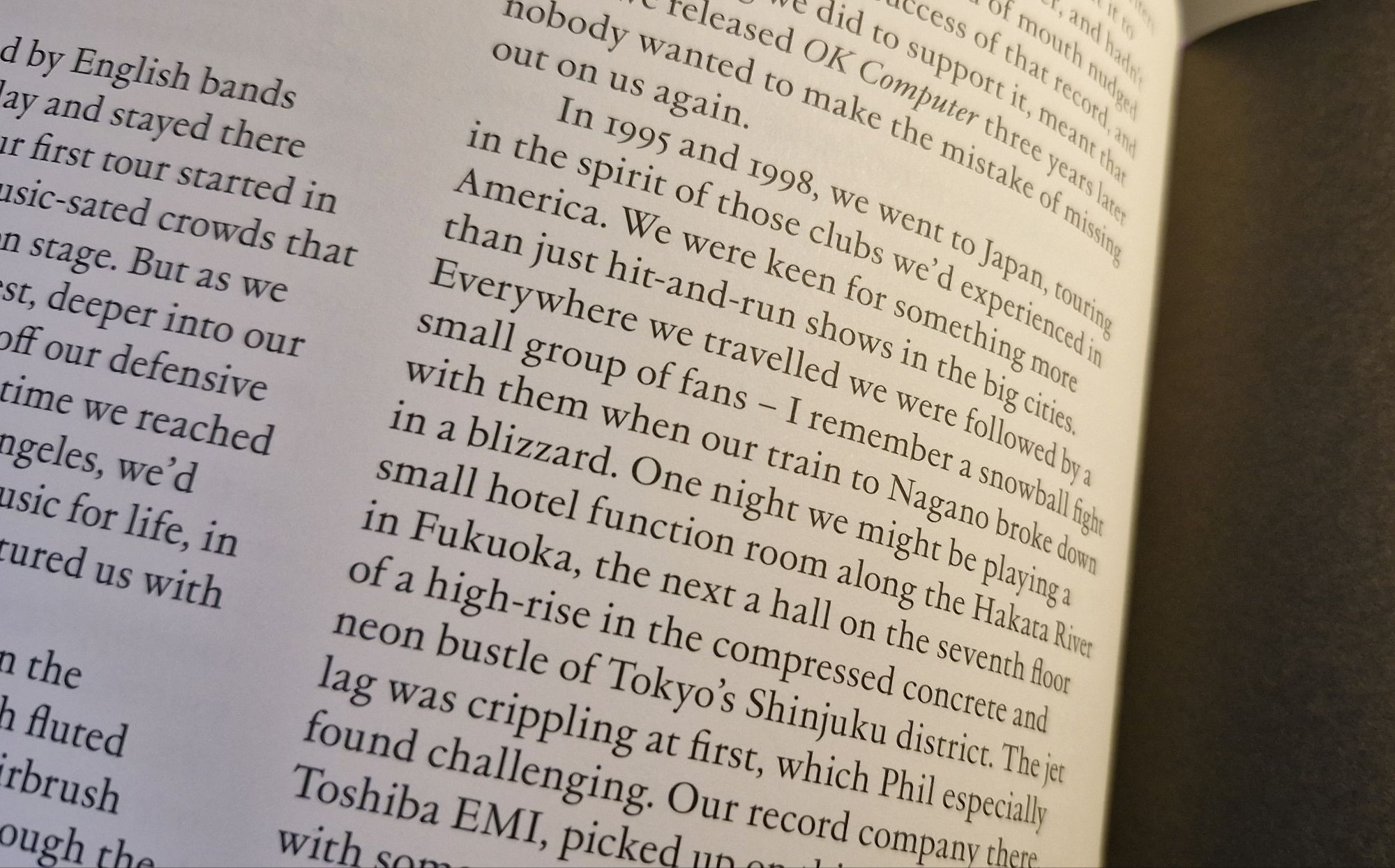
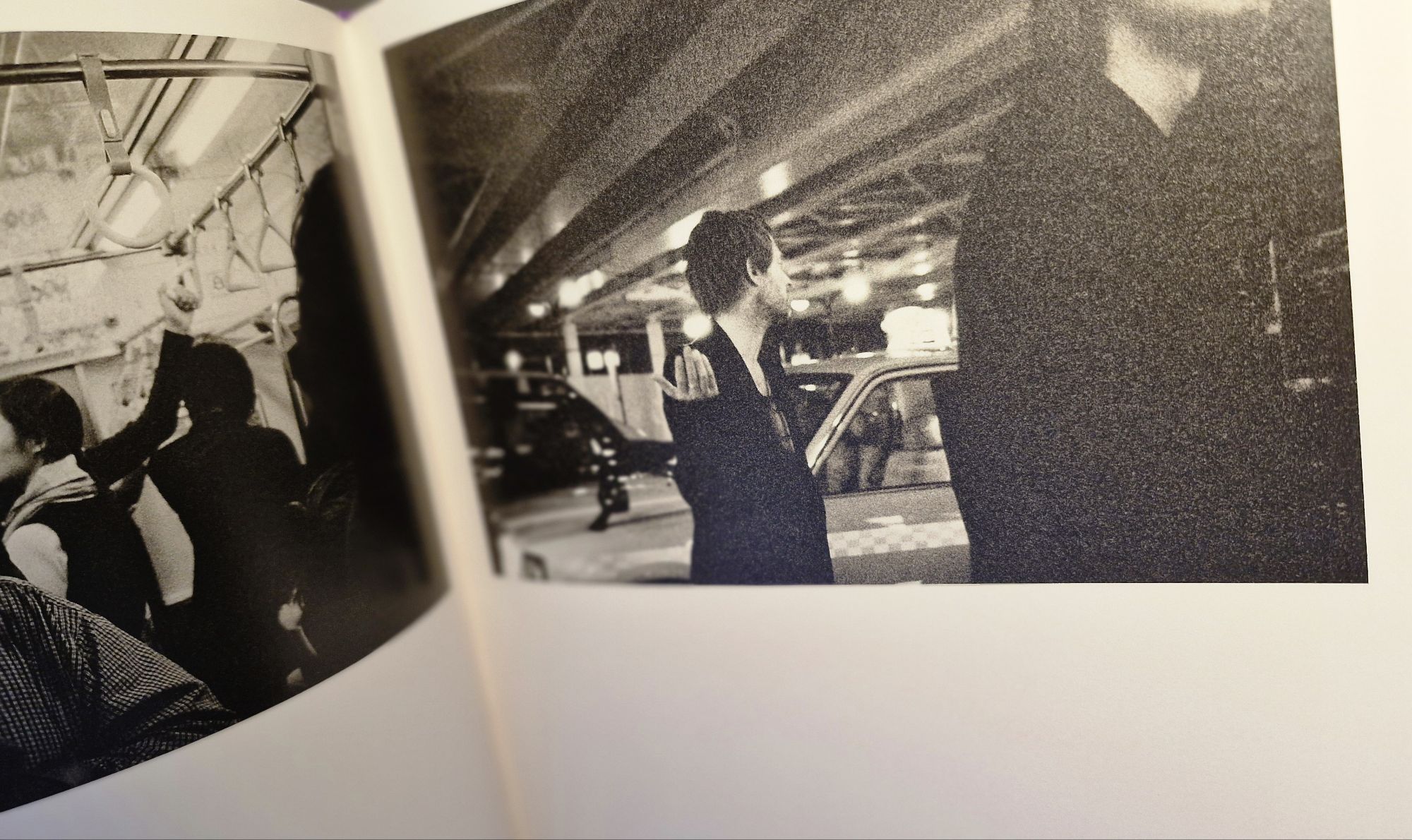
My only desire would have had the How to Disappear: A Portrait of Radiohead book in a slightly larger format, just to get into the depths of the photography more, in a coffee table sense, and maybe I would have liked a location and year on the photo itself, rather than in an index but I’ve argued this point with myself – as when you’re in Art Gallery, it’s so easy to get dragged into the description next to a painting, that often you forget to just look at it and make your own assumptions – which is central. It’s also worth noting that the smaller book size (which I’m comparing to my usual experience with photo books) doesn’t take away the essence, or the moment, of a true odyssey of creativity, rolling the 35mm film on inside a world we’d rarely get to be involved with.
Colin Greenwood’s How to Disappear: A Portrait of Radiohead is a marvel of welcomed slow discovery, of honest, artistic moments that span such a depth of Radiohead that it’s easy to underestimate how utterly excellent this insight is. The combination of photography and words, like music and lyrics, is a vital component to the depths of this compendium, as Colin captures a moment in time and prints them into a memory through the lens of his camera.

How to Disappear: A Photographic Portrait of Radiohead by Colin Greenwood is out now from John Murray: https://amzn.to/407P7By**
*All photos copyright of Colin Greenwood and John Murray, direct from the book
**Affiliate link but book views very much my own

![Unquiet Guests review – Edited by Dan Coxon [Dead Ink Books]](https://criticalpopcorn.com/wp-content/uploads/2025/10/ug-reddit-ad-e1761690427755.jpg?w=895)
![Martyrs 4K UHD review: Dir. Pascal Laugier [Masters Of Cinema]](https://criticalpopcorn.com/wp-content/uploads/2025/10/image-1-e1761586395456.png?w=895)


![Why I Love… Steve Martin’s Roxanne [1987]](https://criticalpopcorn.com/wp-content/uploads/2016/11/roxanne.jpg?w=460)



 Critical popcorn
Post your thoughts