
You’d be curiously insular if you hadn’t observed the huge shifts across the globe relating to the weather, with a vast increase in extreme climate swings, from huge storms to devastating fires to life-altering floods, often unexpectedly striking communities anywhere. And beyond meteorological conditions, there’s noticeable instability in every government on every continent in various guises. This isn’t to say these situations haven’t happened before but we’re also in a generation with a ridiculous imbalance of wealth and, remarkably, an absolute awareness of this with small or no action against it. Oddly, the rich continue to get richer and we watch them on their own devices, exclaiming our distaste, yet your money ends up with them and they’ll thank you, with a vacant smile.
Asif Kapadia’s 2073 takes political and environmental truths happening right now, and merges archive footage and a dramatization of a future, alongside commentary from social insiders, and academics, to create a sci-fi drama that’s intensely insists to be a futuristic cinematic warning from the dystopian future of 2073. While I feel we’ve been predicting such moments via creative ventures for much of the modern era, there’s something about the state of the world today, led by billionaires and totalitarian governments, that’s not just cause for concern, it’s a genuine fear for humanity and the freedoms we have at this point. And I don’t think that’s over dramatic.

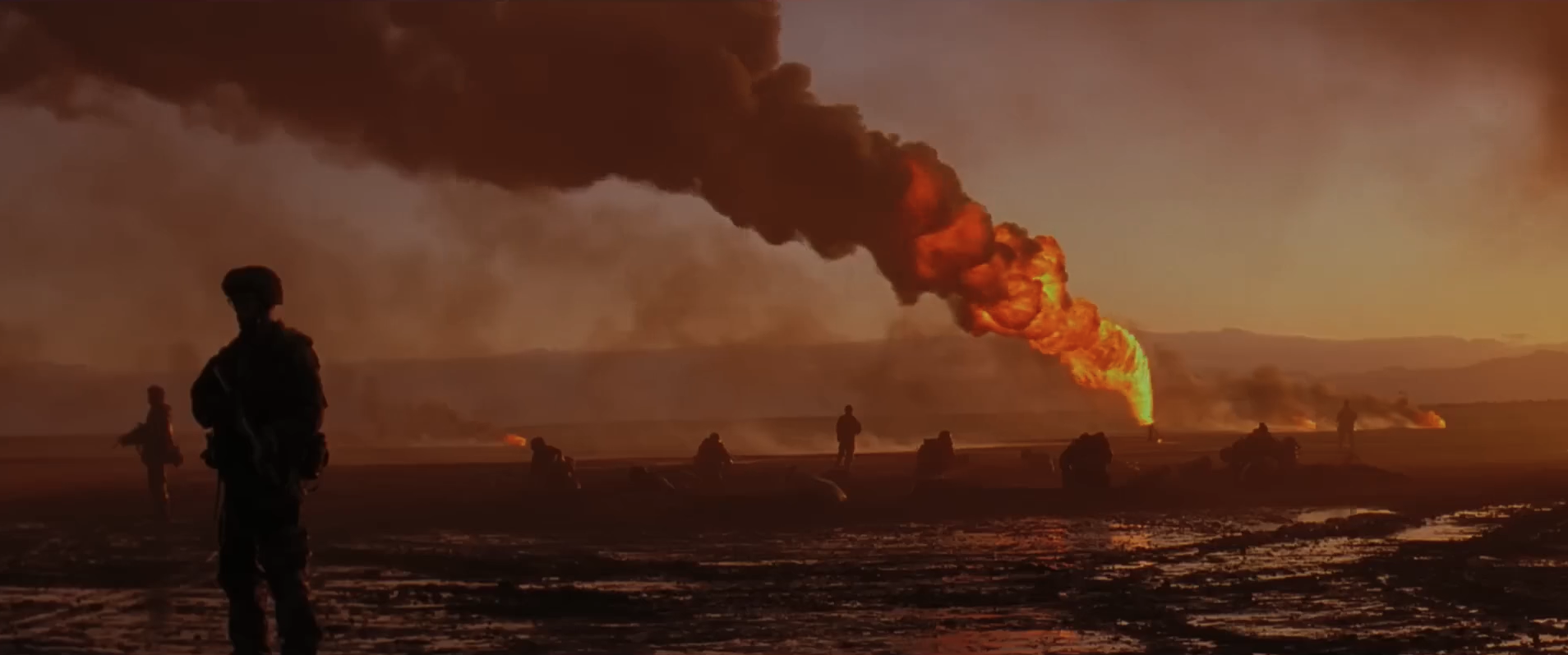
2073 is the result of events of 2036, when the world imploded on itself (via events we’ve already mentioned) and people only exist in the depths of an underground world, while on the surface there’s drones and military police surveilling anyone who appears for signs of suspicious behaviour. Almost like The Terminator, this is dystopia and stories of a once free world, now long vanished, are shared as both nostalgia and a warning back to the past, from the future.
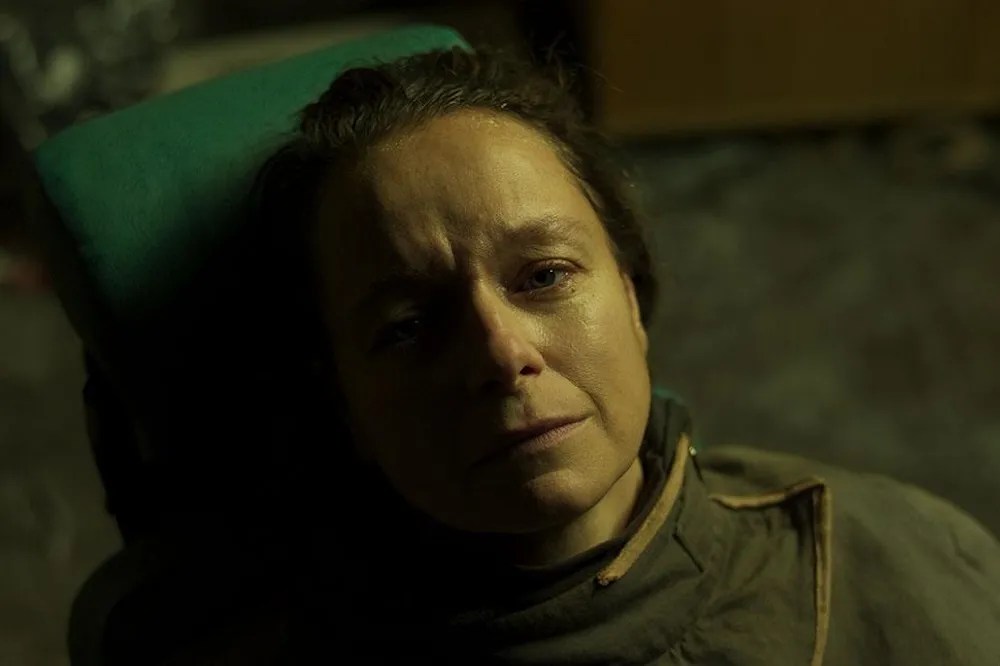
Foreshadowing is key, with the dramatized representation led by Samantha Morton’s character, who lives in the ruins of an desolate mall, spending her days enduring. We also witness other people in dilapidated scenarios – with real-life footage edited in. It’s interesting to see Morton in this role, as she’s a vivid part of Steven Spielberg’s Minority Report for me, the film based on Philip K. Dick’s innovative novella, but here’s she’s a reverse ‘precog’, now warning us about the past, rather than the future.
Beyond her scenes, 2073 is set around a non-fiction documentary-style, and I believe they did it this way to not only soften the intensity of the subject matter, but also to maybe entice people in who might not normally watch such things. Insight comes from the likes of George Monbiot and Maria Ressa, to name just a couple, and while I do wonder if a deeper focus on that would have been better, the depths we go into remain quite terrifying. While there’s not enough time to cover every injustice that exists, much of Kapadia’s focus is on the rise of billionaires and their power across the Globe because, let us remember, they’ve never been voted in by us, yet have heavy involvement in government decisions, so why aren’t we stopping this? As democracies? As individuals? It all feels too big, doesn’t it?

The film also takes us through the realities of democracies crashing, the perfect storm conditions of economic and social breakdowns, and why this is a fuel for the populist leaders. If you’re struggling in your day-to-day life and the government says it’s ‘them over there!’ who are instigating your fight, and you don’t hear anything else – and it’s in the posts you see online (regardless of whether they’re true) – most people believe what they see, and someone to blame means distraction, and this interference means while you’re blaming your neighbour, your government is probably doing something else that still won’t benefit you individually.
2073 feels uncomfortably real and nauseating. While it’s disturbing to have it broken down this way, it’s not a revelation but it is distressing. Right now, we’re allowing the Elons of this world to put their ideas into our existence, often reckless philosophies led by nothing but the need for power and selfish affirmation. Yet they’re influential because they hold your data, and anyone aware of a social media algorithm knows they’ll then be shown things they weren’t even looking for, and often side-tracked. And then there’s AI, and while I don’t think the robots will kill us all, I do think we underestimate the data AI can hold, and without regulation your social media could give any totalitarian government everything they need to know about you. Yes, everything.
Depending on your political leaning, you’d certainly argue whether this film is too left leaning, but I think that’s a little naïve. Look at your own life, are you benefiting from the world you live in, or does it care about you? I think it can be that simple. I don’t think the issues will ever be about people movement, it’s about control, and the control comes from being in power, and those in power is where all the money sits – at the very top – and how often have you been on top?
As a film 2073 is interesting, but it doesn’t flow perfectly. I didn’t mind the year switches, as it’s not that difficult to stay alert, but the dramatizing and the smaller snippets of facts from experts is a bit lost in the changeover from time-to-time, and there’s such a mass of depressing reality, that it’s also difficult to even want to take ‘everything’ in – and I don’t mind admitting that. This is a high concept approach, yet it also champions the individual, encouraging you to take notice and attempt to make a difference because one person can, and that could be me, or you. So keep holding people in power to account, and don’t stop doing that.
2073 is certainly worth watching, and while it might be a tough crunch of brutal reality and a volume of information to take in, it’s worth considering and examination.





![Unquiet Guests review – Edited by Dan Coxon [Dead Ink Books]](https://criticalpopcorn.com/wp-content/uploads/2025/10/ug-reddit-ad-e1761690427755.jpg?w=895)
![Martyrs 4K UHD review: Dir. Pascal Laugier [Masters Of Cinema]](https://criticalpopcorn.com/wp-content/uploads/2025/10/image-1-e1761586395456.png?w=895)



![Why I Love… Steve Martin’s Roxanne [1987]](https://criticalpopcorn.com/wp-content/uploads/2016/11/roxanne.jpg?w=460)


 Critical popcorn
Post your thoughts