Tarsem Singh‘s psychological thriller The Cell is a surreal blend of Fantastic Voyage, The Silence Of The Lambs and Inception, the type of film that only this director could make.
Jennifer Lopez plays Catherine Deane, a child psychologist using experimental technology that allows her to enter the mind of a catatonic patient. At the same time, the FBI is hunting a serial killer (Vincent D’Onofrio) who kidnaps women and drowns them in elaborate, remote chambers. When they apprehend him in an unresponsive, catatonic state, Special Agent Novak (Vince Vaughn) convinces Deane to enter the killer’s mind in a desperate, last ditch attempt to find his latest victim before she drowns.
Watching it today, it’s remarkable how much The Cell seems to have anticipated and influenced all manner of films that came subsequently, from the torture horror of something like Saw to the dream reality of Inception and the macabre imagery of the Hannibal TV series.

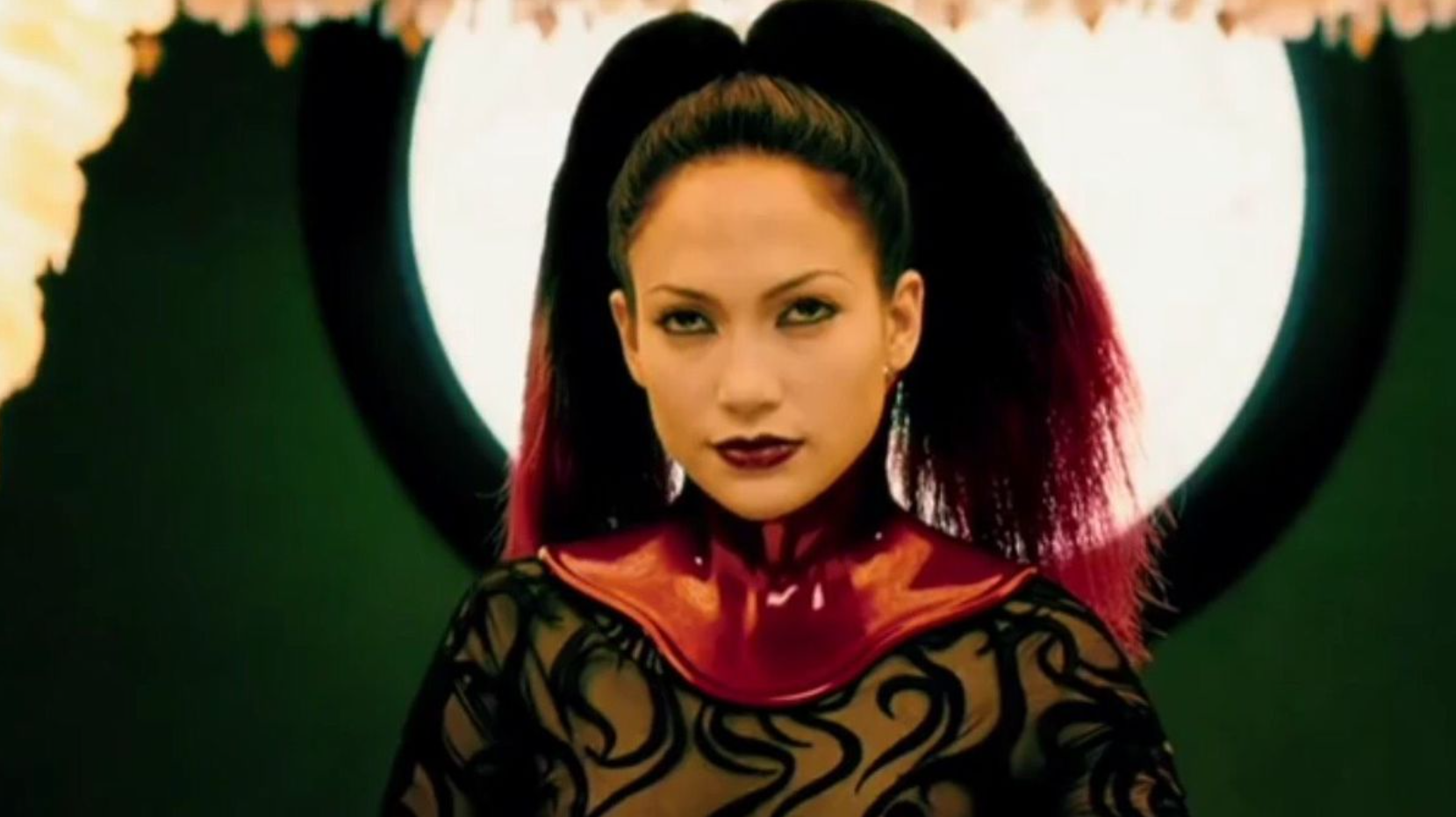
The premise is wildly ambitious, yet it works, because everyone involved commits to the central idea—Tarsem most of all. The dream sequences remain breathtaking, borrowing from numerous works of art to create a truly hellish, surreal landscape. Key to this is the striking costume design of Eiko Ishioka, who brought a similarly otherworldly aesthetic to Bram Stoker’s Dracula.
Beyond its visuals, The Cell boasts a cast of seasoned character actors, all of whom would go on to be, if not household names, at least faces you would immediately recognize: Marianne Jean-Baptiste, Dylan Baker, Dean Norris, Jake Weber, Pruitt Taylor Vince— and even Peter Sarsgaard in a non-speaking role.
As a longtime admirer of Tarsem’s work—particularly The Fall—I was thrilled to speak with him about his memories of The Cell. To coincide with Arrow’s Blu-ray/4KUHD release of this mind-bending psychological thriller, we sat down with Tarsem to discuss the film’s production, his creative process, and his various collaborators. He’s an incredibly engaging and candid interview subject, and his reflections on the film are as insightful as they are refreshingly honest – as you’ll see!
Tarsem, I’m a huge fan – The Fall is one of my all-time favourite films. I remember the first time I saw it, it blew me away.
*Mwah* Ask me whatever you want then, that’s my baby! They’ve just released it on 4K in the UK. They had a couple of IMAX screenings at the BFI – if you’re anytime there – usually if I’m in town I’ll go and see it if it’s on, and they’re going to do it a couple times more – so come up and say hi!
I will! So, today, we’re going to dive into The Cell. When I first watched, it screwed my head up, even now it’s certainly disturbing…
I don’t know why, but I always find that film so funny. I guess what happens is when you put in the dark stuff, they are such calculated things on my part, like this will do this, this will do this, this will happen, that it makes you forget how the magic of the movies works. I’m just looking at these plastic chains holding this guy and it doesn’t make any sound, and then you dub it and create the sounds, and suddenly feels real to everyone except for the guy who’s putting it together.
I know you said earlier that The Fall is your baby, so if that’s the case, what does that make The Cell?
Well, basically, The Fall was always supposed to be my first film, but The Cell happened so quickly, that I just thought “Am I looking a gift horse in the mouth?” let’s just do it. And that’s what happened. Out of all the things I was working on, from music videos to commercials, I designed The Cell to be a blank canvas where I could do whatever I wanted. Which is what The Fall was designed as. It’s like you know, pre-any cinema language if you tell somebody, they can imagine whatever you want, they don’t know what a cowboy film is, all the misunderstandings allowed you to interpret as whatever you wanted.
This particular one I worked on just creating a blank slate, you go inside someones head, and you can do whatever you want. I worked with the writer [Mark Protosevich] and he was incredible. I just said “Take out all the things you’ve written that happen inside the head, and I will sit down and make a list and we’ll go through it together.” So we just cut it down to a 20/30-page script. And I said that’s okay, so we say “first time she goes in, XYZ happens, she goes in, sees the victim, she gets freaked out, she comes out, second time she goes in he captures her, third time, just like that, she goes in she realises he’s got a split personality, etc”. So I made a list of a few things, and that gave me carte blanche to do what I wanted, so I just said, you know what, let’s do it!
I’ve always loved polarizing films – I always find that my favourite films are at around 50% on the Tomatometer and that’s a really proud badge to bear, but also there’s also a lot of shit that’s at 50%. So the problem is that the way that Tomatometer or whatever works is that if you get just 6-7 out of 10 it will literally be the best film ever made. Like The Shawshank Redemption if you go by Tomatometers – it’s not offensive, it’s not the greatest film ever made. It’s a good film! But that’s how it goes, Whereas on the other hand if you find things that are polarizing, where people either say “brilliant!” or “shit!” that’s what I like. But they also end up at 50%! So something like Jonathan Glazer’s Birth, I love that film and it’s right at 50%, and I just think “Why?” I think a lot of people just didn’t buy that pill, they don’t like the language of that film.
The Cell turned out to be a lot more polarizing than I thought, and I just thought “It said ‘serial killer’, how are you so freaked out?” Oh no, we thought she was a psychiatrist, who talks to children. Well, wrong film I guess!
They said the fantasy part wasn’t believable, this was the feedback, and I said “We’ve got Jennifer Lopez playing a psychiatrist! I have all the license I need to make a fantasy! Let me do what I want!” So that was it, so I wasn’t ready for how polarizing it was, but then a bunch of really phenomenal critics like [Roger] Ebert completely championed it, and then I got to say, that’s what I like and that’s what I feel like making.
It elicits a response, a visceral response, whether positive or negative, but it’s there and getting a reaction out of the audience.
Yes exactly, nobody hires you again if you make a “good” film. That doesn’t work. I wanted to make films for a long time, and you just need a particular group of people who like what you do. Everyone’s got a cousin who can make a film that’s “good” and another cousin with a drone who can give you some free wide shots. If you’ve got a phone you can direct! For me it’s just, let’s do what comes naturally to me and see if its got a commercial bone in it, and it kind of did! Not in the case of The Fall, but in this case, it did.
I wonder if its because this one is a mix of fantasy (the dream world) and realism (the grounded FBI investigation) . But then I suppose The Fall has that as well?
It does, but this one has a genre that’s a lot more commercial, more marketable and basically grabbable for people. You say this is what it is, so most people either won’t see it or they will, because they’re into this genre, so it’s kind of a Trojan horse in that particular way. I made it for different reasons to the studios – they like certain things that are ‘hot’, like Marvel for the last decade.
I like to make the analogy: this was the 90s so anything with a serial killer would get greenlit – if it was the 70s, it would probably be a disaster film, and the studio would say ‘there’s a building burning’, but I’d be looking at the building on the 60th floor, where there’s a guy having a dream. I’m making it because there’s a guy having a dream, the studio greenlight it because its a burning building. But people will go to see it because its a disaster film and you get that audience. The Fall didn’t have that, but I had to get that off my chest.
I watched Michael Mann’s Manhunter recently, and there’s a moment where William Petersen says: “My heart bleeds for him, as a child. Someone took a kid and manufactured a monster. At the same time, as an adult, he’s irredeemable.” And I felt like that’s The Cell in a nutshell
That was one thing I found really funny was that it was a lot more Trojan without saying it. And that’s why I find it funny they let me make it. I looked at it as “At what point do you shoot Hitler to save that many people?” When he’s that guy, when he’s Hitler, yes. When you see him as a two year old child? Because the environment that made him has a lot to do with it! So, when it’s a serial killer people see these things, society has decided, this is a bad gene, we need to remove it from the system. And you go with that. In this particular film, this was the last act, and they wanted a lot of fighting, and I don’t know how to make fighting unique. So in the third act I just thought “this is so Trojan, it’s literal, she can’t kill him, so she drowns his inner child” – that is fucking hilarious to me!
I brought her back, not as the Virgin Mary because I was going with that and the studio said “You don’t want to do that” so I went back to this original Brazilian water goddess that looks very similar, and she drowned his inner child and he dies. I just thought, as a final act, that’s hilarious, but not to a lot of people!
They’re quite traumatised by what the killer has done before, but that was a very deliberate act. I upped the ante for people who came to see a J-Lo film – they didn’t want the kind of lush costuming and fantastical operatic stuff, they wanted fighting. I originally wanted fighting too, but when I saw The Matrix I said, Oh no, they’ve done it now. We should move towards opera, but they wouldn’t go there. They said ‘Americans don’t like opera’, they will give you what they call a “bad laugh,” they will laugh at you, not with you. Okay, I will just show some really nasty stuff (that wasn’t there initially) in what he does to his victims, so in the third act you are terrified of him, so when he comes out in a sari and a tutu , you think “I’m not going to laugh at this fucker.” So I just went all out – he suspends himself with hooks and chains, drowns the girls, jacks off, etc, I just kept upping the ante so when later on he turns up dressed as “beyond Vegas” you wouldn’t laugh at him.
Then, of course, [it] became ‘You crossed the line’ and I said, “You can’t take it out because people will do what you said, and laugh at him!” And then they tried one screening when they took it out, and people just laughed at him! So they put it back in, and said well you can have it back. But then the fight was “can the hand not go towards his crotch” so you trim that down a little bit, and then we got it out and then we got a call from Germany saying “we saw the original cut, don’t you have any more of that crazy shit?”

It all works so well, it seems like Vincent D’Onofrio embraced that side of it too.
Oh that guy, he’s a God for me. There’s nothing he’s scared of. You have no idea how ridiculous you can be in a situation like that. When you get a commitment from a guy like that, it’s never half-assed.
There’s a moment near the end when he does a weird run towards Lopez and his younger self – it’s so strange.
*laughs* It’s a hop! That was so amazing. I would try and explain to him; it’s hard, (with CGI it’s probably even harder), but I had done this operatically and he embraced it. I said I’ll get a guy from Cirque De Soleil who’s going to turn around and you’re wearing what looks like the undergarments of a gang, and you’re going to grab this kid, and he just did that hop *laughs* you don’t direct that stuff, you just tell him the situation and he made it!
I saw an interview with D’Onofrio; he talked about the collaborative process and said he holed himself up in a hotel room, immersing himself in disturbing images and came to you with ideas; was the whole process like that?
The dark stuff I already had. Something that was amazing was that he worked incredibly well with someone who, you can’t even say she thought outside the box, she had no idea what a box is, and that was Eiko Ishioka. She was from a different planet. So when she was making the stuff, his suggestions coming into it were really good. Nobody else had suggestions, but I remember him specifically saying “This guys teeth should be like corn.” And I didn’t get it at all, I just said, “Does this make sense to you?” When you trust someone like that, like Eiko, she would say, “The coat should be like the skin of this beetle, but the hair should be like this puma.” And I would say “Does this make sense to you? Then do it” and then I saw it on set, and I would just be like, I can’t forget how his face transformed, and it was the teeth! So he brought this stuff to the film, and I embraced it.
I noted that, in the same interview, he called you a “visual thief”
*laughs* Oh wow! I’ll take that any day! I always say, the expression is “originality is the art of concealing your source” so for me, I was just thinking, what should this guy be, and it was only later when we had planned everything that someone had a better idea, and I wish I’d gone with it, where someone had a better idea, and said “make him like white trash Vegas” and I went yes, but I’d already put so much into the art, that I went oh that’s a bummer, but lets go with that one!
I think the funny thing that nobody writes about, if you look at one of my favourite films, No Country For Old Men, If you look at Javier Bardem, I can tell you, I feel like he did what D’Onofrio did in that hotel, but with pictures of D’Onofrio! You see he’s kind of effeminate, he dresses like that, he has his hair like that, he doesn’t make eye contact, he does exactly what D’Onofrio did, but you know, mine is a pulpy film, and that is a great arthouse film so it doesn’t look like it would come from that, but if I ever meet him I’ll say ‘I hope you saw this film!’
But yeah, I think why not? Look at anybody and say, did you put enough of a mixture in the pot to make it look like a different stamp. Picasso is taking from African art, and just, he embraces that, and it’s just that in the west nobody was doing that so when he puts it together it has a completely unique different feel. So I just think try it, and if you’re making films for a decade or so you will have a different voice, and in the end I think I did.

Definitely, it’s similar to what Tarantino does isn’t it? If you draw inspiration from enough different places, you will create something new.
Yes, I think in this particular one… So… everyone had one thing where they said “Please don’t do that” where it crossed a personal line. One would be like, please don’t do that to the kid, branding him with the iron, etc, the cameraman’s was the ending scene when the those things appear that are so kitsch – he said “He looks like a Moroccan serial killer” and I loved that! So I wouldn’t back off on that one. The writers’ was the horse, he said: “Do not cut up the horse,” and I went to have a chat with him on his farm and I realised that he has horses! And I went of course, that’s your trigger, I can’t take that out…
…I think it works…
It turned out to be disturbing enough for people! Every time I watch it i just laugh – I can’t believe I got away with it. She can’t kill him so she drowns his inner child! I just laugh at it.
This new release from Arrow is coming with three different versions, a theatrical cut, a director’s cut and a new cut… tell us some more about the process
Well that’s a strange one, they had asked me, I don’t know if I would call it a directors cut, it was the original cut that I’d done which Germany took. Maybe you guys have the same one. When they asked me if I wanted a directors cut, I told the studio that if you want one right now, I can tell you what I would do. The thing that was shocking to me was when Howard Shore did the score, it was nothing like what I wanted, and I was shocked at how brilliantly he had embraced what I’d said but not directly. I had a whole bunch of temp tracks, and he literally saw it, the rough cut was taking source music from all over the place, it was so vignette-y and Howard put this instrumentation in and made it a cohesive place. And what I would like to do is take out all the dialogue in the movie and just in a couple of key places put a place card up like a silent film, and just leave it with the score. They said “No no no, too arthouse” but I said 10 grand and I’ll do it! So if anyone ever asks me do you want a directors cut, that’s what I would do. But what you have right now is the cut that was originally presented to the studio.
There’s also an unseen version with alternate grading that was supervised by Paul Laufer, the director of photography?
That one might have been, because I’ve seen the print of it, and it’s really quite sad what the print looks like that’s going around, so I’m really glad that Arrow worked with the cameraman and he did that particular stuff with it. I would like to see it myself because after these interviews, I’m dying to take a look at it!
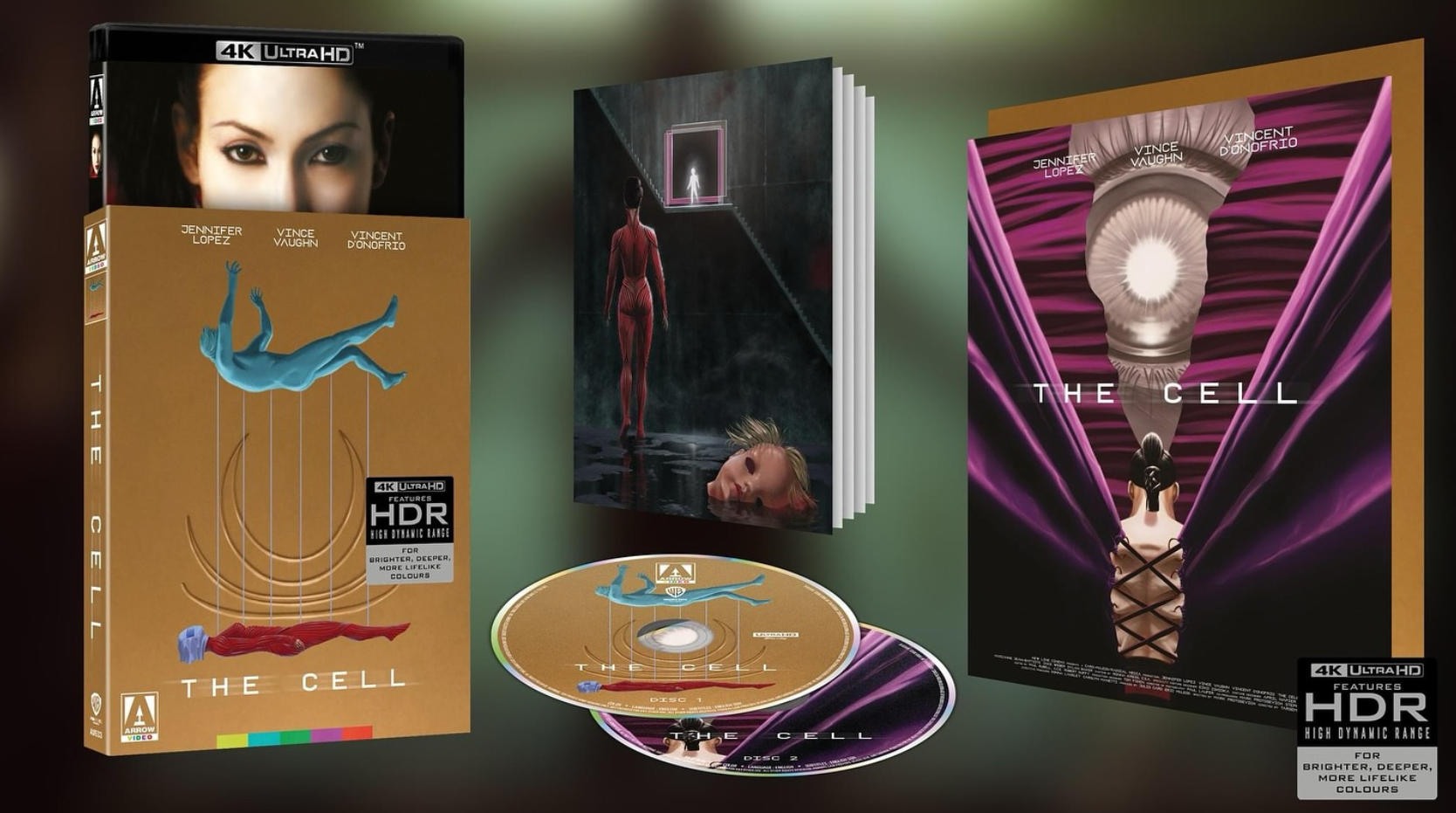
The Cell is out now on Limited Edition 4K UHD and Blu-ray from Arrow Video: arrowfilms.com/4k/the-cell-limited-edition-4kUHD


![Unquiet Guests review – Edited by Dan Coxon [Dead Ink Books]](https://criticalpopcorn.com/wp-content/uploads/2025/10/ug-reddit-ad-e1761690427755.jpg?w=895)
![Martyrs 4K UHD review: Dir. Pascal Laugier [Masters Of Cinema]](https://criticalpopcorn.com/wp-content/uploads/2025/10/image-1-e1761586395456.png?w=895)
![Why I Love… Steve Martin’s Roxanne [1987]](https://criticalpopcorn.com/wp-content/uploads/2016/11/roxanne.jpg?w=460)


 Critical popcorn
Post your thoughts