The Lion in Winter is a fascinating film that feels somewhat unusual today, epic in tone but essentially a character study. Following hot on the heels of period drama A Man for All Seasons (released two years earlier), this is far more intimate, but somehow more melodramatic, perhaps due to its origins on Broadway. At its core it’s a simple story of a dysfunctional family at Christmas. Except this particular family happens to be a medieval royal dynasty.
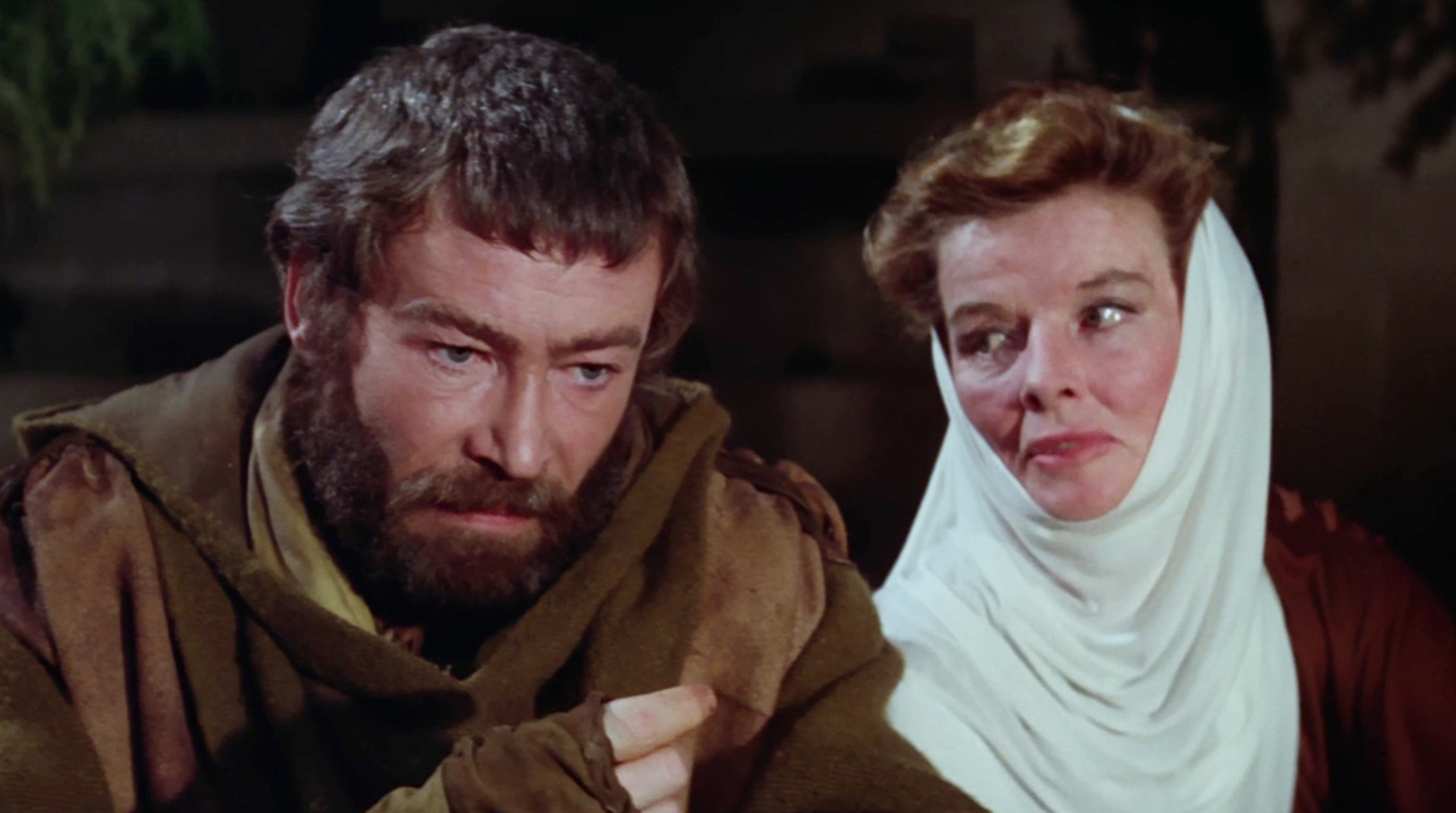
Set in 1183, the film follows King Henry II (Peter O’Toole) as he celebrates Christmas in his French castle at Chinon. Having recently turned 50, Henry is acutely aware of his mortality and, in the wake of his eldest sons death, is determined to name a successor. He assembles his three remaining sons—hot-headed Richard (Anthony Hopkins), the cunning Geoffrey (John Castle), and his youngest and preferred heir, the guileless John (Nigel Terry). An additional thorn in Henry’s side is the presence of his estranged wife, Eleanor of Aquitaine (Katharine Hepburn), whom he has summoned for the holiday. Eleanor, however, has her own agenda: she is determined to see Richard take the throne.
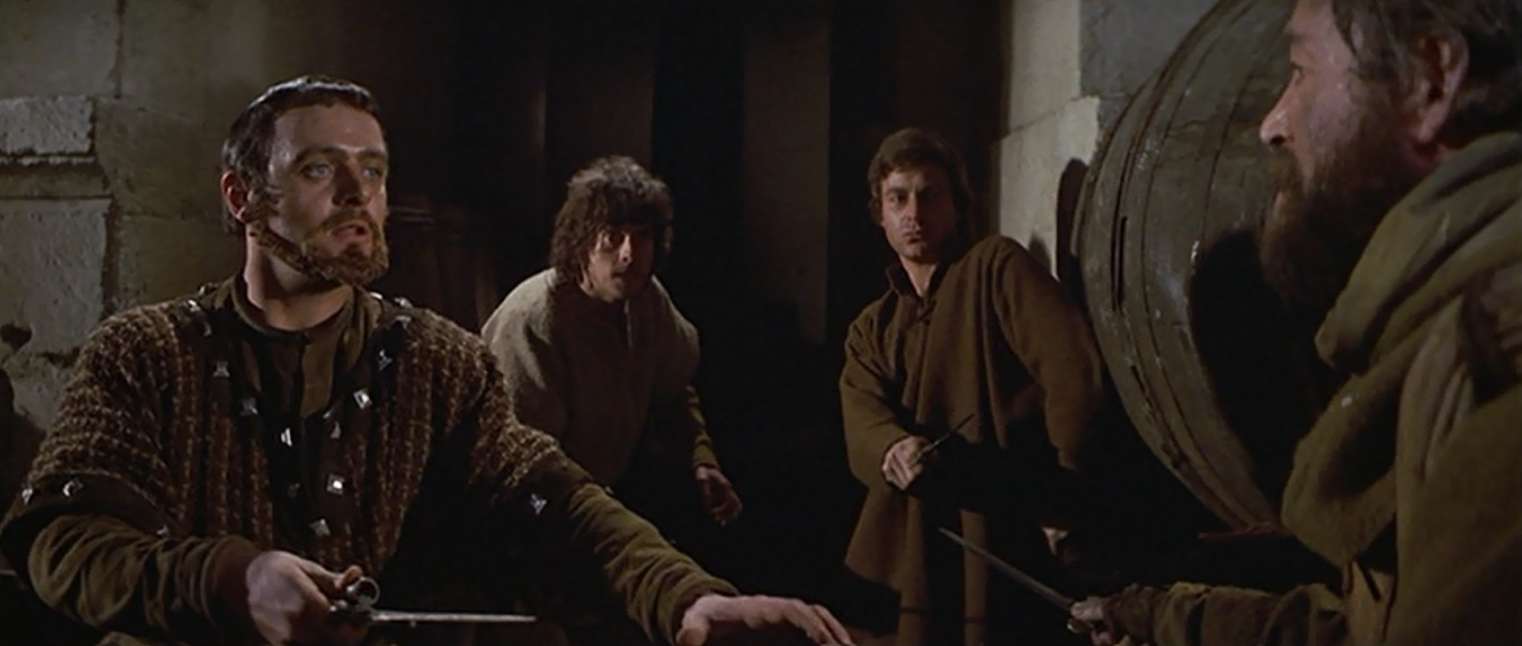
Screenwriter James Goldman, adapting his own play, crafts rich and layered dialogue that is often unexpectedly funny. One exchange that stood out:
“He’s got a knife!”
“Of course he has a knife! We all have knives! It’s 1183, and we’re all barbarians!”
The language is lyrical and era-appropriate without ever sounding archaic, and in the hands of Hepburn and O’Toole, it absolutely soars. Similarly, John Barry’s score is evocative and grand, but also unobtrusive, perfectly complementing the film’s historical setting.

The film is very much a stage adaptation, with director Anthony Harvey largely staying close to the play’s intimate setting. The action is almost entirely confined to the castle’s interiors, and while this sometimes makes for a somewhat stagey feel, Douglas Slocombe’s cinematography ensures that the film never feels visually dull. The rare outdoor scenes—such as the battle on the beach and the beautiful sweeping shot of the view from the battlements, are incredibly shot, and look immaculate in this 4K restoration, suggesting a sense of scale that is missing from the domestic scenes in the castle. Most impressive today, is Eleanor’s breathtaking arrival at the castle by boat. It serves as a perfect introduction to Hepburn’s regal and commanding character.
Given that grand entrance, it’s fitting that Hepburn owns the film as the imperious Eleanor of Aquitaine. She is equally impressive in both her outward facing, acidic public persona and the more intimate, honest scenes between her and O’Toole. These scenes are the highlight of the film, as they shift between verbal sparring and moments of real candour and affection. Of the two, Hepburn gives the more layered, compelling performance, skillfully revealing the vulnerability and insecurity beneath her formidable exterior. She deservedly won an Oscar for her portrayal, and it remains one of her finest performances.
O’Toole, too, is excellent, though slightly too young to be playing the aging king, despite his admirable efforts to appear older. He is raging against his impending mortality, and O’Toole captures this uncertainty beautifully. There’s something wonderful about seeing actors with the capability for broad performances really reining it in, and here O’Toole manages to have it both ways. He masterfully deploys his theatricality as a mask for his character, with his jocular good humour serving as a cover for his true intentions. Its only in private that his genuine emotions are shown, depicted in subtle gestures and reactions that are infinitely more affecting than his theatrical posturing.
It’s strange seeing an Anthony Hopkins who isn’t yet really Anthony Hopkins. He’s a formidable presence in the film, embodying the character’s warlike brutality, but this was his first big film, and it shows. There’s none of the sparkle or charisma that make his later performances so memorable. He seems tentative at times, and his Richard, while effective, feels somewhat unformed. Still, there are flashes of brilliance, such as his venomous insult to John: “You walking pustule.”
Similarly, Timothy Dalton (in his first screen role) is a shadow of the roles he would go on to play. The difference here is that Dalton’s softly spoken, somewhat louche performance style suits the character of Philip II of France. He’s meant to appear unassuming and ineffectual, but with a calculating mind, and Dalton plays this perfectly. In fact the scenes where he and O’ Toole negotiate terms, and snipe at each others political manoeuvring are some of the most enjoyable of the film – they have a fun dynamic, and both actors clearly relish the back-and-forth between their characters. You get the distinct impression that Henry would have been much happier with a son like him.
Of the three sons, John Castle as Geoffrey is the most impressive. He is conniving and ruthless, and it’s easy to understand why his parents don’t like him, but there is a nuance and an underplayed sadness there that you don’t really get from the others. He gives a very modern, subtle performance that makes him more than just a one-dimensional schemer. Nigel Terry’s John, however, is less successful. He plays the future king as little more than a sniveling, ambitious brat, and the film never convincingly explains why Henry favours him over his other sons. Yes, Richard is his mother’s creature and Geoffrey, well nobody seems to like Geoffrey, but John never does anything to warrant the faith Henry has in him, and it’s to the films detriment. The moment when Henry realizes that all his sons have betrayed him—including his beloved John—should be devastating, and is performed to perfection by O’Toole (the little flinch he gives when John is revealed is painful to see.) Yet it seems so apparent to everyone else that John is just as venal and ambitious as the others, that the reveal lacks the necessary emotional weight.
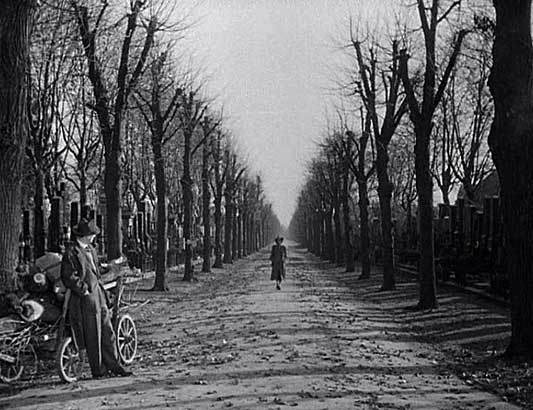
The film’s ending also feels abrupt and somewhat tonally off. Eleanor has spent much of her life effectively under house arrest, yet she and Henry share a strangely lighthearted farewell. While the push and pull of their marriage is vividly depicted throughout the film, this final moment feels oddly detached from the gravity of their situation. The two of them sharing a laugh as she is borne back to her prison feels a strange way to end a film that largely gets the balance right between the dramatic and more light-hearted moments
I wouldn’t say that The Lion In Winter has aged flawlessly, nor will I resort to clichés about how it still packs a punch. Some aspects feel a little theatrical, and the staging is somewhat old-fashioned. The plot though, is oddly reminiscent of Succession, especially the negotiating between Henry and Philip / Henry and Eleanor, and the political manoeuvres of Henry’s sons – the big confrontation with his devious sons has more than a touch of Logan Roy’s “you are not serious people.”
Its strengths lie in its witty dialogue, as acerbic as anything, and in the powerhouse performances of its two leads, who breathe fire into every exchange. Hepburn and O’Toole are simply magnificent, clearly relishing every line of Goldman’s razor-sharp script. It never quite reaches the heights of A Man for All Seasons, but it remains a gripping character piece, and a film worth seeing—if only for the performances.
Special Features
This release from StudioCanal comes with some in-depth extras, including newly filmed interviews with Anthony Hopkins (in which he is refreshingly candid about his inexperience at the time), and camera assistant Robin Vidgeon, as well as older interviews with John Castle and John Bloom and an audio commentary from Anthony Harvey.


![Unquiet Guests review – Edited by Dan Coxon [Dead Ink Books]](https://criticalpopcorn.com/wp-content/uploads/2025/10/ug-reddit-ad-e1761690427755.jpg?w=895)
![Martyrs 4K UHD review: Dir. Pascal Laugier [Masters Of Cinema]](https://criticalpopcorn.com/wp-content/uploads/2025/10/image-1-e1761586395456.png?w=895)
![Why I Love… Steve Martin’s Roxanne [1987]](https://criticalpopcorn.com/wp-content/uploads/2016/11/roxanne.jpg?w=460)


 Critical popcorn
Post your thoughts