
Back in the 90s, despite not being a Manchester United supporter, it was impossible not to revere their Danish goalkeeper – he was the last bastion behind an imposing defence and not any old keeper, he was a secure, commanding key figure in Alex Ferguson’s iconic, powerful footballing side in an era when the Red Devils dominated English football; in a way that merits the plaudits today.
Peter Schmeichel, with a surname we should pronounce slightly differently, but don’t worry about that now as the Great Dane will take you through it, can justly be described as one of the best goalkeepers of all-time, up there with the likes of Yashin, Banks, Zoff, Kahn, Casillas, and Buffon. His career covered over two decades and has quite the record with not only being the most decorated keeper in the history of the modern Premier League, but he also won the European Championship with his home country, Denmark, against expectation, plus he captained Man Utd in his final game when they completed a treble-winning season, finishing up with that historic last minute victory over Bayern Munich in 1999.
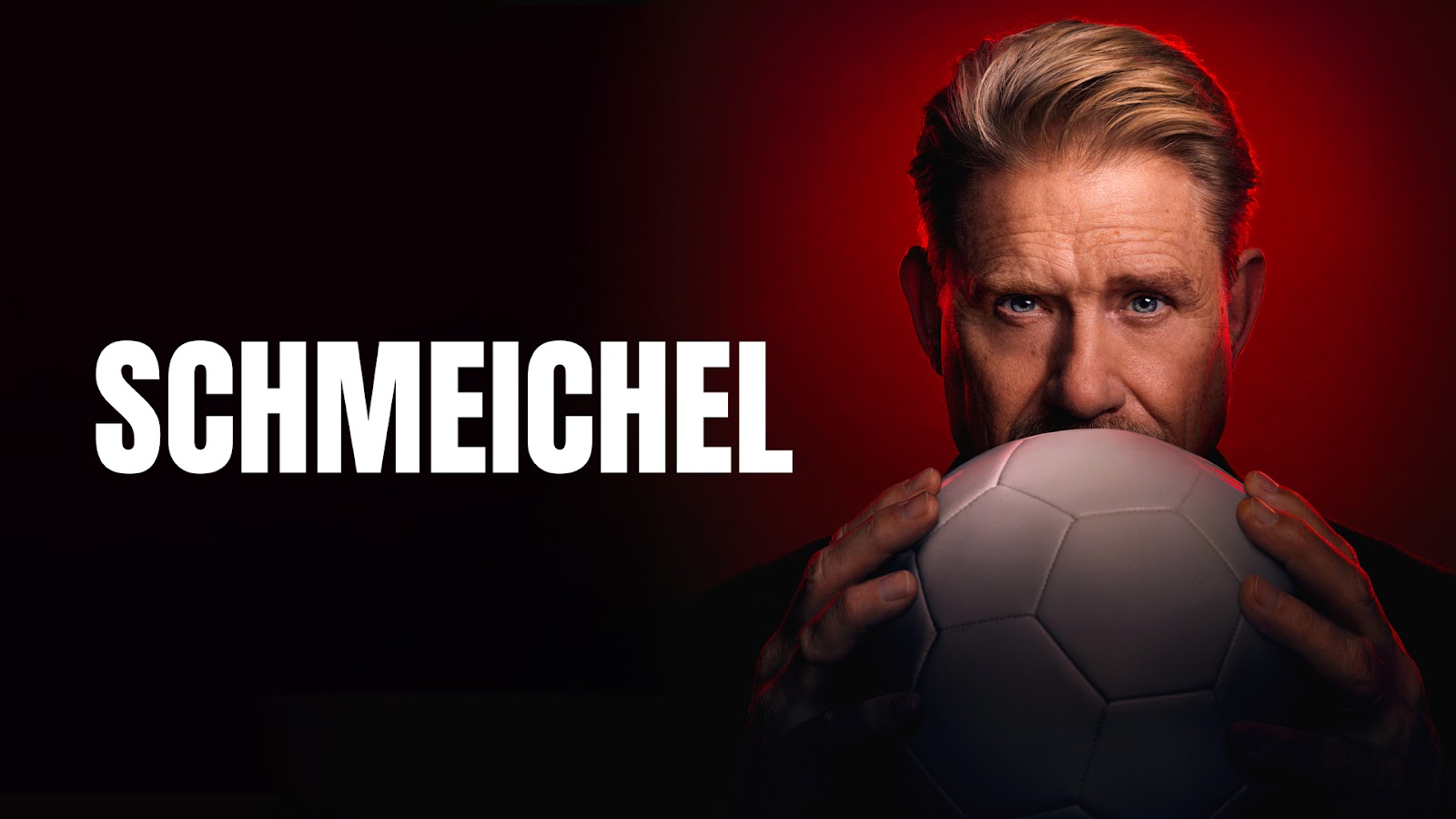
The documentary, Schmeichel, certainly takes us through those incredible highs but also guides us inside his life, with every moment tied to his domestic life, plus range of success, failure and ultimately – a keen sense of character always working towards redemption. Directed by Owen Davies, the film is an open book that begins with Peter playing the guitar in a soft-focus seaside home, but his instrumental melody accompanies the opening segment in a way that doesn’t feel contrived, if anything it’s impressive and just this early, calm introduction will go a long way into discovering his own circle of life.
It’s clear that distinct family relationships shaped Peter into the man he became. We learn that he was driven as a kid, and while much of that ambition he believes came from himself, it was instigated by his Polish Father, a man with a complicated history who lost his own parents at a very young age – due to the Second World War in Nazi concentration camps, and also struggled with alcoholism. And that wasn’t all, as he also became a double agent spy so he could leave Poland, after meeting Peter’s Mother to be, and deciding the only way to live was to risk it all – all fuelled by his own love story after watching British New Wave film A Taste of Honey.

He also deeply respected the strength and calmness of his Mother, who was a Nurse, and while he was expected to enter a world of music, and learned piano from a young age – as his Father was also a jazz musician – Peter had a concentrated love for football, and all his wanted to do was become a ‘hero of the game’, and after a sports teacher encouraged him to try being a goalkeeper; he was instantly hooked. From a young boy, he worked his way up the footballing ladder and to Brøndby at 24 with a positive time as their goalkeeper, and even scored a couple of goals along the way. But Peter still wanted success on a bigger scale and had loved Man Utd from an early age, and after Alex Ferguson went to see him train and play, he was so impressed that in 1991 he joined the Manchester reds and – of course – never looked back.
What Schmeichel highlights is his desire to work hard with the admitted awareness that if you want to be the best, then talent is never enough, you need to give everything of yourself. While, in these later years, he recognises the wider beauty of life and the huge importance of family and connection, more than he ever had before, he doesn’t stray from saying he’d do it all again and, most intriguingly, his family agrees. His son Kasper, also a successful keeper in the English and Scottish leagues, was clearly inspired by Peter and while he and his sister could have ended up wishing their Dad was home more regularly at that time, because professional football is a massive commitment in a short space of time, they’re content for what he achieved, and they’ve all grown and changed since the years have gone by.

Peter is always open about everything that happened in his life, from those enormously fruitful Man Utd days, to the regret of some other situations – such as leaving the team when he didn’t have to (triggered by a huge argument with Ferguson), to playing again the team he loved for both Man City and Aston Villa. It felt like although he did want to be back in the Premier League, he underestimated the pain he’d feel for no longer playing for the side he wanted to.
While there are a number of stories to enjoy, it does lack a little in a fiery edge from other fellow ex-players like Alan Shearer or Roy Keane, despite additional interviews with Alex Ferguson, Gary Neville and Eric Cantona to name a few, because it would have good to hear more about the darker, gritter inside days at Man Utd, as they were an intense team, and that equilibrium would have brought more scope, as part of this biography.
However, if you’re a Schmeichel fan, or Danish of course, there’s certainly enough here to enjoy with a nice easy 90 minutes (obviously) run time. I found it grounded and thoughtful, making it a sincere real-life insight into a modern football legend, through his psychological highs and lows, right up to now, and so this documentary should entice any fellow football fan into his story.



![Unquiet Guests review – Edited by Dan Coxon [Dead Ink Books]](https://criticalpopcorn.com/wp-content/uploads/2025/10/ug-reddit-ad-e1761690427755.jpg?w=895)

![Martyrs 4K UHD review: Dir. Pascal Laugier [Masters Of Cinema]](https://criticalpopcorn.com/wp-content/uploads/2025/10/image-1-e1761586395456.png?w=895)



![Why I Love… Steve Martin’s Roxanne [1987]](https://criticalpopcorn.com/wp-content/uploads/2016/11/roxanne.jpg?w=460)



 Critical popcorn
Post your thoughts