
It’s always exciting to see lost episodes of Doctor Who brought to life with animation and since the release of The Power of the Daleks in 2016, Whovians have been treated to animated releases almost every year, and sometimes more than once a year at that. While the fan response is inevitably somewhat mixed to these animated releases (mostly due to the fact that these productions simply can’t immaculately recreate the original 1960s serials they’re adapting), it’s still nevertheless exciting to add ‘new’ stories to the shelf and experience adventures not seen in nearly 60 years. For 2025, BBC Studios are releasing the four-part adventure The Savages, which saw its premiere at the BFI Southbank on 28th February.
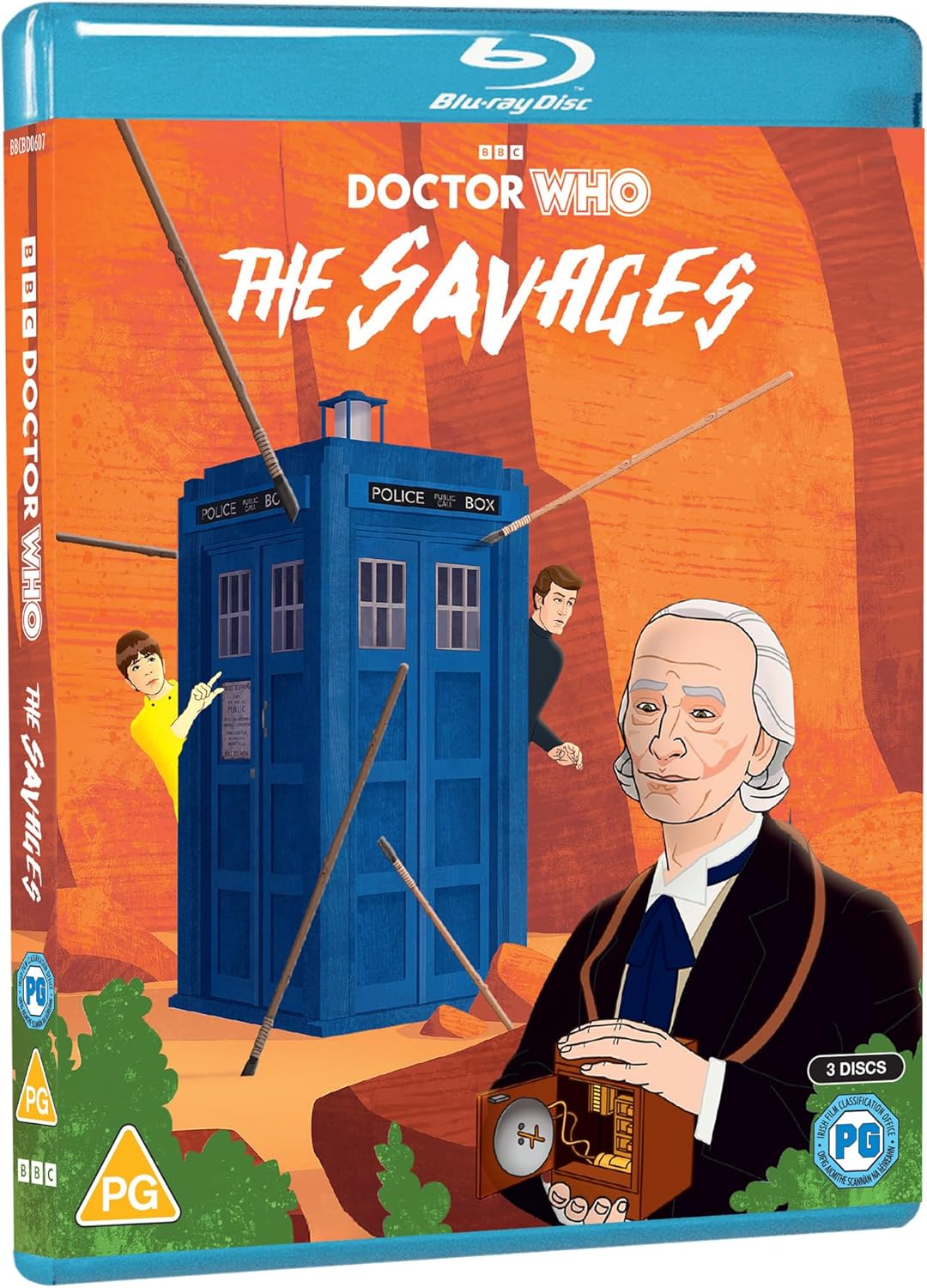
The story sees the First Doctor and his companions Steven and Dodo arrive on a mysterious, seemingly prehistoric planet, where they encounter a superintelligent race known as the Elders, who have been following the TARDIS team’s time travel exploits for some time. Also residing on the planet are the Savages, cavemen-esque people who initially seem to be threatening before the Doctor, Steven and Dodo discover who the real savages are…
Originally broadcast between 28th May and 18th June 1966, The Savages was the ninth and penultimate serial of Doctor Who’s third season. Written by Ian Stuart Black – who would go on to pen The Macra Terror the following year (animated in 2019) – the story’s strong moral message sets it apart from the more comical previous adventures The Celestial Toymaker and The Gunfighters. Much like with Macra, the premise revolves around a seemingly Utopian futuristic civilisation harbouring a dark secret – in this case, it’s that (minor spoiler alert), the ‘civilised’ Elders are draining the Savages of their lifeforce to prolong their own lives, improve their intelligence and live in luxury. The title of The Savages (the first serial to feature an overarching title on-screen) has a distinct double meaning, for both the ‘Savages’ who live in the caves in fear of the Elders, and the Elders themselves, who pride themselves in their dislike for the ‘inferior’ co-habitants of the planet. While this idea could be applied to a number of different real-world scenarios (at one stage of development the serial was titled The White Savages — indicative of the time, perhaps), it’s difficult not to see it as a comment on class, with the seemingly wealthy Elders profiting from the exploitation of the lower class of the ‘Savages’. The protagonists’ fight for the Savages to be treated as equals with their fellow people provides the story with a strong moral stance, and it’s easy to believe that if The Savages had aired as part of Doctor Who’s more recent seasons, it would be decried as ‘woke’ by certain audiences.

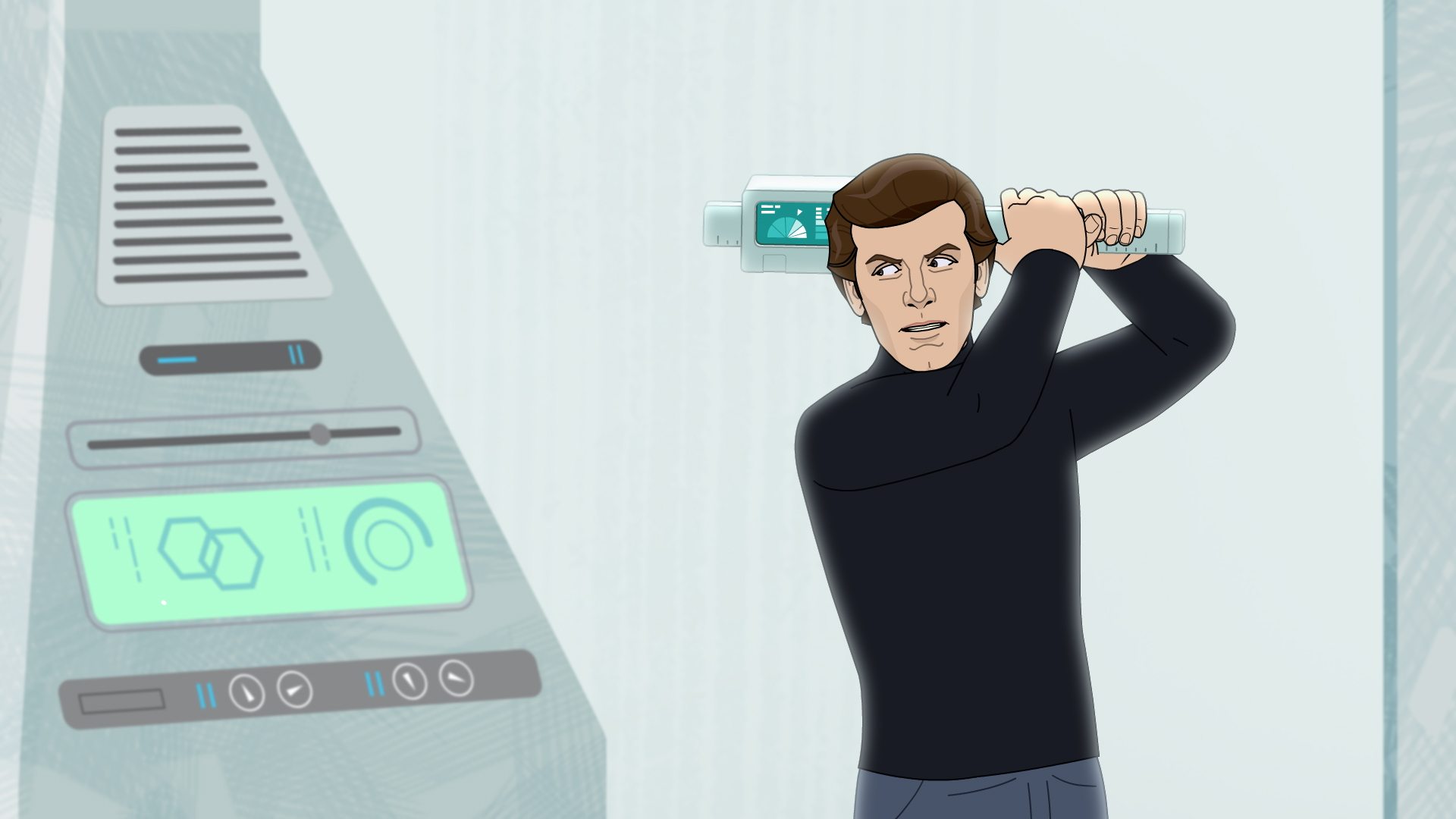
The Savages is notable for being Steven Taylor’s final appearance in Doctor Who (although actor Peter Purves reprised the role on-screen in iPlayer spin-off Tales of the TARDIS in 2023), and while his departure is nicely underplayed as an emotional farewell, it is a shame that the character has very little to do in the story, and no substantial development leading to the conclusion of his journey in the TARDIS. That being said, Purves is on fine form as ever, and his dynamic with Jackie Lane’s Dodo is nice to watch (even if the characters appeared in a mere four serials together). William Hartnell is on fine form as the Doctor, particularly in Episode 1, relishing in the character’s impish sense of humour – although him playing with a ‘reacting vibrator’ is unintentionally funny despite the obvious sci-fi-ness of the device.
One of the most shocking moments in the entire serial is when the Doctor’s life-force is drained by the Elders, resulting in a chilling cliffhanger ending to the second episode and leaving the Doctor zombified for the entirety of Episode 3. It’s been suggested that this may have been to ease Hartnell’s workload, but it really adds to the drama and suspense of the serial’s second half and the storyline must have been genuinely scary for the kids watching at home in 1966. The anarchic climactic scene in Episode 4 feels all the more justified when the villains have subjected the Doctor of all characters to their horrifying experiments. It could also be argued that the Doctor’s experience with the machine weakens him in the lead-up to his regeneration in a few stories’ time, although it’s unlikely that this was intentional foreshadowing at the time.
It’s not all grim though, as the chief Elder Jano (Frederick Jaeger, who would go on to play K9 creator Professor Marius in The Invisible Enemy) is given some of the Doctor’s life-force and begins to take on his characteristics, allowing actor Jaeger to do a surprisingly good and very amusing Hartnell impression.
As a story, The Savages is terrific, with a strong moral message and some great sci-fi ideas. There may be no obvious monsters, but the zombified Savage stumbling towards Dodo at the end of Episode 1 must have been good nightmare fuel back in 1966. Its twist may be a little obvious, although the script unravels it gradually over its surprisingly pacey four episodes. The Elders’ light guns are a great sci-fi gadget, even if they suddenly become generic ray guns later on in the serial, and the Elders’ awareness of the Doctor is a plot point that the story seems unsure of what to do with. Raymond Jones’ score is quite unique for this era of Doctor Who and its eerie string sounds really add to the atmosphere. There is a collection of telesnaps (essentially screenshots) and production stills from the original production, helmed by long-time Who director Christopher Barry, but with this new animation, it’s easier to appreciate just how good the story is.
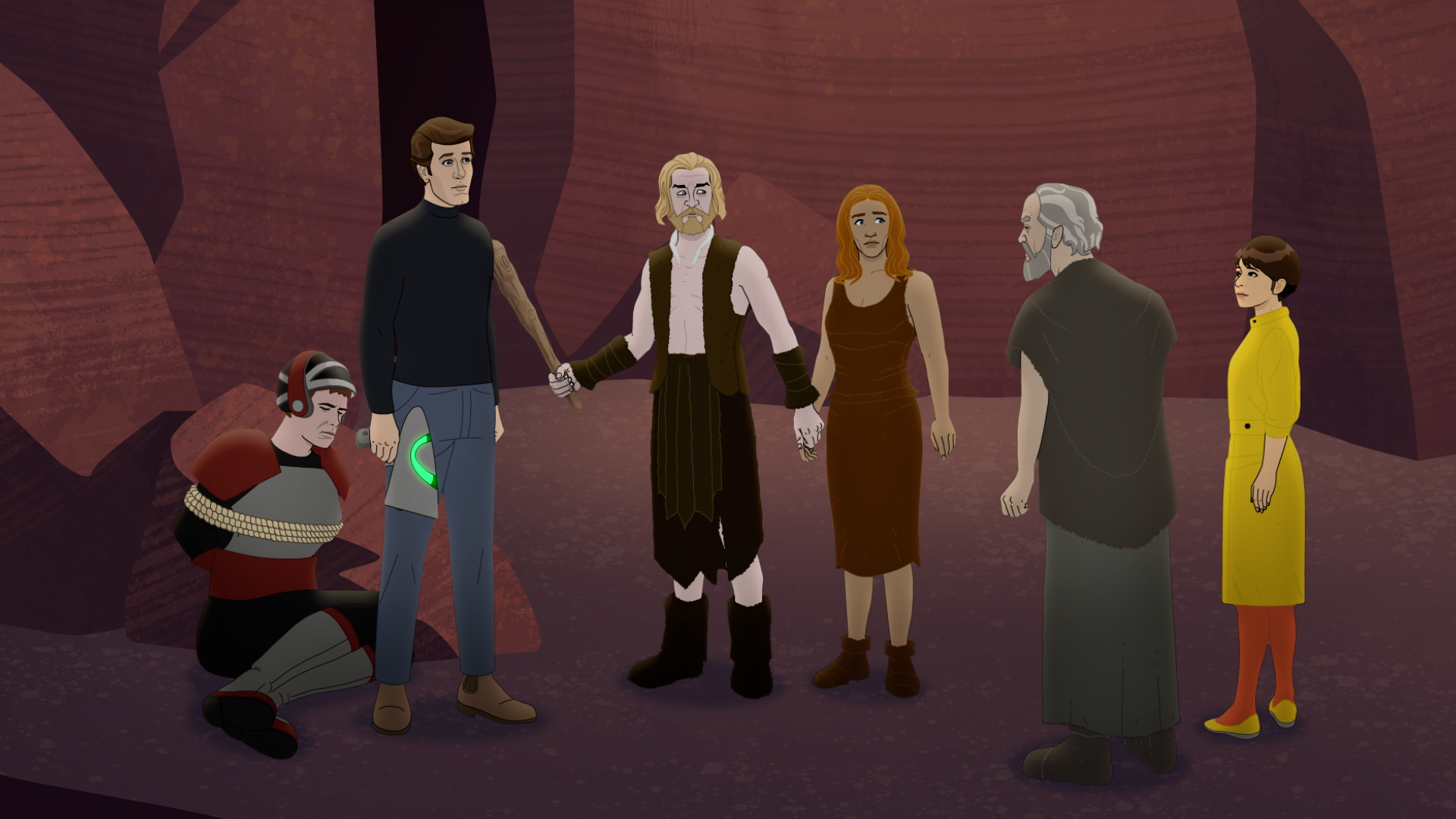
Speaking of the animation, The Savages has been helmed by director AnneMarie Walsh, who previously worked on The Faceless Ones and The Evil of the Daleks. The animation is generally pretty solid, although the lack of lighting effects and depth is a bit disappointing. 2019’s The Macra Terror is still the highpoint for these missing episode animations, and while The Savages isn’t on that level, it is on par with Walsh’s The Underwater Menace reimagining from 2023. It’s clear that these animations have tight budgets, but it is disappointing when fans have seen the team do better before. When The Evil of the Daleks – a serial almost twice as long as The Savages – can look *that* good, it’s difficult not to want that same attention for all of the serials, even if there are clear limitations with these productions.
The colour palette is strong, utilising warmer colours for the sandstone wasteland where the Savages reside (exactly what they eat and drink to survive is unclear) and cooler, more sterile colours for the Elders’ city. It’s a pity that the physical effects of the life-force-draining machine aren’t more obvious in the animation, although the decision to present Jano as Caucasian is certainly for the best (there is some debate about whether the actor had gold face paint on or perhaps even blackface in the original production). Some of the atmosphere and scares have been diminished in the animation (particularly Episode 1’s ending) due to the lack of atmospheric lighting, and while I appreciated new additions like the Elders’ holographic display, the distinct lack of sound design made these moments a little jarring. That being said, Mark Ayres has done a great job at restoring the original soundtrack – especially when considering the source material he’s working with.
All in all, this new animated version of The Savages is a welcome addition to the Doctor Who canon, and while it can’t recreate what the original live action production was like, the animation does a good job at telling this great story. Having never experienced The Savages before (either on audio or via photographic reconstruction), it was incredibly exciting to watch a ‘new’ Doctor Who story, and despite my criticisms with the animation, the upcoming DVD and Blu-ray release is a must-own for Whovians all over the cosmos.

Special Features
For the upcoming DVD and Blu-ray release, the following special features are included:
- Alternative black and white presentation of all four episodes.
- Episode reconstructions of all four episodes, featuring material from the original 1966 production. Available with optional audio description from Peter Purves.
- Cast/crew audio commentaries presented by Toby Hadoke. With actors Kay Patrick (Flower) and the late Robert Sidaway (Avon) on episodes 1 and 2 and with Peter Purves (Steven) and studio floor assistant, Julian Aston on episodes 3 and 4.
- Remembering/Forgetting The Savages – A new 100-minute documentary on the making of the original 1966 production of The Savages. Directed by Stuart Denman and presented by Toby Hadoke.
- Innes Lloyd – The Producer – New 90-minute documentary on the life of Doctor Who producer, Innes Lloyd. Directed by Charles Norton and narrated by Jane Asher.
- Surviving Footage Compilation – Short film extracts from the otherwise lost episodes 1, 3 and 4.
- 1968 BBC training film, featuring The Savages director, Christopher Barry.
- Photo Gallery
- Animation Gallery
- ROM Content

![Unquiet Guests review – Edited by Dan Coxon [Dead Ink Books]](https://criticalpopcorn.com/wp-content/uploads/2025/10/ug-reddit-ad-e1761690427755.jpg?w=895)
![Martyrs 4K UHD review: Dir. Pascal Laugier [Masters Of Cinema]](https://criticalpopcorn.com/wp-content/uploads/2025/10/image-1-e1761586395456.png?w=895)



![Why I Love… Steve Martin’s Roxanne [1987]](https://criticalpopcorn.com/wp-content/uploads/2016/11/roxanne.jpg?w=460)


 Critical popcorn
Post your thoughts