
It’s become almost obsolete to point out that Nicolas Cage has made some discerning choices in film roles lately. Whether delivering over the top, bombastic performances (Mandy, Color Out of Space) or embracing quieter, more introspective roles (Pig, Dream Scenario), Cage seems to be really revelling in this stage in his career, and has cultivated one of the most fascinating late-career renaissances in Hollywood. The Surfer, directed by Lorcan Finnegan, offers yet another intriguing variation – one where Cage’s performance starts off as uncharacteristically restrained, before descending into something far more unsettling.
Cage plays a nameless character returning to his coastal hometown in Australia, intent on purchasing a beach house, where he can reconnect with his son, going surfing every morning. However, his plan is immediately derailed when a group of territorial local surfers aggressively challenge his presence with the snarled motto: “Don’t live here? Don’t surf here.” What follows is a tense and surreal battle of wills between Cage’s outsider and the hostile locals, a war of attrition that spirals into something both allegorical and deeply psychological.

Finnegan, drawing inspiration from The Swimmer, crafts a story that delves into themes of nostalgia, displacement, and toxic masculinity. Like Burt Lancaster’s character in The Swimmer, Cage’s protagonist appears to be a man out of time, desperately clinging to an idea of home that may never have truly existed. The film teases past trauma through brief, fragmented flashbacks, hinting that Cage’s version of events may not be as straightforward as it initially appears. Did he ever really have a claim to this place? Is the surfboard he insists is his actually his at all? Or has he fabricated a past that justifies his obsessive need to reclaim it?
Visually, The Surfer is stunning. Finnegan employs the harsh, sun-drenched beauty of the beach to reflect the protagonist’s deteriorating mental state, distorting reality through eerie imagery and disorienting shifts in tone. The film walks a fine line between psychological horror and existential drama, keeping the audience uneasy as the lines between delusion and truth blur.
It’s a fairly bonkers film, with a heightened sense of reality that is clearly not meant to be taken literally. As Cage’s character lingers in the beach car park long past the point of rationality, suffering from dehydration and starvation while losing all his belongings, the narrative takes on a dreamlike, almost nightmarish quality. Any reasonable person would walk away, yet Cage’s stubborn protagonist remains, scavenging for food and water, growing increasingly unhinged as his sense of identity erodes. The more he is beaten down—both physically and mentally—the more his perception of reality becomes distorted and unreliable.


Cage delivers one of his most captivating performances in years, initially playing against type with a subdued portrayal before gradually unraveling as only he can. We know enough as a film audience to question Cage’s confidence in his offer on the house. And when his secretary mentions that he was in the office without shoes or socks on, you know that it’s only a matter of time before he explodes. And explode he does, (with characteristically offbeat line deliveries) but the film is such a deliberately paced slow burn, and he has so thoroughly been put through the ringer, that his manic outburst feels entirely earned.
Julian McMahon also deserves praise as the cult-like leader of the beach community – initially appearing well-meaning if intimidating, it quickly becomes apparent that he’s just as bad as the hostile surfers he mentors, if not worse. He asserts his dominance over Cage in a much more insidious way with a presence that is both charismatic and terrifying. Meanwhile, the inclusion of Mr Inbetween’s Justin Rosniak as an affable yet subtly sinister police officer adds another layer of conspiracy and paranoia to the film’s world. His presence raises questions of how far the surfing gangs reach extends, and yet his friendly demeanour makes us question Cage’s story even more. As he trades his few belongings for food, water, and a charge on his phone, he loses his sense of identity and status to the point where we begin to question if he ever had them in the beginning, or if the entire film is some kind of fever dream.
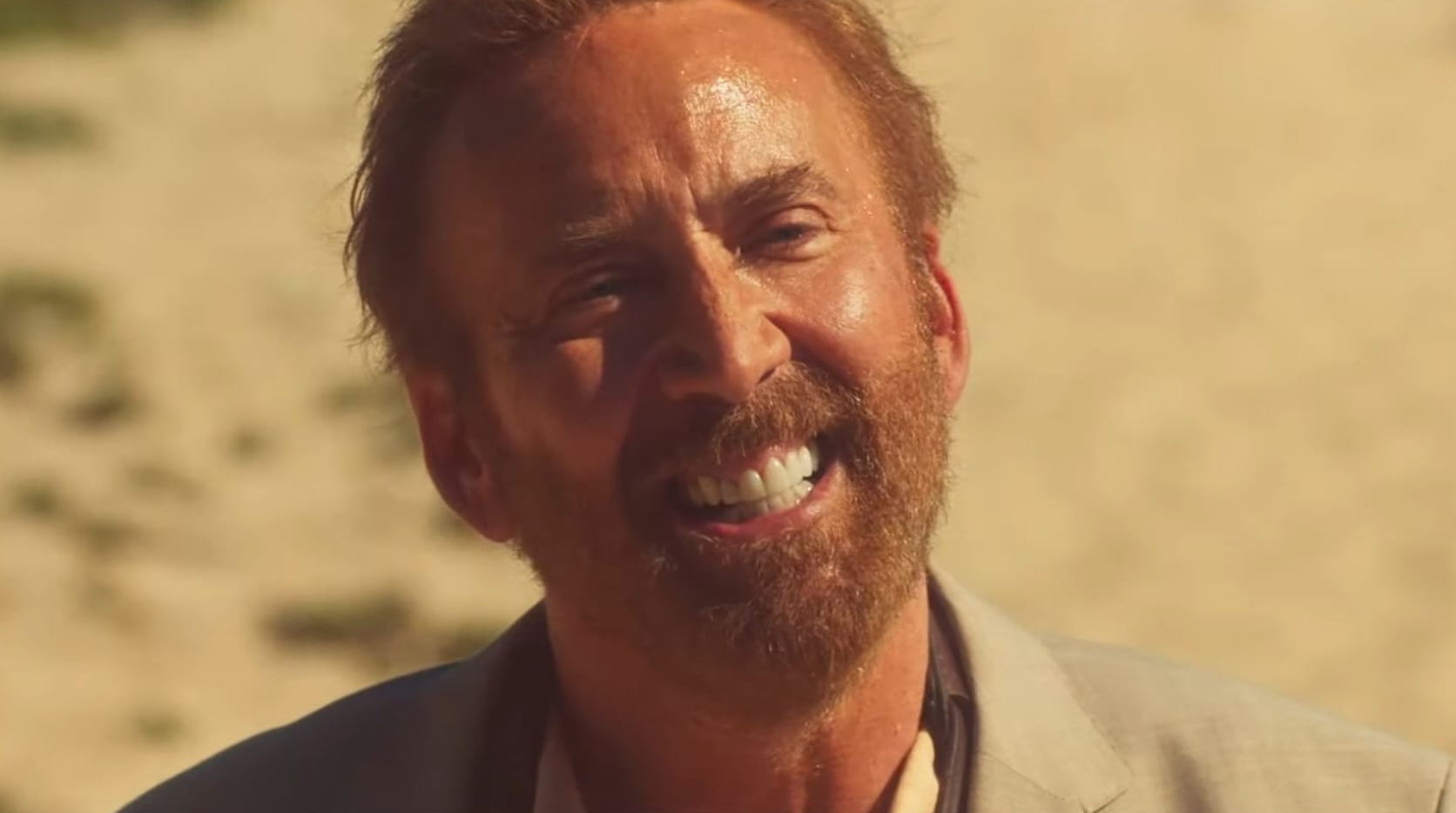
That said, The Surfer is not without its flaws. The middle stretch of the film risks losing its audience as certain plot beats repeat without much variation. However, for those willing to stay with it, the film’s languorous pacing ultimately pays off. The final act is both bleak and ambiguous, culminating in one of the most enigmatic endings in recent memory.
By turns mesmerizing and frustrating, The Surfer is not without its flaws, but Finnegan deserves credit deploying a distinctly cinematic, almost Nicolas Roeg-like film language through editing. It’s a film about loss—of status, identity, and a place to belong—but it’s also a film about the self-destructive refusal to let go. Cage, once again, proves why he remains one of the most unpredictable and compelling actors of his generation, giving one of his most interesting performances in recent years.




![Unquiet Guests review – Edited by Dan Coxon [Dead Ink Books]](https://criticalpopcorn.com/wp-content/uploads/2025/10/ug-reddit-ad-e1761690427755.jpg?w=895)
![Martyrs 4K UHD review: Dir. Pascal Laugier [Masters Of Cinema]](https://criticalpopcorn.com/wp-content/uploads/2025/10/image-1-e1761586395456.png?w=895)


![Why I Love… Steve Martin’s Roxanne [1987]](https://criticalpopcorn.com/wp-content/uploads/2016/11/roxanne.jpg?w=460)



 Critical popcorn
Post your thoughts