
“If we save the sea, we save our world” – Sir David Attenborough
The documentary format hasn’t always been as prevalent as it is today, and while there’s certainly a vast quantity of real stories to invest in, there are not many that will truly get people talking – for all the right reasons. Ocean with David Attenborough isn’t political nor preaching, it’s diving into our shared mortality to guide you on a journey that’s equal parts beautiful and heartbreaking, while adding acts that are harrowing, offset with a horizon of hopefulness.
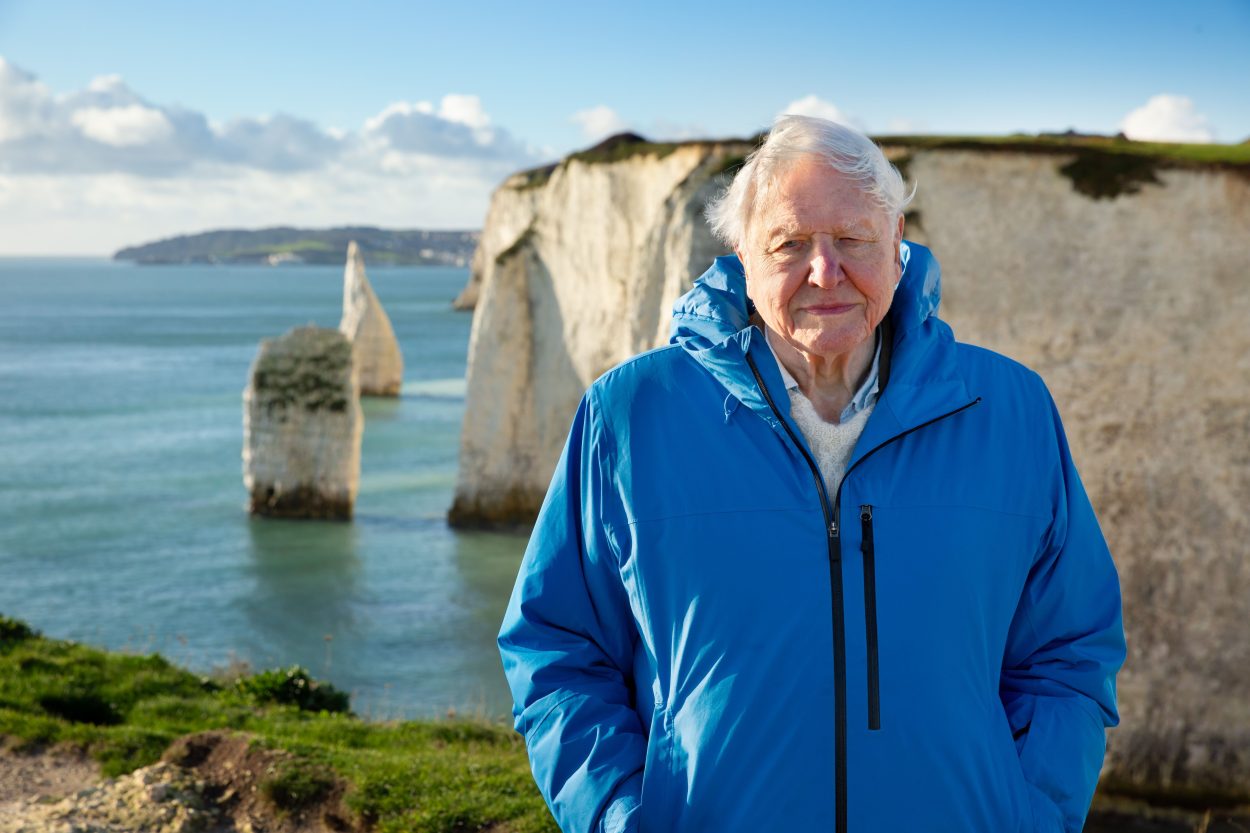
I believe only Sir David Attenborough could command such a story, and we should listen, because it’s a tale of how to not only extend the life of humans on Earth, but for the lifespan of the planet itself. From David’s first scuba dive in 1957 in Australia, and Scientists discovering the true wealth of nature within the Great Barrier Reef, to deeper ocean exploration around 1979, the ocean isn’t just some uncharted nothingness, it’s packed with life trying to exist, while much of civilisation is trying its darndest to kill off a delicately balanced ecosystem.
As David establishes, we’ve seen and explored more land on the Earth than ever before but, in an educated sense, we know little about the ocean – and as it covers over 70% of the planet, that’s worth investigation. In actuality, we’ve explored 5% but technology and advances in the tech means we can see and understand more now. And, the crucial point is, scientists have begun to discover what we can do help climate change slow down, and also how absolutely vital the ecosystem of the sea is to everything.
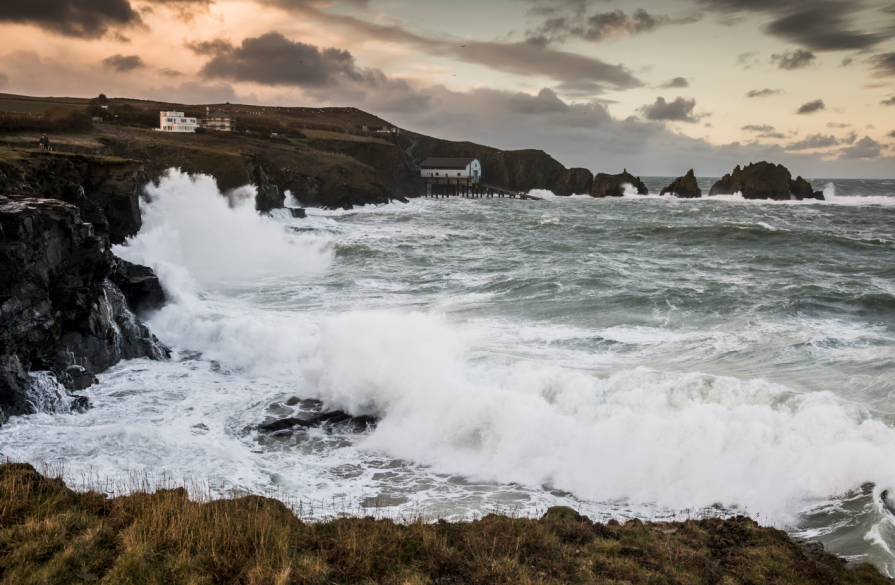

Ocean with David Attenborough reminds us it’s the last great wilderness and that while coastal regions are owned, and often fought over, as a whole it’s owned by us all. This big blue, this final frontier of discovery, contains millions of animals who spend their existence working in perfect balance with each other and, yet, within that equilibrium, human beings exploit the shallow seas and wildlife habits by over-fishing. But it’s important to mention, this story isn’t about stopping fishing – it’s reminding everyone we can fish, we can eat but it needs to change, and it should be sustainable in the very real meaning of the word.
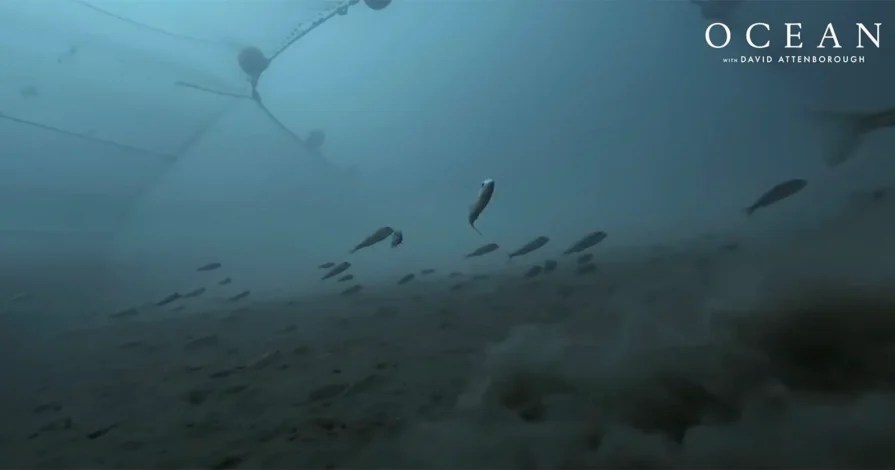
There’s a devastating sequence of underwater filming that reveals the frankly traumatic reality of vessels trawling and dredging the ocean floor for scallops. While there was once a thriving community of organisms, the seabed looks like it’s the result of a nuclear winter. And what’s worse is that they continue to trawl in the same areas, literally ripping apart ecosystems and – even more distressing and heartbreaking – virtually killing any creature that happens to be in the way in the nets, even for a few scallops, as those scooped up are often discarded. You’d think some oceans are out of bounds, but even in the Antarctic, where you’d expect all varieties of whale and penguin taking their fill of the krill, in their true habitat, we’ve now got ships there taking that food source from them. It’s modern ocean colonisation, and there’s barely anywhere on the planet this isn’t happening, and governments know.
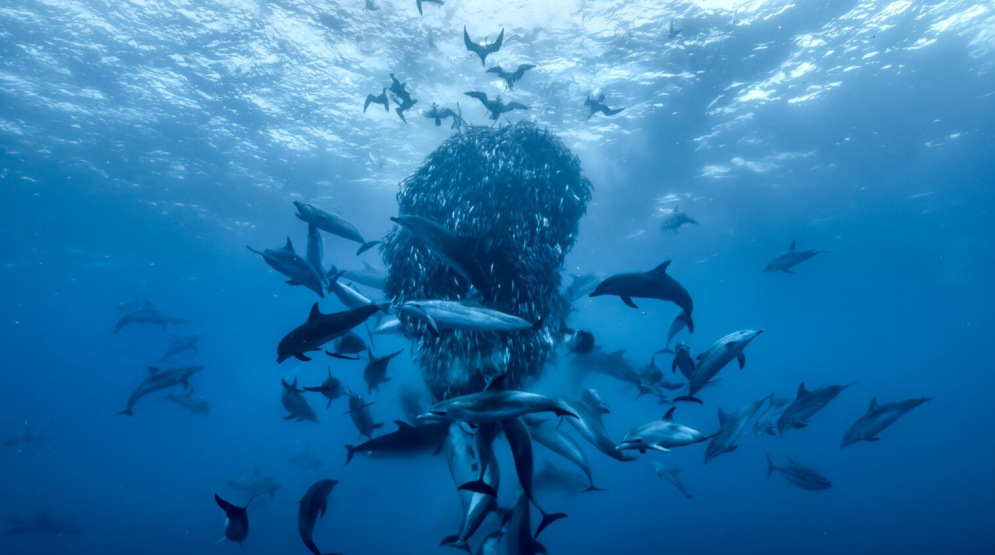
It’s saying something that many of these creatures survived what the dinosaurs didn’t, and yet human beings are on the verge of making it worse. While it’s challenging not to feel hopeless, and David admits the same when discussing the warming oceans and the bleaching of the coral reefs, he does share stories of light filtering through even the darkest depths of this tale. Because, for the truth of where we are, there is absolutely hope and we should feel lucky that the planet itself is fighting back, with the ocean an central part of this push to rebalance.
As with any great documentary, Ocean with David Attenborough highlights things that are working and how the ocean can recover. Some examples are human-led, from the Papahānaumokuākea Marine National Monument – which covers 583,000 square miles of ocean waters and islands of Northwestern Hawaii – to marine scientists across the globe discovering that areas once seemingly dead can return to abundance by letting the fish, kelp, plants, and the rest have to themselves, so they can naturally thrive. This messaging is great to witness, and offers that reminder of why it’s so important to remain environmentally aware.
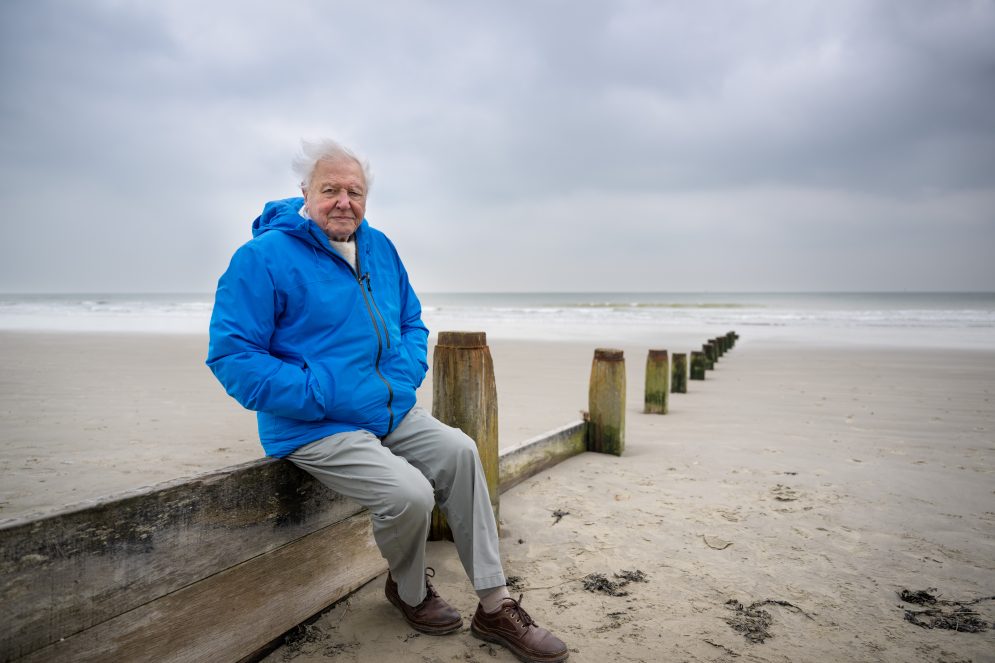
Directed by Colin Butfield, Toby Nowlan, and Keith Scholey, ‘Ocean’ is not only a testament to astonishingly smart documentary making, but vitally a call to help nature find its way back to save us, for future generations. It’s also a film about fishing and conservation and how they can co-exist. While only less than 1% of the ocean is officially protected, which is shocking in itself, every government can (and is suggesting they’re trying to) do more. And we can all help.
As with so much marketing, you’ll see the words ‘must-watch’ and ‘vital viewing’ for this film, yet those descriptions could never be more critical, nor more accurate. Not only it is beautifully shot, with exceptional immersive cinematography, it’s a prompt that now is the time for people to make an established effort, and make sure we’re heard for the survival of the ocean and the earth itself.

Ocean with David Attenborough airs on Sunday 8th June at 8pm on National Geographic and streams the same day on Disney+
Cinema screenings can also be found at OceanFilm.net
Educators can be part of the solution that inspires young people – the ocean stewards of tomorrow – by discussing OCEAN WITH DAVID ATTENBOROUGH in the classroom. Later this year, National Geographic Pristine Seas will make the documentary film available to educators at schools, universities, museums, and libraries, and for educational and charitable conferences and events for non-commercial purposes. Learn more at nationalgeographic.org/society/ocean-with-david-attenborough/


![Unquiet Guests review – Edited by Dan Coxon [Dead Ink Books]](https://criticalpopcorn.com/wp-content/uploads/2025/10/ug-reddit-ad-e1761690427755.jpg?w=895)
![Martyrs 4K UHD review: Dir. Pascal Laugier [Masters Of Cinema]](https://criticalpopcorn.com/wp-content/uploads/2025/10/image-1-e1761586395456.png?w=895)

![Why I Love… Steve Martin’s Roxanne [1987]](https://criticalpopcorn.com/wp-content/uploads/2016/11/roxanne.jpg?w=460)


 Critical popcorn
Post your thoughts