
Human Traffic hit an era in my life when I was still too enamoured by the Trainspotting and Shallow Grave time, that then fell into a full-on Tarantino admiration, as films and other types of music overtook my attention for rave culture on the back end of Britpop. But even as new British Invasion mania had begun to waver, Justin Kerrigan’s film was always in the wind, and this newly remastered version – hitting 4K UHD and Blu-ray for the first-time – is absolutely a creation to behold.
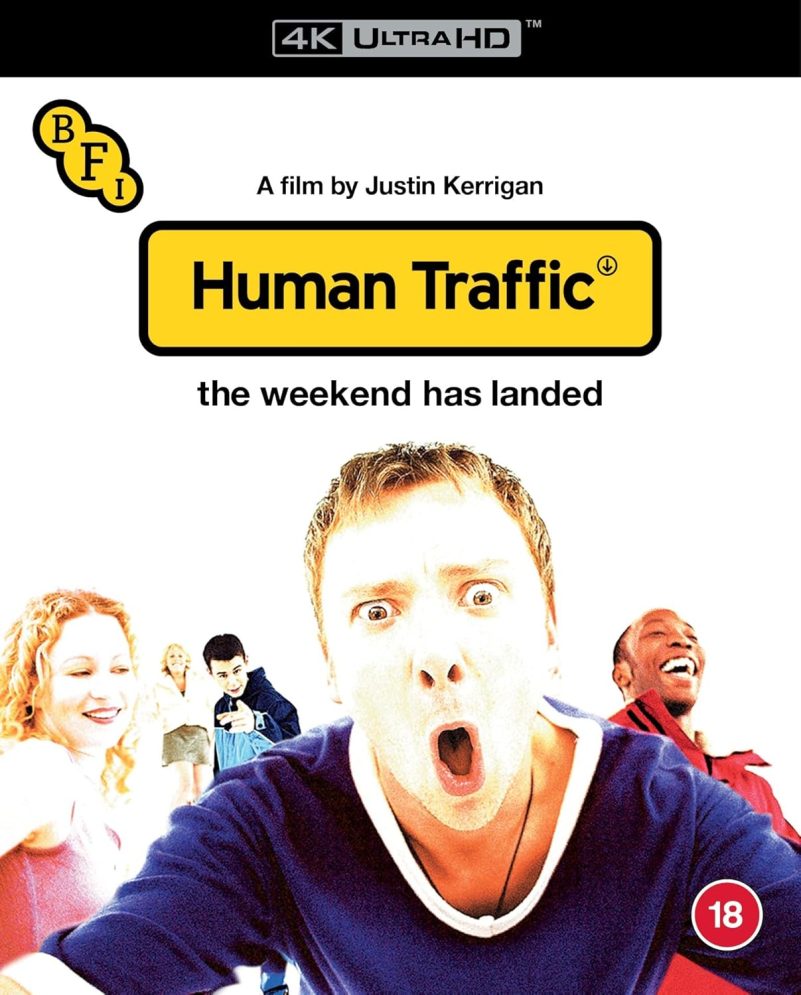
Human Traffic follows the lives of five Cardiff-based friends, who hate their 9-to-5 jobs, but love their weekends. It’s smart, non-judgemental, and also not as celebratory of the drug scene as you might think it is. We don’t see people taking ecstasy (which would be the most connected class A), we don’t witness people causing trouble, it mainly represents a wild weekend for our core characters, now finding an originally unplanned nostalgia for the late 90s, which was the last modern era when everyone didn’t have a mobile phone, and you merely existed within the moment, involved into the conversations with your friends, or whoever you happened to end up talking to. Sure, there’s could be concern lingering in an enhanced situation, but Human Traffic doesn’t need to portray that, the media have done that forever, for all of us.
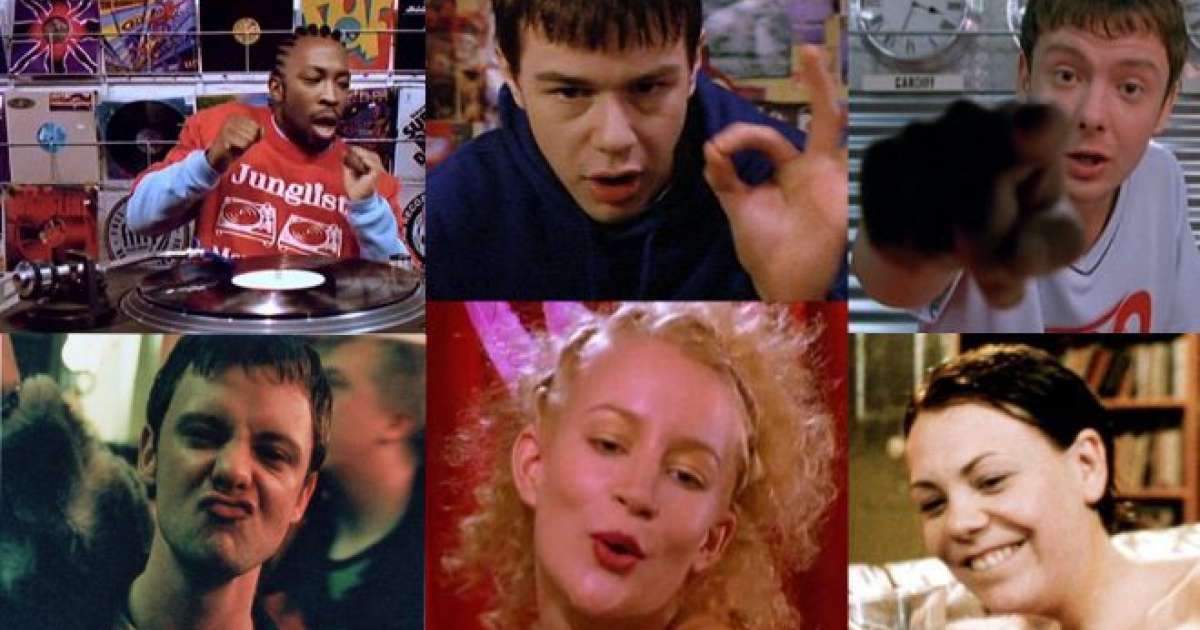
The five friends are Jip (John Simm), his best mate Koop (Shaun Parkes), fast-food worked Nina (Nicola Reynolds) and her bestie Lulu (Lorraine Pilkington) and then an unforgettable early big screen role for cockney boy Moff (Danny Dyer), the latter who’ll go on a journey of finding himself and what he loves via all-night dance and deep conversations on Star Wars with Richard Coyle’s Andy – just enjoy their high-fixated dialogue about Yoda exploring inner space and the Emperor controlling outer space, it’s inspired. Over the course of one night, we’re with these mates on their best night out and – looking back and watching it now with older eyes – this film was certainly ahead of the changing culture of the time, with massive comments on the fragile male ego, as well as individuals innate self-awareness and paranoia of your twenties, yet portrayed within the setting of a joyful, unrelenting rave adventure.
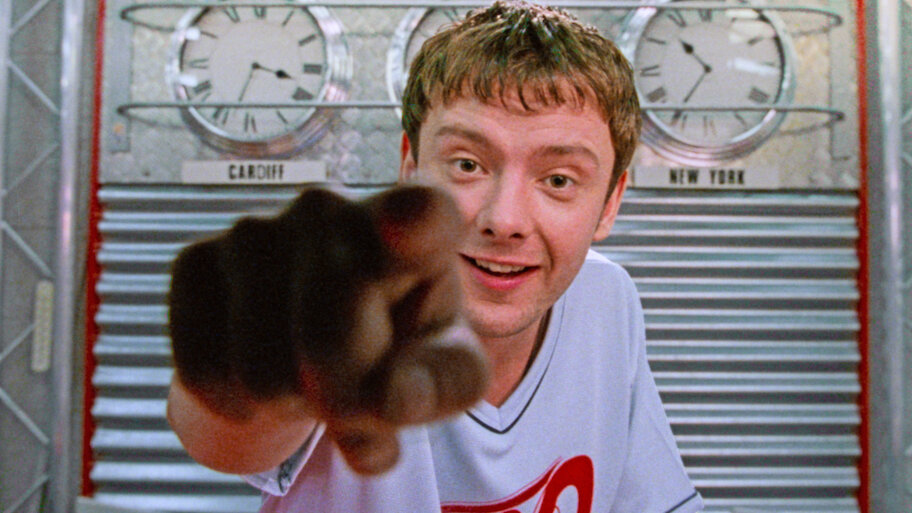
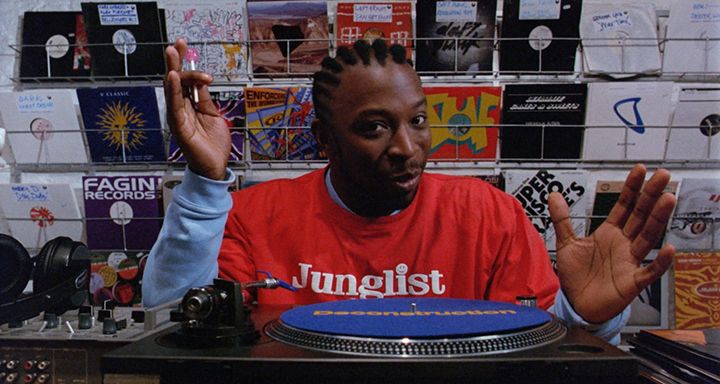
While I’m too young to have lived through the illegal rave scene of the early 1990s, and then criminal justice and public order act of 1994 that shut it down, in the UK I was just old enough to see it as a strange control mechanism, especially when it focused its regulations on stopping music that was ‘characterized by repetitive beats,’ outside to more than 10 people. To many, it sounded like a law eager to stop the slightest joy in music but what it ended up doing was force party-seekers, including upcoming DJs and nightclubs, into a whole new indoor world, which is the joy we follow throughout Kerrigan’s film.
If you’re a Brit watching today, you may well notice the UK TV show references, there’s a lot of Only Fools & Horses for example, but what really stirs the pot of ingredients is the flavoursome soundtrack, curated by the essential selection himself: Pete Tong. It accompanies the film from the build-up before to the night out itself, taking you from anticipation of the party, to the fierce fun of the rave, all the way to the chill out and comedown that follows, with tracks from the likes of Carl Cox (who also stars in the film), plus Armand Van Helden, Energy 52, William Orbit, Death in Vegas, Fatboy Slim, Public Enemy, Underworld, Peter Heller, and many more. And without the perfect soundtrack, this film may not work as a well as it does, it’s vital.
It’s fascinating literally seeing some inspiration for director/writer Justin Kerrigan on screen, as posters and soundbites complement the narrative as it includes the likes of Clerks, Dazed and Confused, True Romance, Drugstore Cowboy, the echoes of Irvine Welsh (of course), and even Bill Hicks, plus it reminded me of that superb night out Spaced episode, from Edgar Wright, Simon Pegg and Jessica Stevenson, which also arrived roughly at the same time – and we’re all the better for it. It’s also worth discussing that clever reworking of the national anthem, integrating lines such as “Our generation, alienation, have we a soul?” on the back of real-life heavy political social reforms and people feeling separated from each other, which has gone on to only increase since its release. Little moments like that song put forward the question whether we’re representing every background in film still, or whether the 90s offered the last creative freedom beyond focus groups, social media outrage and 24/7 news paranoia. The future is here, have we forgot how to let go and just enjoy reality? It’s a discussion I certainly can’t answer in this review, but I hope people keep asking the question.
This BFI release is a restored 4K resolution version (2160p) via the talented Starlight Films Ltd, and SilverSalt Restoration Ltd, who used the original negatives and it’s presented in its original aspect ratio of 1.85:1 with original 5.1 and 2.0 stereo sound. It looks 90s in the best way in UHD with Dolby Vision, and if anything somewhat felt brighter and visually wrapped in the glorious pleasure of the night we’re witnessing, also due to Dave Bennett’s vibrant cinematography. So many sequences and scenes remain energised, and the use of a fractured fourth wall feels unique in this setting, and speedy edits even resemble Baz Lurhmann’s early style.

So, in 4K UHD, Human Traffic rightfully holds up its heart not just on its sleeve, but with full throttle passion aloft in the air for everyone to party around. It’s satirical, dynamic, pro-drugs and equally self-aware. It’s very funny, unreserved, and uncompromising, and so true to the time that it’s basically part-documentary. Strap yourselves in but most importantly… let yourself go – Nice one, bruvver!

Human Traffic is out now on 4K UHD and Blu-ray from the BFI, order here: https://amzn.to/3UmvQZj
Special Features
While I’ve only had access to the digital version of the booklet that comes with this special BFI release, it features some fine pieces from Lou Thomas, Tim Murray and exec producer Renata S. Aly, and it delves into how the film brought the rave scene to the masses, the relevancy of the movie to this day, plus some joyful nostalgia regarding how authentic clubbers found it, and its cult fan base.
Exec Producer Renata S. Aly also lends her insight to the Show Me the Money feature, a 19-minute film that discusses how the film came to be, how the funds were raised and her connection to it all. Mark Searby’s Nice One Bruvva, a 14-minute feature, celebrates the uniqueness of the film and gives it even more gravitas as well. There’s also a great long-form interview with Danny Dyer, which I assume was the 2023 BFI event, as he discusses with the excellent Nia Childs his career, which is no holds barred and packed with that welcome Dyer honesty.
There’s also a 12-minute 1997 documentary Rave, from filmmaker Torstein Grude, which follows DJ Manic, a techno tourist and a girl who’s addicted to partying. It’s a fun bonus! You should also check out the slightly hilarious, and very much of the time, Human Traffic pop promo featuring John Simm, plus there’s the 1999 and 2025 film trailer, and also 23 minutes of deleted scenes.


![Unquiet Guests review – Edited by Dan Coxon [Dead Ink Books]](https://criticalpopcorn.com/wp-content/uploads/2025/10/ug-reddit-ad-e1761690427755.jpg?w=895)
![Martyrs 4K UHD review: Dir. Pascal Laugier [Masters Of Cinema]](https://criticalpopcorn.com/wp-content/uploads/2025/10/image-1-e1761586395456.png?w=895)
![Why I Love… Steve Martin’s Roxanne [1987]](https://criticalpopcorn.com/wp-content/uploads/2016/11/roxanne.jpg?w=460)


 Critical popcorn
Post your thoughts