
A three-hour black comedy about a family whose elder members are grappling with varying degrees of terminal illness might not like a crowd-pleaser, yet there’s a lot to enjoy here. Matthias Glasner’s epic Dying (Sterben) boasts a stark title but is a rich, layered opus, with terrifically engaging characters to pore over and dissect in the achingly dysfunctional Lunies clan. Divided into chapters for each character (and a fourth and fifth for its thematic sections The Thin Line and Love), the film is a smorgasbord of sorrow, friction, affection, and a search for purpose. Tolstoy’s “each unhappy family” remark would make a good strapline.

We open on aging mother Lissy Lunies (Corinna Harfouch), waking up disorientated and covered in excrement. She’s battling a roster of complex health issues (diabetes, cancer, failing eyesight and kidney problems). Husband Gerd (Hans-Uwe Bauer) is further down the line towards the white light than she is – dementia-addled, he’s been rambling about aimlessly for weeks, babbling nonsensically, and wandering naked into neighbours’ homes prior to being packed off to a care home. Their straitlaced son Tom and wayward daughter Ellen is referenced and Tom’s voice is heard on a phone call, but the film takes its time before introducing them. Evidently, Tom and Ellen are preoccupied. Their parents’ dual impending deaths are not a key concern.
When Tom (Lars Eidinger) is eventually introduced, he’s at work. A renowned conductor, he’s preparing for the most significant of his career. The name of the piece? ‘Dying.’ “We have to earn the part at the end by being humble at the beginning,” he tells his orchestra, a knowing nod to the bedlam of Lissy and Gerd’s end-of-life sequences, and the lack of humility they’ve shown him as parents. Composed by his edgy and depressive friend (Robert Gwisdeck), the fragments of the piece that we hear veer between brilliant and formulaic. The musicians themselves wonder aloud whether it’s impressively profound or pointless kitsch. If this is a metaphor for life itself, it’s a fitting one.
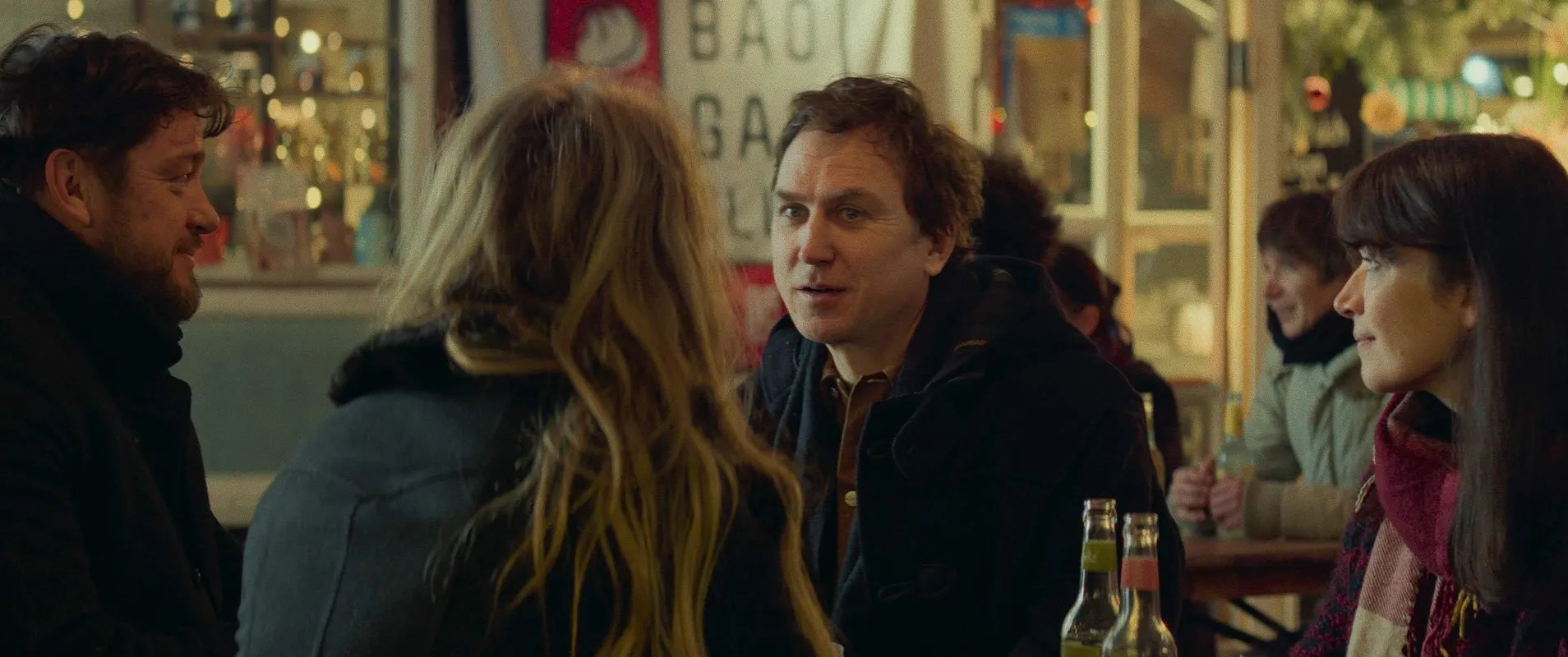
Filmmakers have been fascinated with conductors forever, but the archetype’s seen a recent resurgence, and immediate parallels with Tár are abound. There’s something about this career choice that feels effortlessly symbolic – the deity-like concept of a single figure producing something of beauty with the mere flick of a wrist, commanding both the orchestra and a crowd of attendees and bringing life from silence – and it’s interesting how both films boast scenes of emotionally charged meltdowns at the Berlin Philharmonic. What would drive someone to such a career, where they’re in complete control of a group like that? To retain control of a tumultuous personal life? If films about conductors are anything to go by, it’s the only reason anyone would assume the mantle.
Tom and Lydia Tár share a coldness, but as characters, are markedly different. Eidinger’s Tom is less explosive, his combustible nature more submerged than his Cate Blanchett counterpart. He’s in an emotional quandary after becoming a dad (of sorts) when his pregnant ex-girlfriend (he still harbours feelings for) asks him to be her birthing partner because of a lack of support from her current boyfriend, who she has no intention of leaving. His parents’ terminally ill state seems of little true significance, and is more of an irritation, something he’s obliged to deal with in the role of the son, though that role seems fairly meaningless to him. In one scene, over ten minutes long and a conversation between mother and son, Lissy ladens on two confessions: that she dropped him as a child and that he was an accident. In the same scene, Tom relents that the whole family are terrible people, but is Tom, and later, Ellen, all that terrible? Is either sibling obliged to care about their parents’ deaths? Are we all just acting the roles we’re given out of obligation – mother, daughter, boyfriend? In the film’s cold open, a child breaks the fourth wall via a Smartphone – “You have to do what comes into your heart. You have to do what you want. What do you feel in your heart?” It sounds profound but doing whatever you want isn’t an eye-opening statement, it remains a child’s mentality. The pursuit of pure self-interest, though often cited as the goal of a life, has an impact on others, often detrimental.


When we eventually meet the absent Ellen, she, like her mother, is waking up unsure where she is. “Am I in Latvia?” she whispers drunkenly before discovering the answer is Yes and heads off to the airport, to embark on an expectedly anarchic love affair with her dentist boss, in between bouts of allergic reactions and vomiting on patients. It’s a part played with perfect volatile charm by Lilith Stangenberg, bringing comedy into the chaos, but also begs the question, how much of this is what Ellen wants? Or are her frenzied foibles a way of comprehending her upbringing, something she inherited from a life with two unloving parents?
With its sweeping scope and character-driven plot points, it’s a tale of magnitude about the human condition. It’s something Russian and American literature has been particularly adept at portraying over the decades and reads like a German version of The Corrections or Six Feet Under. Like all works proclaiming to be about death, it is of course about life, but all manner of bases are examined here from every angle: birth, regret, self-delusion, disconnection, and solitude. Ultimately, we’re led to question the reality that family ties can be wholly insignificant if not buttressed by an inherent love. Don’t be deterred by the gargantuan runtime, a saga of this magnitude sorely needs and earns it.


![Unquiet Guests review – Edited by Dan Coxon [Dead Ink Books]](https://criticalpopcorn.com/wp-content/uploads/2025/10/ug-reddit-ad-e1761690427755.jpg?w=895)

![Martyrs 4K UHD review: Dir. Pascal Laugier [Masters Of Cinema]](https://criticalpopcorn.com/wp-content/uploads/2025/10/image-1-e1761586395456.png?w=895)



![Why I Love… Steve Martin’s Roxanne [1987]](https://criticalpopcorn.com/wp-content/uploads/2016/11/roxanne.jpg?w=460)


 Critical popcorn
Post your thoughts