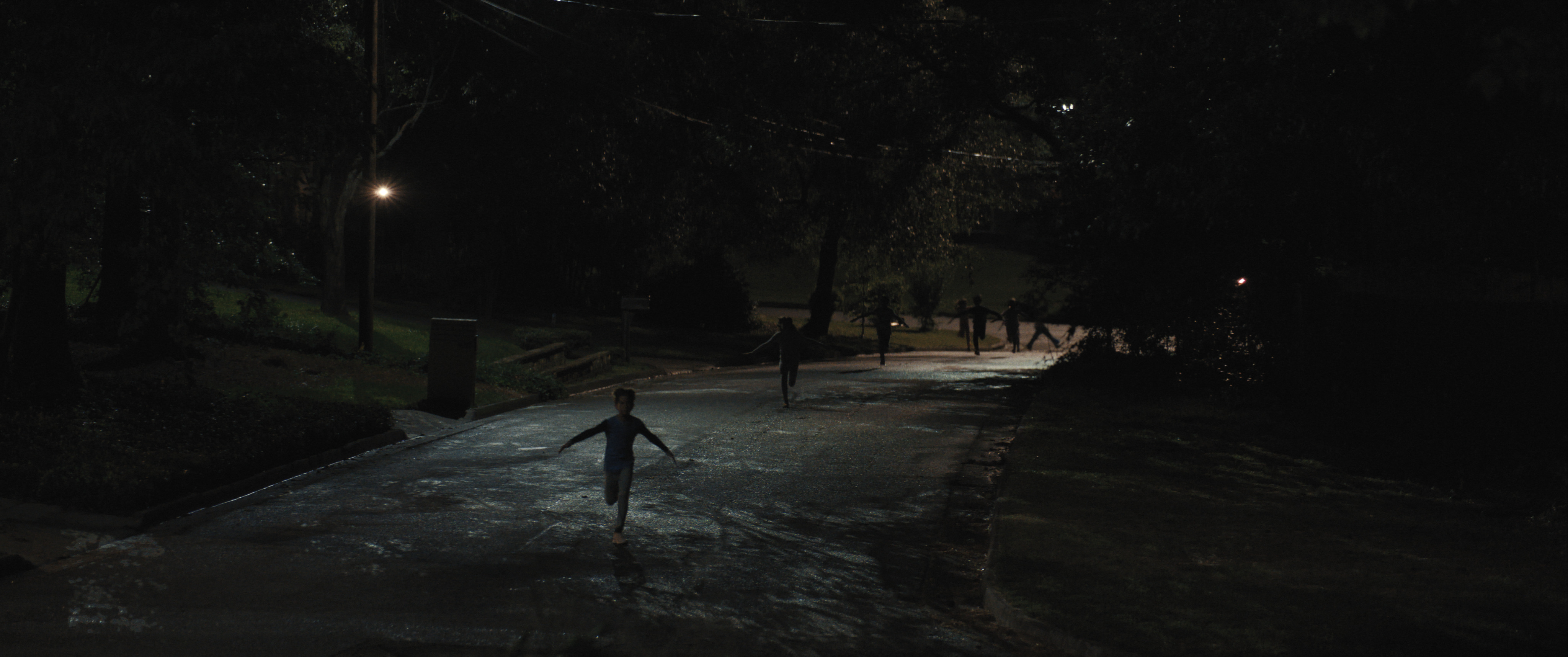
The opening gambit of Weapons is as simple as it is eerie. One night, at 2.17AM to be exact, 16 children from the small (fictional) town of Marybrook leave their homes, running arms outstretched, into the night, never to return. And the missing children constitute the entire class of teacher Miss Gandy (Julia Garner), except one child who was seemingly spared from the phenomena.
As far as starting points go, it’s a gripping hook, and Zach Cregger‘s follow up to the brilliant Barbarian delivers on the promise of this premise. Cregger shows the brewing resentment and suspicion that desperate parents direct at Miss Gandy, while more peculiar things begin to happen all over town. The result is one of the most unpredictable, vital, gripping horror films of the year.

As with Barbarian, Cregger plainly enjoys wrong footing his audience and playing around with non-linear narratives. The film is split into six segments, and each one centres on a singular character, as events dovetail, we are shown different perspectives of the same incident. As a storytelling technique it’s a canny move, it offers momentum and keeps the audience engaged. However, later on, it raises the question over whether this structure papers over cracks in the story.
The performances of the six points of view characters are pitch perfect, natural, lived-in, and believable, with Julia Garner perhaps the best as the teacher barely clinging on to her sanity while desperately trying to uncover the truth. Yet, for me, Alden Ehrenreich steals the film as her hapless cop ex-boyfriend. He’s trying to do the right thing, but his impulses continually get him in trouble. Josh Brolin, Austin Abrams, and Benedict Wong are similarly great in their segments, while young Cary Christopher gives an impressive, mature performance that grows in poignancy. There is also an extraordinary performance from one actor whose role is a spoiler in itself but suffice to say the film has one of the most disarmingly creepy, flamboyant villains of recent years, up there with Longlegs.
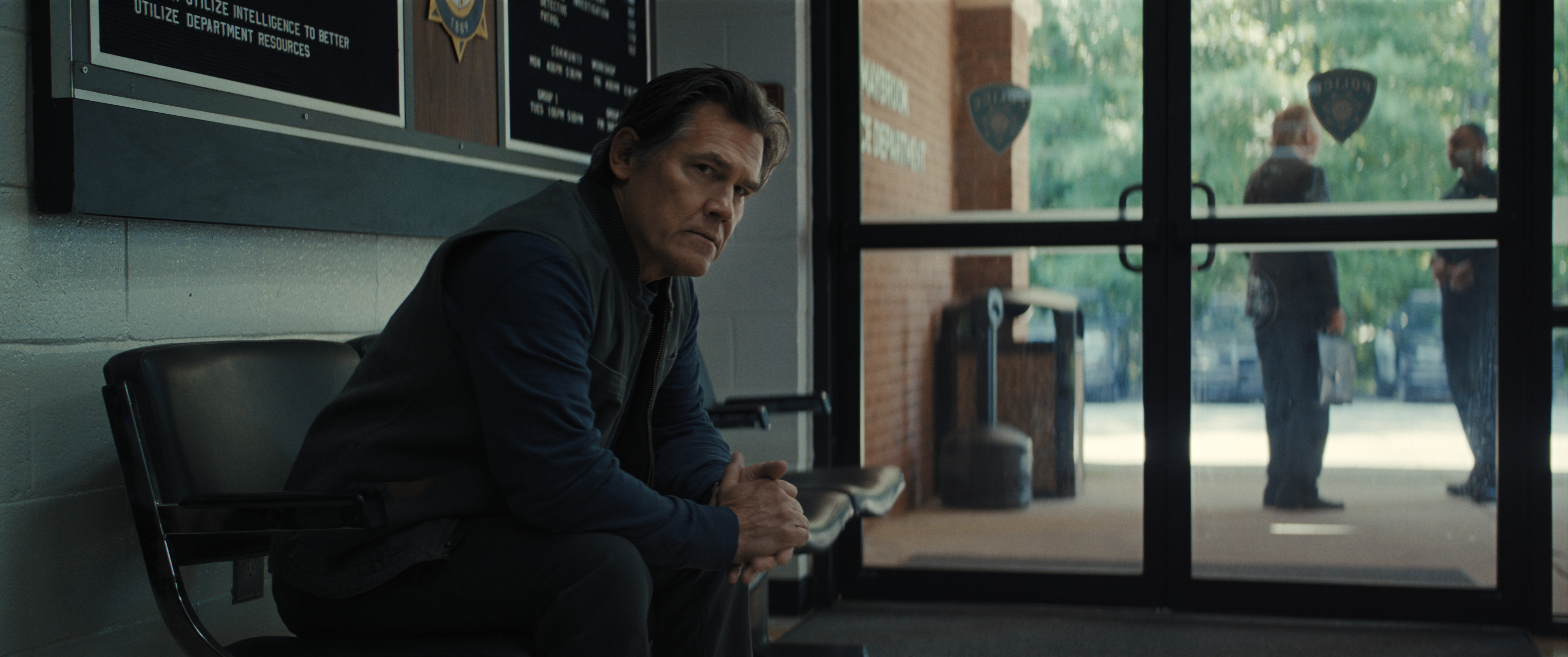
All the lead characters are deeply flawed people, and it feels like the evil at the heart of the town recognises this and harnesses it. Cregger has stated that the work of Paul Thomas Anderson, especially Magnolia, was a huge influence on the film, and this is clear both in the multi-stranded narrative and some of the characterisation (Ehrenreich’s cop is very similar to John C Reilly’s character in the earlier film) and some kinetic camerawork that recalls the big dramatic moments in Anderson’s film. There’s also a hint of ‘Salems Lot, and even Something Wicked this Way Comes in the small-town setting, and the way an insidious, malevolent force corrupts the town. The combination of this, as well as the clear nod to fairytales, especially The Pied Piper, leaves you with an incredibly unsettling feeling, something that is at once grounded and otherworldly. Relatable characters and natural (and funny) dialogue contending with something deeply disturbing affecting the town. Cregger plays his cards close to his chest about which direction the story will go in – I was convinced it was going to be a science fiction/Twilight Zone style twist about aliens observing a town in chaos. And who knows…?
Despite many positives, there are inconsistencies in the mythos, and part of me was irritated that certain elements weren’t explained more, but then a snappier part of me pointed out this is what horror fans are constantly saying we want from films. When something like Hereditary or Prometheus comes along and insists on explaining every little thing, the main criticism is that exposition dilutes the horror, that it’s scarier when it’s unexplained. Weapons seems to operate largely on dream logic, but there is enough reason here to broadly make sense of the story, even if the mechanics remain murky. And most importantly, it’s scary. Cregger fills his film with shocks of every kind, jump scares, sustained single take scares; eerie conceptual horror and grisly, visceral gore, and each beat is executed to perfection. Cregger hones in on details that everyone can relate to. I don’t think the simple sound effect of a car door opening has ever been quite so menacing, and I will never look at a potato peeler the same way again.
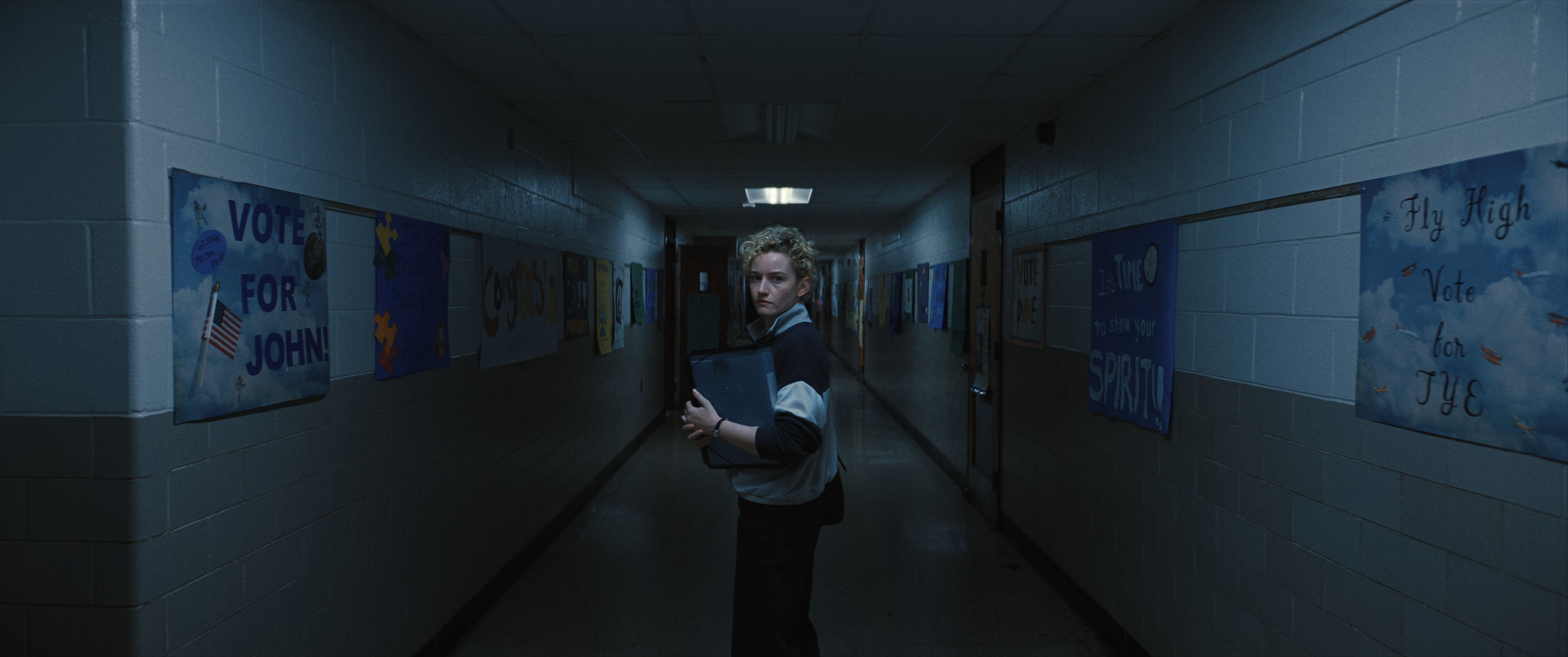
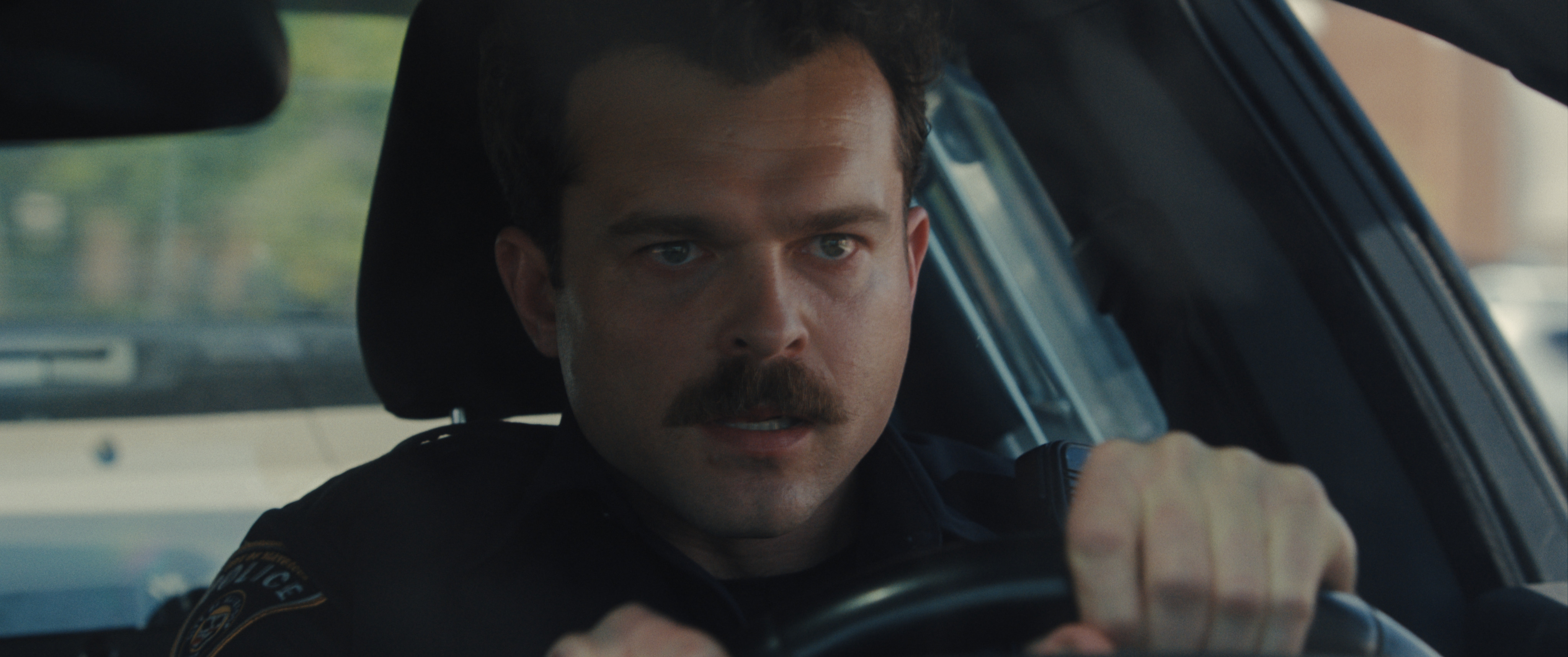
Where Cregger falters slightly is in overreaching, because as a horror Weapons surpasses expectations, but as a character piece it leaves a bit to be desired. Much as I enjoyed the performances of Ehrenreich and Abrams, considering how prominent they are early on, their resolution is rushed. There’s also a crucial bit of information we are given (which I have repeated in the name of discretion) that turns out to be incredibly misleading. There is a semantic explanation for this, but it very much feels like the audience has to do the heavy lifting to reconcile the script with what we see onscreen.
The film is genuinely funny too, and the actors play the reality of the frequently bizarre situations the characters find themselves in. A sizeable portion of the laughs come from characters’ incredulous but very relatable reactions to what is right in front of them. The result is that the humour never comes at the expense of the scares, or the potent sense of dread that permeates every scene. Weapons is genuinely humorous in some places, utterly terrifying in others, and in a couple of stand out moments, both at the same time.
A grim fairytale for the 21st century, complete with a viscerally cathartic ending, Weapons is one of the most uniquely discomforting, exhilarating films of the year and it keeps surprising you, right up to the end. It’s a film you’ll want to see in a packed screen if possible, so you can soak in the collective tension, and the audible gasps of surprise and horror.


![Unquiet Guests review – Edited by Dan Coxon [Dead Ink Books]](https://criticalpopcorn.com/wp-content/uploads/2025/10/ug-reddit-ad-e1761690427755.jpg?w=895)
![Martyrs 4K UHD review: Dir. Pascal Laugier [Masters Of Cinema]](https://criticalpopcorn.com/wp-content/uploads/2025/10/image-1-e1761586395456.png?w=895)
![Why I Love… Steve Martin’s Roxanne [1987]](https://criticalpopcorn.com/wp-content/uploads/2016/11/roxanne.jpg?w=460)


 Critical popcorn
Post your thoughts