Back in the dark days before VHS, DVD or BBC iPlayer, the only way to relive an episode of Doctor Who after broadcast was to seek out the novel adaptation produced by Target Books, a long-running series of paperbacks in which classic Doctor Who stories of old were given a new lease of life in print form. Aimed at fans who were too young to have seen the original television version, as well as those who were keen to experience the story again after many years, the Target Books fast became invaluable pieces of Doctor Who merchandise for many a Whovian throughout the years prior to the advent of home video.
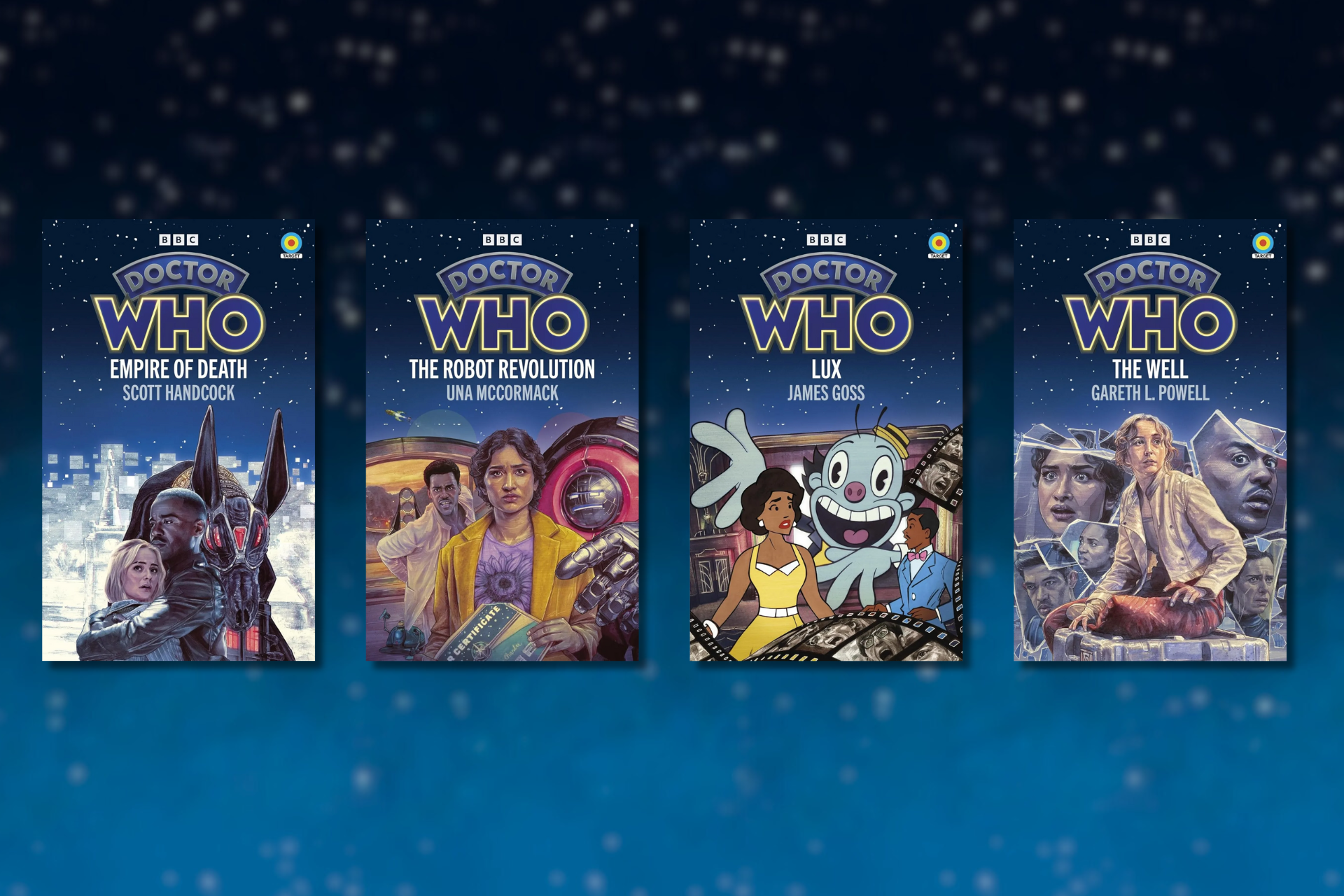
Now, thanks to the team at BBC Books, four Doctor Who stories from the Fifteenth Doctor’s first and second seasons get the Target treatment, following on from last year’s 60th Anniversary and Season One novelisations, with gorgeous cover artwork from illustrator Dan Liles.
Our resident Whovians Pete Messum and Matt Dennis give us their verdict on each of the new books below!
WARNING: Contains Spoilers!
Empire of Death
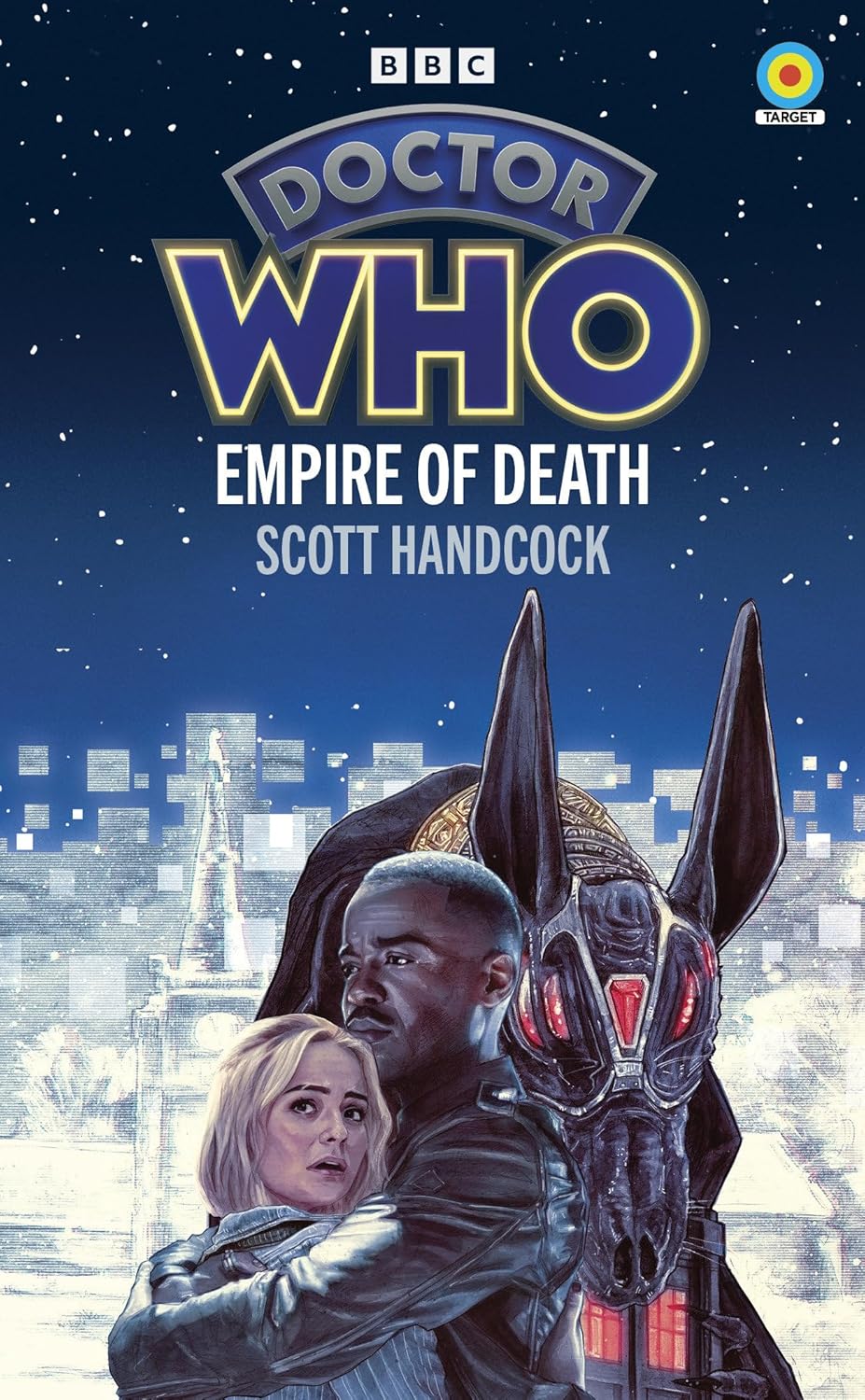
One of the exciting aspects about the Target Collection is the opportunity to develop and build on episodes that might not have worked quite so well on TV. The Legend of Ruby Sunday and Empire of Death were a mixed bag of a two-part finale to the Fifteenth Doctor’s first season, but script editor Scott Handcock’s novelisation nicely expands on the story, reinstating some deleted material and expanding on exposition and character work to make for a more satisfying adventure overall.
The expanded opening sequence is a treat for diehard Whovians (the Zarbi sequence cut from earlier drafts and mentioned in Doctor Who Magazine is a welcome addition) whilst also providing Sutekh’s death wave with a much greater sense of scope mid-way through the novel. Speaking of Sutekh, his motivations are made clearer thanks to Handcock’s interlude which touches on the Osiran’s backstory. Classic Who fans may have mixed feelings on this reinterpretation, but Sutekh has a real sense of presence in the second half of the narrative in a way that the TV episode struggled to maintain. Even the death of UNIT’s Colonel Chidozie is given a greater sense of impact, informing the Doctor’s character arc in a way that seemed to be lost on screen.
The story still has its issues — ironically the Memory TARDIS is completely forgotten about in a curious narrative gap — yet the expanded material does improve on what we saw on TV. If you weren’t too impressed with last year’s season finale, this Target novelisation may give you a new appreciation. Ultimately, Scott Handcock takes Russell T Davies’ script for Empire of Death and breathes new life into it. PM

Order EMPIRE OF DEATH here
The Robot Revolution

Some episodes of Doctor Who might seem a bit too light and breezy to sustain a whole novelisation, but author Una McCormack does a cracking job of expanding on The Robot Revolution in this adaptation of the Season Two opener.
There’s not much here that’s necessarily new or original to the novel, but McCormack peppers the story with some excellent characterisation and interesting backstory, offering readers a lot more insight into the lives of characters like new companion Belinda Chandra, the doomed Sasha 55, and Belinda’s ex-boyfriend Alan, which imbues the story’s rather basic robots vs rebels plotline with much higher stakes.
Most of Belinda’s backstory is cribbed from other episodes, but it’s interesting stuff worth repeating throughout this, her introduction in novelisation form. Sasha 55 is the character that benefits most from McCormack’s prose, who affords the character a lot more personality then was possible to portray in her short amount of screen time in the TV version (which in turn makes her ultimate fate a lot more meaningful and tragic here). Alan is also given a touch more backstory too, and the end result is a more rounded and interesting villain.
There’s a whimsical tone in places, which all ensures a fun and brisk read, yet one that is loaded with character and depth. MD
Order THE ROBOT REVOLUTION here
Lux

No author feels better suited to Lux then James Goss. Which is just as well, since Lux is arguably the most difficult story from Season Two (and Doctor Who as a whole) to adapt in novel form – a task which Goss is more then up to, judging by the end result here. Much like with his novelisation of The Giggle, Goss takes an unorthodox episode and meets the challenge of adapting it in incredibly creative ways.
By its very nature, Lux is an incredibly visual tale, what with its story of light gods, cinema screens and animated characters, and the editors have done a cracking job in ensuring these aspects aren’t lost within pages of straight prose, instead opting to include pictures, screenshots and playful fonts to illustrate the story so that it loses none of its visual punch. Goss matches this whimsical material with his descriptions, which are wonderfully irrelevant and playful in tone.
The meta sidestep midway through the story is also handled incredibly well – reorganised and redistributed throughout the story as a framing device, these scenes come off a lot less jarring here then they did in the TV version. In adapting these moments, Goss also has a lot of fun throwing in lots of in-jokes and references for Doctor Who fans which will certainly elicit a few chuckles.
Whilst the plot is pretty much exactly what we saw onscreen, Lux still makes for an incredibly fun read, thanks to the author’s playful text and off-kilter styling. MD
Order LUX here
The Well

The challenge of adapting Season Two’s horror tale The Well has fallen to award-winning sci-fi novelist Gareth L. Powell, who provides a mostly solid retelling of the episode. While former script editor Scott Handcock was able to reinstate deleted material and clarify some of the creative decisions with his novelisation of Empire of Death, Powell’s The Well feels a little restricted by its TV incarnation in places. Platoon Leader Shaya Costallion is given greater depth here, becoming a more integral character in the story and providing the ending with a greater impact, but while the personnel files – structured as interludes, expanding on the other soldiers – are a fun idea, they do very little to develop the characters beyond cannon fodder. Anyone hoping for more development with Aliss will be sorely disappointed, and she disappears without any resolution to her storyline. The opening sequence still feels a little brisk; the TV episode seemed to be in a rush to start the adventure but the novel struggles to justify this without the outer space skydiving visual. A little more creative license could have been used to set the scene better.
Ultimately, the problem with this Target novelisation of The Well is that it loses so much of the horror and ambiguity of the TV episode. There’s a prologue centred around the Midnight entity, which removes some of the mystery right out of the gate, while the final third of the novel struggles to balance describing what’s happening without over-explaining it. After The Well aired, Whovians discussed and debated exactly what was going on and what happened to the entity (how many life forms were in that air lock?), but this novelisation doesn’t lean into these doubts and ambiguities, instead offering some clear-cut explanations along the way. Flashbacks to Series 4’s Midnight are thrown in but as awkwardly handled as they were on screen, the resolution still feels rushed and the overall atmosphere is somewhat lacking. The Midnight entity and everything surrounding it works better with a sense of mystery – the horror of the unknown – but The Well struggles to maintain that ambiguity and thus loses a lot of the horror inherent within the premise.
Perhaps The Well isn’t best suited to a Target novelisation, or perhaps Powell felt restricted by what happened on screen, but this makes for a slightly underwhelming read. While on TV, I thought The Well was a much better episode, I have to confess that I much preferred the novelisation of Empire of Death. PM


![Unquiet Guests review – Edited by Dan Coxon [Dead Ink Books]](https://criticalpopcorn.com/wp-content/uploads/2025/10/ug-reddit-ad-e1761690427755.jpg?w=895)
![Martyrs 4K UHD review: Dir. Pascal Laugier [Masters Of Cinema]](https://criticalpopcorn.com/wp-content/uploads/2025/10/image-1-e1761586395456.png?w=895)

![Why I Love… Steve Martin’s Roxanne [1987]](https://criticalpopcorn.com/wp-content/uploads/2016/11/roxanne.jpg?w=460)

 Critical popcorn
Post your thoughts