
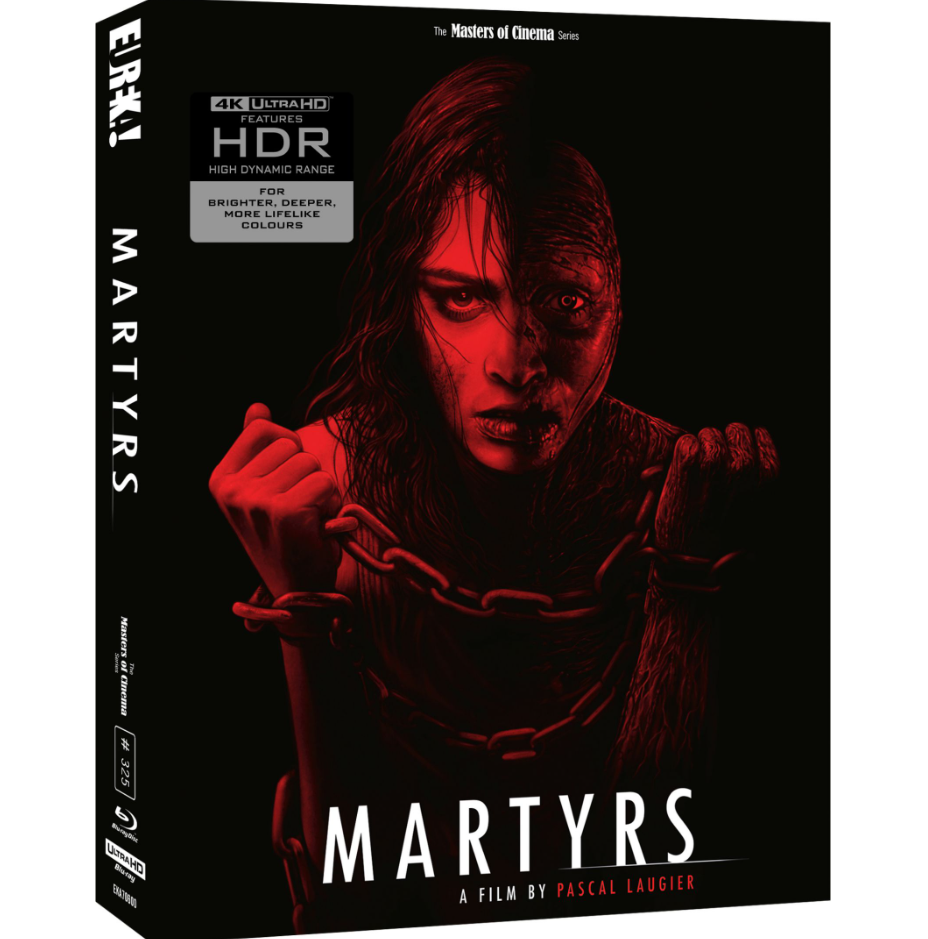
There’s a Halloween tradition within my friend group. Every year we meet up and watch a horror double bill – one schlocky fun horror, and one genuinely disturbing film. After one year when my disturbing pick was deemed “not scary enough” I was determined to pick something that would shake him to his core. As such, the next year I massively overcorrected and selected Pascal Laugier’s seminal horror masterpiece, Martyrs.
It’s tempting to call Martyrs the best film you will ever watch once, but that’s not quite true. Calling it disturbing is an understatement – it’s up there with the most traumatising cinematic experiences of my life (maybe Come And See has it beat, but not by much) but it’s also so layered, so strangely fascinating, that you end up revisiting it despite yourself.
To go into the plot too much would rid the film of much of its potency, but at its core is the devoted friendship of two young women, Anna (Morjana Alaoui) and Lucie (Mylène Jampanoï). Lucie is a survivor of an unnamed childhood trauma; while Anna is her fiercely loyal guardian. Together they invade the home of a well-to-do family in search of answers. The truth they uncover drags them, and us, inexorably into a nightmare that only grows darker with each subsequent revelation.
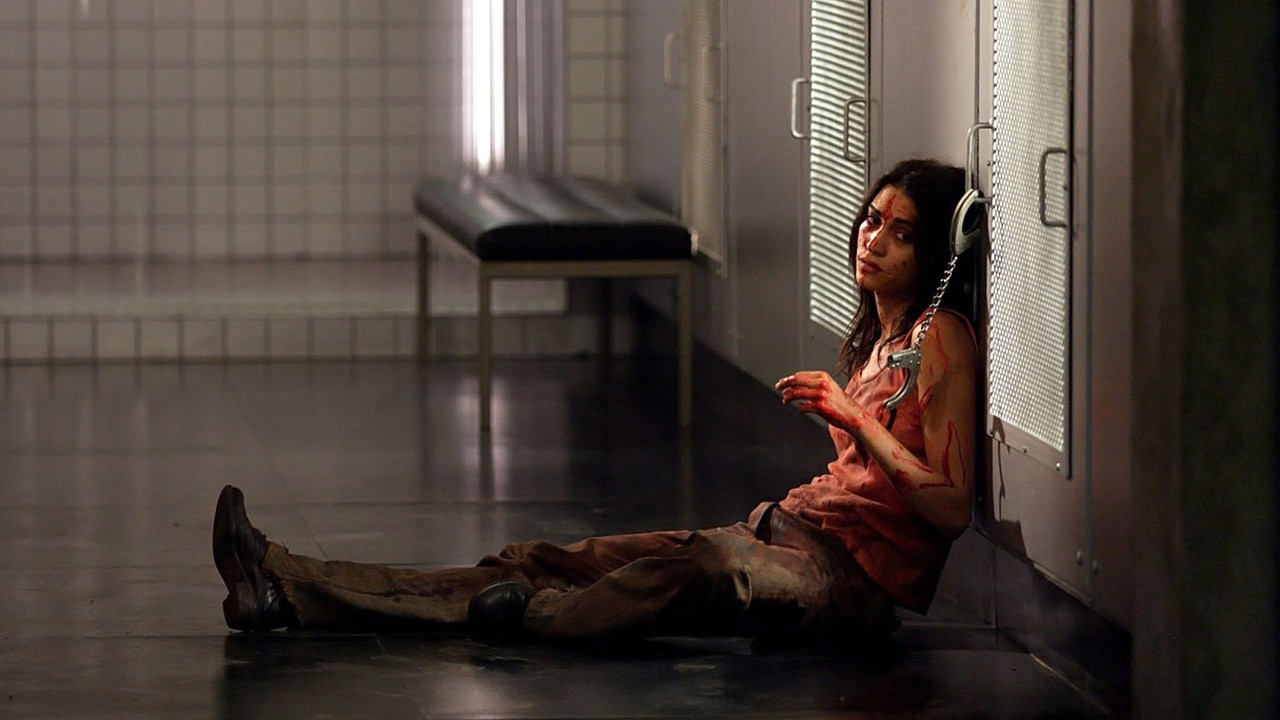
I often describe Martyrs as three horror films in one, each marked by a decisive, gut-wrenching pivot at each new reveal. It begins as a home invasion thriller, shifts into a supernatural mystery, and finally descends into an exceptionally disturbing cult horror. Laugier wrong-foots the audience with every new plot development. The setting is so disorienting, you’re constantly shifting sympathies, and just when you think you know whose perspective to trust, the film twists again, right up until the film’s final, agonizing act, where the dreadful significance of the title becomes apparent.
Martyrs is often lumped in with the so-called New French Extremity movement – a label Laugier vehemently resists. There are clear parallels to be drawn between this and films that fit more comfortably within that movement – it plays with narrative conventions like Haute Tension, and features stomach churning horror like Inside, but where many of those films revel in transgression for its own sake, Martyrs feels more introspective, even mournful. To me at least it feels more akin to something like Trouble Every Day, a film that uses horror imagery to plumb the depths of human lust and desire, not content to just shock. As Alice Haylett Bryan says in one of the extras in this release, Martyrs’ combination of visceral gore and existential dread effectively serves as the connective tissue between French Extremity and French Horror cinema.
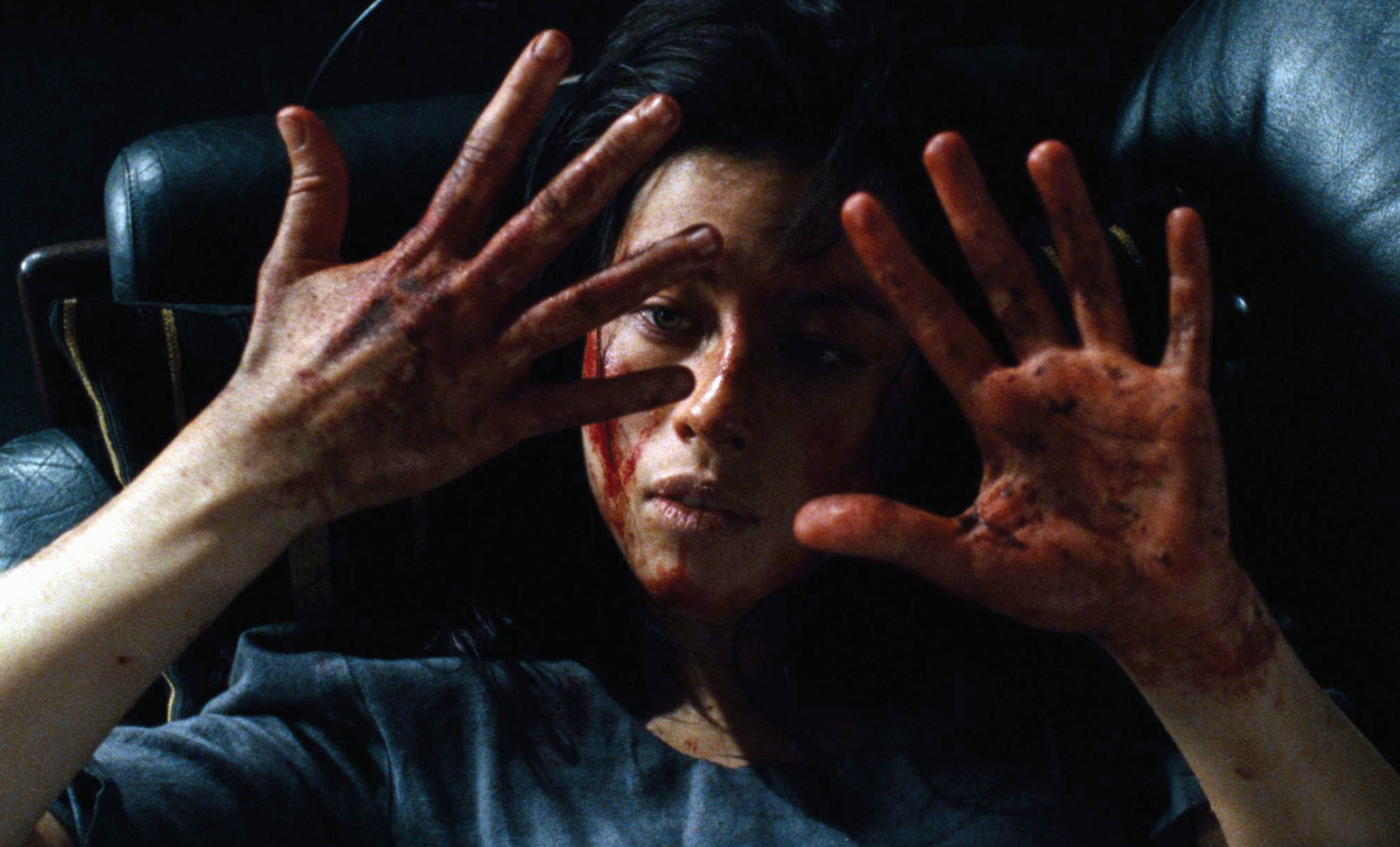
It’s strange that Laugier has said he made Martyrs after seeing Hostel, as despite superficial similarities, the two films seem diametrically opposed. Eli Roth’s film is about instant gratification – it’s horror cinema as spectacle, as a theme park ride. Martyrs, on the other hand, is slow, existential, and melancholy. The violence is horrific, unrelenting and very very unpleasant, but it never feels sensational or gratuitous. Laugier makes you care deeply for its heroines before dragging them through hell. There’s no gleeful showing off of gore effects, and the violence is almost as traumatising for us as it is for the characters. There’s no catharsis, no spectacle – just the slow, methodical process of breaking down a body and a soul.
You’d think this would make it a gruelling watch, and in parts it is, but more than anything else, what sticks with you is how deeply sad the film is. It’s just about the nastiest and most tragic depiction of survivor guilt I’ve ever seen, and the innate decency of Anna, the very quality that would mark her out as a “final girl” in a more conventional horror film, here is the thing that ultimately dooms her. And then there’s that enigmatic, ambiguous ending, that leaves you with more questions than it answers. It’s an unexpectedly poetic, unsettling conclusion that sits somewhere between despair and revelation, and “keeps us doubting…”
It’s also an astonishingly well-crafted film, in structure and in the way it’s shot. The precision of the camerawork, the startling use of light, that unforgettable extreme zoom into Anna’s eye—it’s all meticulously composed and almost transcendental. But it’s not a beauty that gives you distance. Laugier ensures that you feel every cut, every punch, every whimper.
This new 4K release from Eureka Entertainment, sourced from the original camera negative, is a beautiful restoration, and a reminder that this isn’t *just* another throwaway torture porn film. The opening home invasion is more reminiscent of Michael Haneke than the nastier genre entries, and even at its most extreme, the film feels deliberate, precise, and mournful. In its own way, Martyrs even anticipates the social horror of films like Get Out: a wealthy, older class exploiting the bodies of the young – particularly young women – for their own ends. The implacable demeanour of the cult makes the violence even more disturbing – there’s no passion or anger in their actions, just a cold clinical detachment. It’s viscerally nasty, in a way that words can’t really do justice to, but it’s also profound, beautiful in a grotesque way, and painfully gripping. It’s not exploitative (onscreen anyway, hearing about the production is a separate matter) so much as it is humane – while still confronting the banality of evil, existential dread, and the human capacity for cruelty taken to it’s extreme.
Once the lights came up at the end of our Halloween screening, nobody said a word. Everyone just sat there, utterly traumatized, with thousand yard stares, and left pretty much without a word. Not many films can produce that effect. Martyrs is not for the faint of heart, and it’s certainly not one to throw on for a fun bit of Halloween viewing (as I learned to my cost). But for those willing to face it, it’s an experience like no other – visceral, harrowing, and, yes, transcendent. A truly horrifying film of brutality, beauty, and beatification, that I’ll probably only watch another four or five times.
Special Features
Alice Haylett Bryan is such an engaging presence on these releases – I loved her analysis of Trouble Every Day earlier this year, and Beauty and Brutality her analysis of Martyrs is similarly incisive and accessible. The rest of the extras are similarly indepth, from the new audio commentary with Nia Edwards-Behi, co-director of Abertoir Horror Film Festival, and several features; Revisiting the Belford House – newly recorded interview with lead actor Mylène Jampanoï, Over Her Flayed Body – new video essay on Martyrs and body horror by Xavier Aldana Reyes, author of Contemporary Body Horror, and Organic Chronicles – archival feature-length documentary on the making of Martyrs. In addition there is a selection of interviews, stills and trailers.



![Unquiet Guests review – Edited by Dan Coxon [Dead Ink Books]](https://criticalpopcorn.com/wp-content/uploads/2025/10/ug-reddit-ad-e1761690427755.jpg?w=895)


 Critical popcorn
Post your thoughts