
Some films are so engrained by modern iconography you feel you’ve witnessed it before you’ve even seen the full movie by itself. Raging Bull was one of those films for me, and that thought is highlighted by the title sequence in the boxing ring, with Pietro Mascagni‘s stirring Cavalleria Rusticana “Intermezzo” accompanying a distant black and white shot of a boxer springing around the square shadow boxing, with only the floodlights and flash bulbs to light the moment, and it is truly iconic.
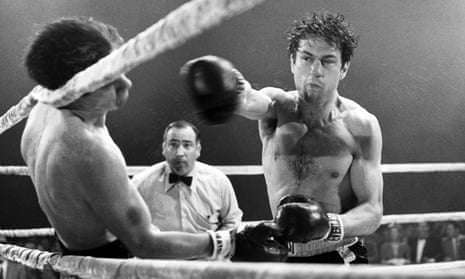
And from the beginning, this is a story that’s deftly framed, with director Martin Scorsese decided to keep this opening shot from outside the ropes, as later he’s specifically inside them, as once we’ve met the lead character – Robert De Niro’s brutal Jake LaMotta – you realise it’s a metaphor for the entire movie, as Jake principal fight is always with himself.

Opening in New York City in 1964, we’re presented with an overweight LaMotta in an unknown dressing room, rehearsing something that sounds like a soliloquy, but we’re not savvy to why or how at this point, but we’ll definitely loop back to it at the conclusion. Because first up Scorsese takes us back to NYC in 1941, and we’re in the ring with De Niro’s La Motta as he fights an opponent and in truth, it looks like he wins but he’s not given the fight on the final numbers.
Somewhat emotionally defeated, he doesn’t react too frustratedly but it does give us an initial look at how Raging Bull is filmed: shot in black and white, taking in shots of the shadows and the shade, the dripping sweat, hearing a distant roaring atmosphere and – initially – some beautifully controlled human brutality, but that’s just before there’s a riot in the crowd and chaos kicks off when the result is announced – all handsomely supplemented with a long shot of the organ player, as she plays their usual ‘end of fight’ tunes, as if the frenzy behind them isn’t even happening.

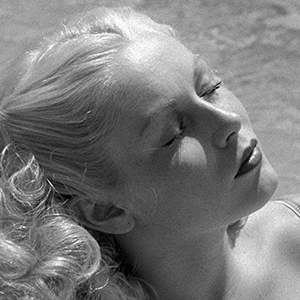
I’ll be honest, in the first half of Raging Bull, I wasn’t sure if I was pulling for the main character in any form, despite this being De Niro’s stupendous performance (and it won him an Oscar), Jake is violent away from the ring, as well as in it. With true story tie-ins of domestic abuse towards his wives, who are portrayed by Lori Anne Flax’s as Irma LaMotta, Jake’s first wife, and then Cathy Moriarty’s Vickie LaMotta – who’s in the majority of the film and gives a stupendous, strong performance – it’s clearly problematic siding with this man, especially as they clearly portray his ferocity, and it’s primarily uncontrolled aggression towards everyone. He’s often described as an ‘animal’ by other characters in the film, and once his untethered mindset is fired up by jealously towards anything he can’t fully control, it results in his rage being unleashed on his brother Joey, spectacularly depicted by Joe Pesci, and then it’s even more difficult to want anything good for him.
Jake LaMotta does have success though, and shared via a mid-movie montage that seems like the feel-good years in his boxing career, when he was winning. De Niro is built for this role, in both a local NYC sense of knowing/feeling the character, but also in a literal physical sense. He’s a beast, he’s clearly powerful, and it’s unusually compelling to witness. While this sets up the film as a definite vehicle for the De Niro/Scorsese brilliance, it’s also a great ensemble piece with Pesci and Moriarty being key to his story. They’re equally frighted by this troubled, yet talented, man in their lives, but will become a part of his downfall – as he begins to lose his mind, in a world where he was always on the edges of sanity anyway.
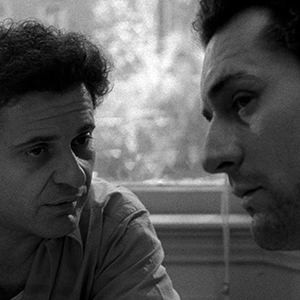
Originally written by Mean Streets’ Mardik Martin and Taxi Driver’s Paul Schrader, the extras make it clear this was a passion project for Robert De Niro, who wanted to portray Jake LaMotta in all his brutal nature, but mostly wanted Scorsese on board, with the duo eventually honing much of the script when filming began. It’s also interesting to hear that Scorsese was at quite the loss in his life, and unwell, but also with his filmmaking (which oddly echoes After Hours, and look how good that is) but Bob De Niro and him were friends from childhood, and he convinced him to get working – and then once committed, neither pair ever looked back.
Raging Bull is a showcase for a number of creative choices, and stylistic flairs, in its filming decisions, never forgetting the stunning cinematography from Michael Chapman. While, as briefly mentioned, Scorsese decided to keep us inside the boxing ring for the matches, making us quite literally a part of the fight – which are also stunningly ferocious and realistic – we’re often close-up to the characters during intense moments, and drop back for wider, slower scenes that reflect the calm they’re framing. I’d assume this reflects Jake’s mindset, being chaotic in a psychological sense, with only some early sensual situations with his new wife Vickie comforting him and Scorsese lets the moment exist on screen, in its emotive element.
I was also intrigued by the inclusion of non-speaking shots of other characters in discussion, where you’ll watch someone talking but hear nothing because we’re too far away from where it was happening. This felt like Jake was watching but not knowing what they were saying – possibly increasing his inner bitterness and turmoil that never stopped brewing. And, when you think about, in real life you don’t hear what other people are saying from across a room, even if you want to know – but I haven’t seen that done a lot in film, and it’s effective here.
And, of course, it’d be outrageous of me to not mention the fight sequences, and the editing from the ever-brilliant Thelma Schoonmaker, who won the second Oscar for the film. Cut quickly to aid realism, adding in sudden and effective changes in pace, or representations of aggression, you sense truth in the style as it cuts between camera shots and still photography effortlessly – never losing the rhythm of the moment. Plus the use of background flash photography to speed up a victory moment, or a killer punch in a vital instant feels so right, which is kind of incredible.
Raging Bull isn’t without its controversies, but that could be said about any film championing a lead character who thrived on violence, both in his career and towards those people in his life. He beats his wife, there’s heavy trauma for everyone in varying levels of psychological and physical intensity, but on film they’re characters – and film itself prospers on heightened, intense character drama – and there’s so much on display here.
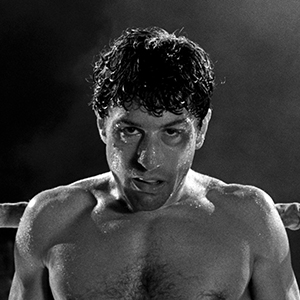
With that in mind, it’s also important to offer this film an entire context, and by the telling of Jake LaMotta’s life story from early successes to those unfit and overweight, lonely nights hosting solo nightclub shows, as an audience we’re definitely offered the information to make a clear decision about what they think about him, and especially when you see where Jake ends up. This man is brutal in his affairs and physicality rules his existence, but there’s no other way to tell it – he’s not really a nuanced character, even if De Niro gives him individuality, this is who he is. Just another human being, doing what he can with whatever he’s been given.
It’s easy to appreciate why Raging Bull, and let’s remember this was my first full visit, remains in so many all-time top film lists, because it stands out uniquely from its 1980 cinema release due to the authenticity it portrays, and the unique choices it makes – and of course, Robert De Niro’s intensely brilliant lead performance.
This Criterion Collection release is packed, as ever, with extras and they delve intelligently into the archives, and make this entire edition a special release. Alongside this nww 4K digital master, approved by Scorsese, with 2.0 surround DTS-HD Master Audio soundtrack – the only brief sound issues are with characters just a little bit further away from the microphones but it’s barely noticable overall. Also have a watch, and a listen to the Audio tracks, of the De Niro/Scorsese interviews, and the Vickie La Motta with Cathy Moriarty as well, to begin with, before delving into the wealth of other insight collated by Criterion, as listed below.

Raging Bull on 4K UHD is available from Criterion Collection now: https://amzn.to/3V7YdLW
Special Features:
- One 4K UHD disc of the film presented in HDR and one Blu-ray with the film and special features
- Three audio commentaries, featuring Scorsese and editor Thelma Schoonmaker; director of photography Michael Chapman, producers Robert Chartoff and Irwin Winkler, casting director Cis Corman, music consultant Robbie Robertson, and others; and boxer Jake La Motta and screenwriters Mardik Martin and Paul Schrader
- New video essays by film critics Geoffrey O’Brien and Sheila O’Malley
- Fight Night, a making-of program featuring Scorsese and key members of the cast and crew
- Three short programs highlighting the collaboration between Scorsese and actor Robert De Niro
- Television interview from 1981 with actor Cathy Moriarty and the real Vikki La Motta
- Interview with Jake La Motta from 1990
- Program from 2004 featuring veteran boxers reminiscing about La Motta
- Trailer
- English subtitles for the deaf and hard of hearing
- PLUS: Essays by poet Robin Robertson and film critic Glenn Kenny
- New cover by Eric Skillman


![Unquiet Guests review – Edited by Dan Coxon [Dead Ink Books]](https://criticalpopcorn.com/wp-content/uploads/2025/10/ug-reddit-ad-e1761690427755.jpg?w=895)
![Martyrs 4K UHD review: Dir. Pascal Laugier [Masters Of Cinema]](https://criticalpopcorn.com/wp-content/uploads/2025/10/image-1-e1761586395456.png?w=895)
![Why I Love… Steve Martin’s Roxanne [1987]](https://criticalpopcorn.com/wp-content/uploads/2016/11/roxanne.jpg?w=460)

 Critical popcorn
Leave a reply to Dan Bullock Cancel reply