
This week’s Doctor Who was absolutely terrific. Sutekh was a superb villain: memorable, menacing and a genuine threat for the Doctor to face. There was a terrific atmosphere throughout, balancing a sense of epic scale with great small character moments – particularly between the two leads. In fact, there’s a good argument to be had that this was one of the finest Doctor Who adventures ever put to screen.
But enough about the Pyramids of Mars repeat on BBC Four, let’s talk about Empire of Death…

Jokes aside, it’s fair to say that expectations were pretty high for this season finale. Doctor Who finales are tricky beasts: rarely completely satisfying, and often prioritising epic, universe-ending stakes and big moments over a solid, standalone plot. Sutekh’s storyline is almost doomed to feel anti-climactic after 50 years away from our screens, and the mystery box aspects have been teased throughout the season without any kind of development since The Church on Ruby Road, meaning that Empire of Death is expected to provide satisfying answers in less than an hour after seven episodes of waiting. To say that Empire of Death is disappointing isn’t too surprising, although admittedly one would have hoped that a sequel to one of the best-loved Doctor Who stories of all time would at least work as a great standalone story.
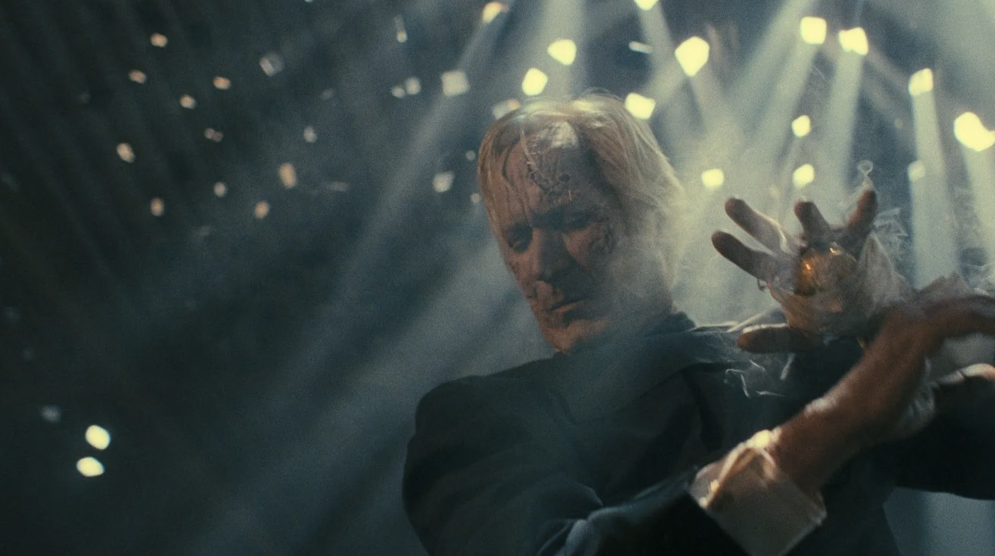
Speaking of Sutekh, the malevolent Osiran is said to have evolved into a more godlike form (certainly a far cry from his 1975 self) and has been hanging onto the TARDIS ever since his apparent defeat…which in the broader context of Doctor Who must surely be around two thousand years at this point? It’s a curious retcon that creates more questions than it does answers. Why was the TARDIS only having issues from Wild Blue Yonder onwards? Why is it only in the last several adventures that we’ve seen manifestations of Susan Twist? What even was Triad Technology? There may be some ambiguity to be found with the salt at the end of the universe, but this isn’t addressed on-screen. Sutekh himself appears to have become an evil Doctor Who fan, engaged in the mystery of Ruby’s mum and watching the Doctor’s various adventures over the millennia. There might be a fun metaphor to be found there about fan culture, even if I’m not sure Sutekh is the right character for that kind of thematic concept.
Certain plot points – particularly with regards to Sutekh’s defeat – felt glossed over, with short and vague lines thrown out there that were easily missed. Putting a lead on Sutekh’s jackal-esque form is a neat tongue-in-cheek gag (and a good use of the Doctor’s intelligent gloves), but it’s not made clear what dragging him through the time vortex actually achieved. There’s a suggestion that Sutekh’s gift of death attacking the universe twice cancelled out the effect and brought everyone back, yet it ends up feeling like a strong visual without a clear logical explanation. It’s even less clear what happened to Sutekh at the end – did he disintegrate, or teleport? It’s hard to believe that the time vortex killed him when it didn’t before, especially given that he’s been hugging the TARDIS throughout the time vortex for millennia (apparently). Ultimately, once Sutekh destroyed all life in the universe, the story was guaranteed to end with a big reset button, reducing the dramatic tension right from the beginning of the episode. Perhaps having Sutekh ‘win’ in the first place creates a narrative dead-end that the story struggles work back from (after all, Sutekh never managed to completely break free from his trap in Pyramids of Mars, and still became such a memorable villain).

This episode also saw the conclusion of Ruby Sunday’s storyline, which already seems to be divisive amongst fans. It’s a deliberate anti-climax, intended to be an emotional pay-off that audiences might actually relate to (as opposed to some kind of cosmic twist). That said, the storyline resolves so perfectly that it feels somehow disingenuous, not quite hitting that bittersweet feeling Russell T Davies‘ script seems to be aiming for. After the fairy-tale set-up from the Christmas Special, to go for such a down-to-earth ending quite a tonal shift, and the mystery box approach to the storyline in hindsight leaves the impression that Davies was deliberately manipulating audience expectations for a more fantastical or sci-fi twist to Ruby’s storyline, when in fact he never intended to go in that direction. It’s not an issue with the idea itself – that Ruby’s mother was in fact simply a normal woman who gave her up – but more with the framing of the storyline leading up to this reveal. The mystery box is teased and teased and opened up to reveal something perfectly ordinary that doesn’t line-up with what was implied in earlier episodes.
The Time Window sequence from last week’s The Legend of Ruby Sunday doesn’t make much sense in hindsight. Why is Ruby’s mum cloaked like that? Davies has suggested that it could be “time shrouding her” in the in-vision commentary, but what does this actually mean? Why does Ruby’s mum point at the Ruby Road sign to name Ruby? Is she communicating very badly with the Doctor, or is it simply a tease without a satisfying answer? Why did the Doctor’s memories of that night change, even after the Goblins incident? Why could nobody find Ruby’s mother until 2046, with all of the experts involved? (And also, if they knew in 2046, why didn’t the Ambulance know in Boom?) (And also also, why does an important plot point of this episode hinge on what seems to be deleted moment from 73 Yards?) Why does the snow keep falling? There’s a vague implication of a reason in the previous episode, but it’s a tenuous explanation at best. What’s the association with the music? Maestro’s claim of a “hidden song” within Ruby (and their knowledge that The One Who Waits was present at the time, but not that they were hiding on the TARDIS they attacked) in The Devil’s Chord doesn’t quite line up in retrospect. Ruby’s arc had a strong set-up in the Christmas Special, and has reached a conclusion in this finale, but there’s been a distinct lack of character and narrative development in the intervening episodes. It’s a shame when episodes like 73 Yards have shown us just how good Millie Gibson can be – and even the events of that episode were undone by the end.

Before this review becomes too negative, it’s worth acknowledging that Empire of Death does have a fair bit going for it. It always seems to be easier to pick out an episode’s faults in a review rather than highlighting its various strengths, so let’s talk about some of the good bits. There’s no denying that Ncuti Gatwa and Millie Gibson give it their all, especially in their final scene together on the TARDIS. We know that Ruby will be back next season, but the way Gatwa plays that final scene as the lonely Doctor brings a new side to his incarnation that we haven’t seen before, and one that feels inherently Doctor-ish. The sequence with the Doctor and Mel (Bonnie Langford) racing away from the sandstorm on a Vespa was great fun and demonstrated a more widespread threat from Sutekh. It’s also worth mentioning that Empire of Death features some incredibly impressive visual effects work (that must’ve looked excellent at the cinema screenings), perhaps proving why it’s taken so long to have the God of Death return to the series.
That all being said, it is worth acknowledging that the episode is one of the most fan service-y stories in Doctor Who to date. To literally have our main characters watching Pyramids of Mars on a TV screen at a few points feels like a metatextual step too far, an acknowledgement of the series as a TV show with the kind of nostalgic attitude that has hurt Who (and many other franchises) in the past. As a fan, it’s difficult not to be excited by the return of Sutekh, the references to Susan (what was all that about in the end?) and the inclusion of the Memory TARDIS (in what must surely be a prequel to Tales of the TARDIS), but it’s hard to say how non-fans will respond to these elements. Does this sort of thing make Doctor Who come across as impenetrable to a wider audience? Russell T Davies‘ original run seemed to strike the best balance, bringing back characters like Sarah Jane and K9 but recontextualising them in the context of the story at hand, treating them as characters the Doctor knows even if the audience might not. Given that this season was sold as a clean slate for Doctor Who, and it was less than a year ago that we were celebrating the history of the series with the 60th Anniversary Specials, I wonder if this finale (and to some extent this season) has been a bit too nostalgic for its own good.
As a whole, this season has had some strong standalone episodes, yet it’s lacked consistent character development. The mystery box elements feel unsatisfactory because they were set-up, didn’t build to anything particularly interesting and didn’t develop across the season in a way that made the journey feel as worthwhile as the destination. Some may blame this on the reduced episode count, although I’d argue it’s because of the lack of continuity episode-to-episode (once again, the 6-month time gap between the first 2 episodes feels incredibly awkward), which has been a key strength in earlier seasons of Doctor Who – including in Davies’ original tenure as showrunner. Season 1 is a fun, sometimes experimental run of episodes that feature the show’s best production values to date, but it’s difficult not to be left wanting more from it.

Empire of Death isn’t the sort of finale one would expect from a first season; once your new Doctor has battled the God of Death and saved every planet he’s visited (since 1975), where else is there to go in terms of stakes for future seasons? That’s a question for next season (along with who Anita Dobson‘s Mrs Flood is), and while this two-part extravaganza wasn’t quite the satisfying pay-off we’d all been hoping for, it’s still great to see Gabriel Woolf back as Sutekh nearly 50 years later in a big Doctor Who blockbuster. It’s a fun story with some great moments littered throughout (Sian Clifford‘s cameo as the Kind Woman adds a welcome touch of humanity to the apocalyptic stakes), and inevitably fan opinions will vary as to how satisfying certain reveals were. We’ve had 7 weeks and 8 episodes of new Doctor Who, filled with action, humour and romance, and even if we all have our favourite and least favourite episodes, it’s been a good reminder of why the Whoniverse has lasted for over 60 years.









Leave a Reply to Book Review: Doctor Who – Death in the Stars – Critical popcornCancel reply