
No film goodbye has hit me harder in recent years than Paul Mescal’s slow retreat down that bright white corridor in the final seconds of Aftersun. The scene is luminous and baffling at once, primarily since we’re never quite sure what we’re saying goodbye to. Director Charlotte Wells leaves the ending deliberately ambiguous, and in doing so has spawned many a YouTube video and Reddit forum dissecting its intention. Whatever you believe happens to Calum at the end of the movie, it’s impossible not to be broken by it.

Set in the late 90s, 2022’s Aftersun sees 11-year-old Sophie (Frankie Corio) go on one final holiday with her dad (Mescal) at a fading Turkish resort the day before his 31st birthday. As Sophie befriends other teenage tourists, all of them creeping towards the cusp of adolescence, it’s clear that Calum is reaching the edge of something himself, experiencing intense inner turmoil. The movie utlises different filming styles and time frames, stitching together the film’s main shooting style and fragments of MiniDV footage from Calum’s camera. For many audience members (including me), this grainy shaky-cam is steeped in nostalgia, eerily reminiscent of home movies we grew accustomed to viewing in the 90s, that crooked tracking line shredding the screen’s upper and lower halves, vastly different from today’s glossy TikTok fare.
Following an emotionally charged dance scene to David Bowie’s Under Pressure (the lyrics This is our last dance attaining added poignancy) the final shot depicts a dreamlike image of Calum alone in a rectangular room. It’s become one of the lasting shots of 2020s cinema, already iconic three years later, as Calum pockets the camera and descends towards the back of the room. Then he vanishes beyond some waiting double doors. The doors drift to a close. Roll credits.
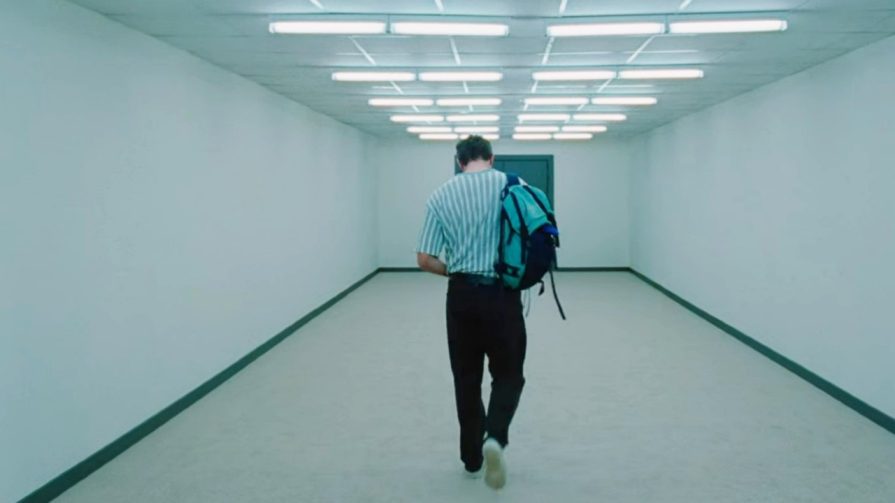
Wells’ ambiguity is discreetly devastating. Whether Callum’s farewell is permanent due to suicide or whether he and Sophie are simply estranged is never clarified, though the defining consensus among viewers is overwhelmingly the former. What’s clear is Calum is no longer in Sophie’s life. His descent towards the door implies he’s entered a headspace at his depression’s apex, convinced that the world, and Sophie, will be better off without him, when the truth will always be anything but.
It’s an unforgettable ending, and a devastating look at the impact of depression on those left behind to pick up the pieces. There’s a reason it remains Mescal’s greatest movie, no matter how many Gladiator sequels arrive afterwards.


![Unquiet Guests review – Edited by Dan Coxon [Dead Ink Books]](https://criticalpopcorn.com/wp-content/uploads/2025/10/ug-reddit-ad-e1761690427755.jpg?w=895)
![Martyrs 4K UHD review: Dir. Pascal Laugier [Masters Of Cinema]](https://criticalpopcorn.com/wp-content/uploads/2025/10/image-1-e1761586395456.png?w=895)
![Why I Love… Steve Martin’s Roxanne [1987]](https://criticalpopcorn.com/wp-content/uploads/2016/11/roxanne.jpg?w=460)

 Critical popcorn
Leave a reply to Dan Bullock Cancel reply