
The first one is always the best. That’s a truism for every franchise out there, with the possible exception of Alien and The Godfather. Once a film series gets past three films, it faces the inevitable threat of diminishing returns, of repeating itself, of having to go bigger than what came before.
The Jurassic Park series has gone bigger and bigger with each instalment, culminating with Dominion, which concluded with dinosaurs and humans coexisting uneasily. So where do you go from there? To his credit, director Gareth Edwards manages to – sigh – “find a way” to do something different with Jurassic World Rebirth.
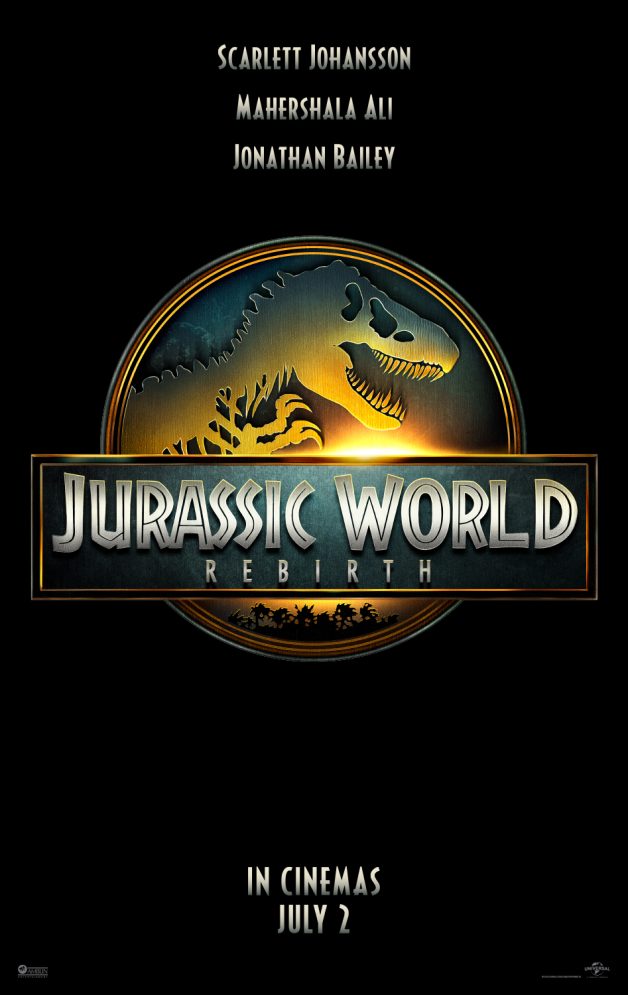
As someone who disliked Jurassic World Dominion (although Dan recommends the Extended Cut!), I still appreciated that Edwards stuck with the continuity of the previous films, dumb as it may be. Set roughly thirty years after the previous film, Rebirth presents a world where dinosaurs are apparently dying out again, and the sheer wonder of the previous films has been replaced with widespread apathy. The visual of a gigantic sauropod holding up traffic is a great visual, and far more effective than any exposition in conveying how dinosaurs have become part of the background noise of daily life, even if it seems unlikely that people would have become so bored with them already.
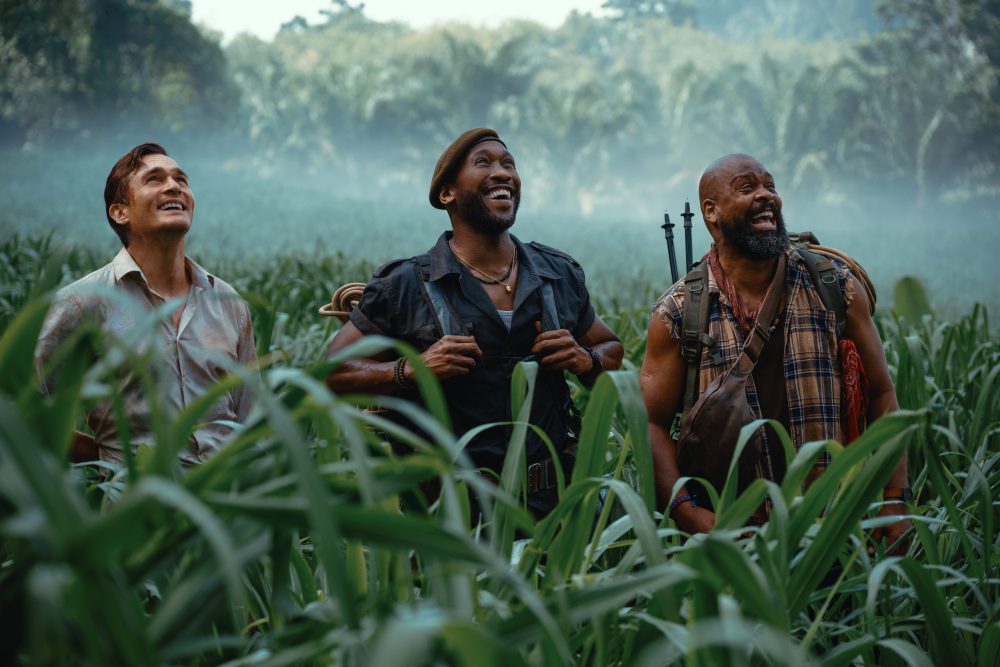
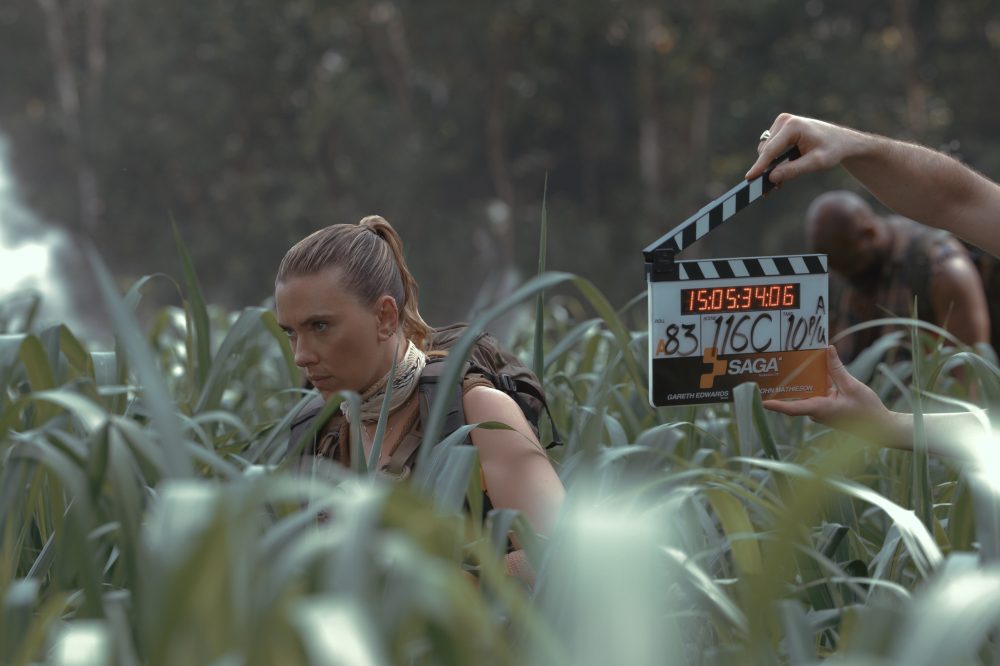
It all starts promisingly enough, with a genuinely creepy opening, only marred slightly by the Final Destination-esque contrivance that leads to the genetically mutated dinosaurs escaping. Characters are introduced efficiently, and Edwards actually takes time to flesh them out before the inevitable chaos. Scarlett Johansson plays Zora Bennett, a mercenary hired by pharmaceutical tycoon Krebs (Rupert Friend) to venture to yet another secret island, to retrieve three blood samples from the biggest dinosaurs on land, sea and air, respectively. She’s joined by eager paleontologist Henry Loomis (Jonathan Bailey) and fellow mercenaries led by Duncan Kincaid (Mahershala Ali). Complicating matters is the presence of the Delgado family, crossing the ocean on a yacht are initially rescued by the team, only to get separated upon arrival at the island.


The plot is refreshing in its simplicity – a stripped-down treasure hunt with giant prehistoric monsters. More Kong: Skull Island than Godzilla, it’s lighter thematically than previous installments, but that’s part of the appeal. Johansson and Ali might be slumming it, but they inject their roles with enough life to make them feel like more than the usual thinly written archetypes. David Koepp’s script is characteristically witty in places, and there’s a distinct lack of in-jokes or self referential nods. There is a refreshing earnestness to the film, and Ali and Johansson bring real emotional weight to their characters, although they are occasionally hamstrung by clunky backstories. Similarly, Bailey brings a childlike wonder to Loomis, and it’s nice to see a geeky character who isn’t afraid of his own shadow, throwing himself (sometimes literally) into the action, even if his moral objections to the mission feel crowbarred in.
Rupert Friend is another highlight as the shady InGen representative, but there’s a bit of dissonance between his performance and what the film clearly wants him to be. Friend seems to be playing him along similar lines to Martin Ferrero’s lawyer from the first film – callous maybe, but not evil. However the script, and by extension the other characters, view him as more like the overtly villainous InGen executives that populate the series, and the result is frustrating.
Meanwhile, Manuel Garcia-Rulfo and his family are all likeable enough as the audience surrogate, if a bit forgettable, (apart from his daughter’s boyfriend, who is begging to be eaten) However, the breakout star will likely be Dolores, the adorable little Aquilops (See! you learned something!) that befriends his youngest daughter Isabella (Audrina Miranda).
Where the film shines is in the moments of spectacle. Edwards has already demonstrated his sense of scale in Monsters and The Creator, and does so again here with the introduction of the Titanosaurs. It’s a genuinely affecting sequence, and a touching tribute to Spielberg’s original film. It perfectly captures the sense of awe that is missing from the first half of the film, and the emotion on Bailey’s face really sells it. It’s also a canny way to recontextualise the dinosaurs, having these cynical characters rediscovering their sense of wonder.
There are three standout action set-pieces to rival anything in the previous films. The Spinosaurus attack on the boat, the Quetzalcoatlus egg hunt, and the Tyrannosaur chase downriver (adapted directly from the original Michael Crichton novel – and there’s an excellent Folio Society version to pick up). On a technical level, these are thrilling, and Edwards keeps lots of plates spinning at once. Where he falls down is in the human element. There’s no moment to rival poor Eddie Carr getting ripped apart in The Lost World, primarily because Edwards doesn’t ever really make us care about his characters. They’re there to be chased, and eaten, and while there is exposition ostensibly to make us care about them, it all feels a bit trite and throwaway. Even the one scene explicitly designed to elicit emotion from the audience is undercut almost immediately in a frankly baffling decision.
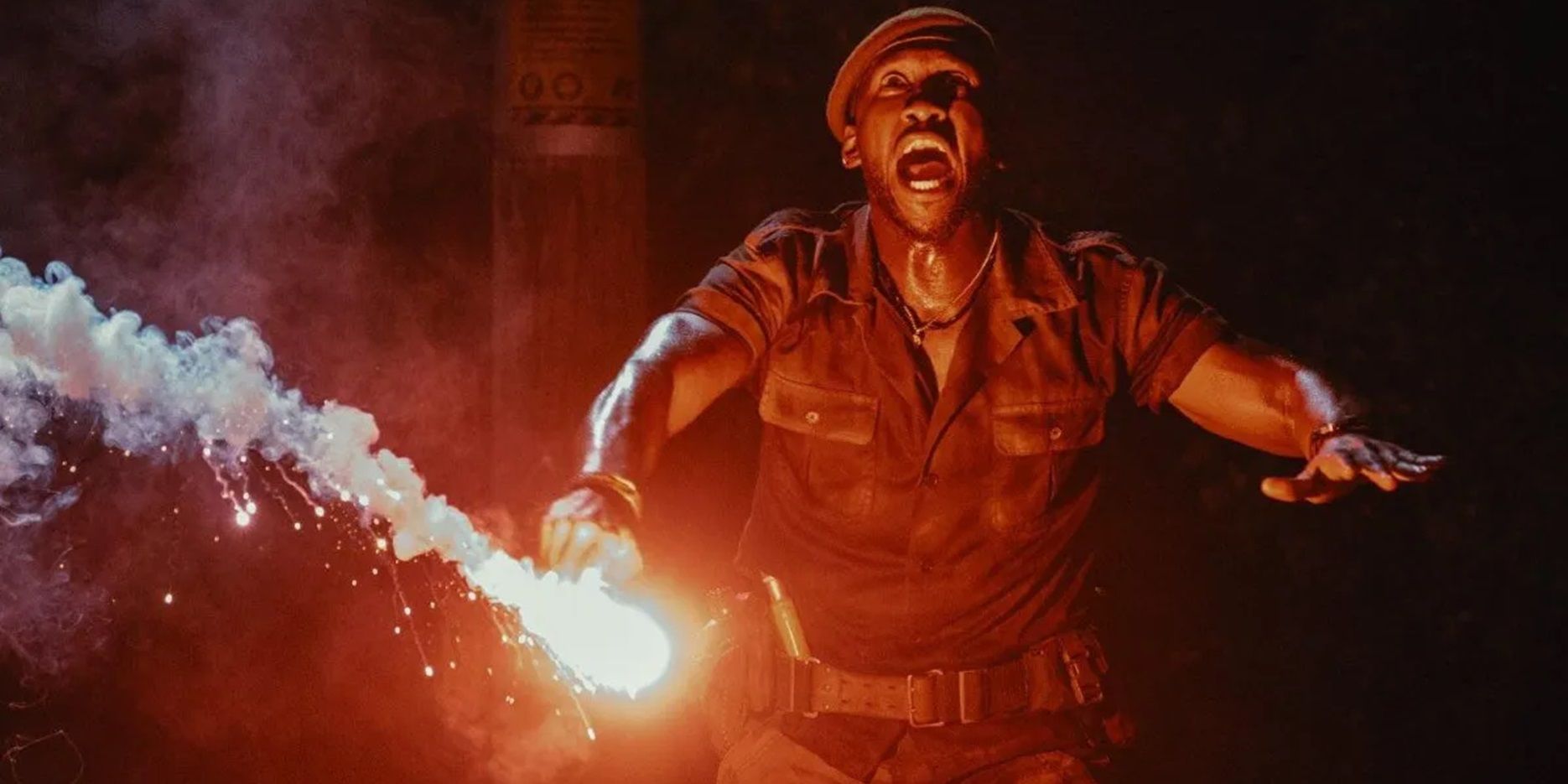

It also makes the same mistake as Jurassic Park III in that all the characters who are going to die, die very early on with very little fanfare. One character is in the dinosaurs mouth before it’s even clear what’s happening. The main issue with this is it all feels so perfunctory, with no care put into making the scenes suspenseful or carry any emotional weight.
The dinosaurs themselves are wonderful, and crucially, they’re scary again. Gone are the cartoonish monsters of Fallen Kingdom – here they are simply predators, which is infinitely scarier. As a huge dinosaur geek, I got a real thrill seeing the Spinosauruses menacing the boat, and the Quetzalcoatlus nest. I was less enamoured with the genetically engineered “new” dinosaurs.
I feel like the giant, mutant hybrid thing is the 2020s version of that giant mechanical spider that Jon Peters notoriously wanted to insert into every film he produced. It’s a plot device that never ever works and yet it keeps cropping up. The creatively named D-Rex(!) is a bizarre chimera; part xenomorph, part Rancor. It never dominates the story like the Indominus Rex did in Jurassic World, and it embodies one of the franchise’s most tedious habits: inventing monsters as if real dinosaurs aren’t already terrifying enough.
Jurassic World: Rebirth isn’t the saviour of the franchise, but it might be the best installment since Jurassic Park III. It’s messy, often choppy, but frequently exhilarating. While it’s no masterpiece—and far from a reinvention—it’s a massive step up from the last two installments. Sometimes, watching giant reptiles chase screaming humans across a jungle is enough. Edwards brings back a real sense of awe to a film series that had begun to take dinosaurs for granted. Not so much a reinvention as a shot in the arm, it’s at least a move in the right direction.



![Unquiet Guests review – Edited by Dan Coxon [Dead Ink Books]](https://criticalpopcorn.com/wp-content/uploads/2025/10/ug-reddit-ad-e1761690427755.jpg?w=895)
![Martyrs 4K UHD review: Dir. Pascal Laugier [Masters Of Cinema]](https://criticalpopcorn.com/wp-content/uploads/2025/10/image-1-e1761586395456.png?w=895)

![Why I Love… Steve Martin’s Roxanne [1987]](https://criticalpopcorn.com/wp-content/uploads/2016/11/roxanne.jpg?w=460)


 Critical popcorn
Post your thoughts