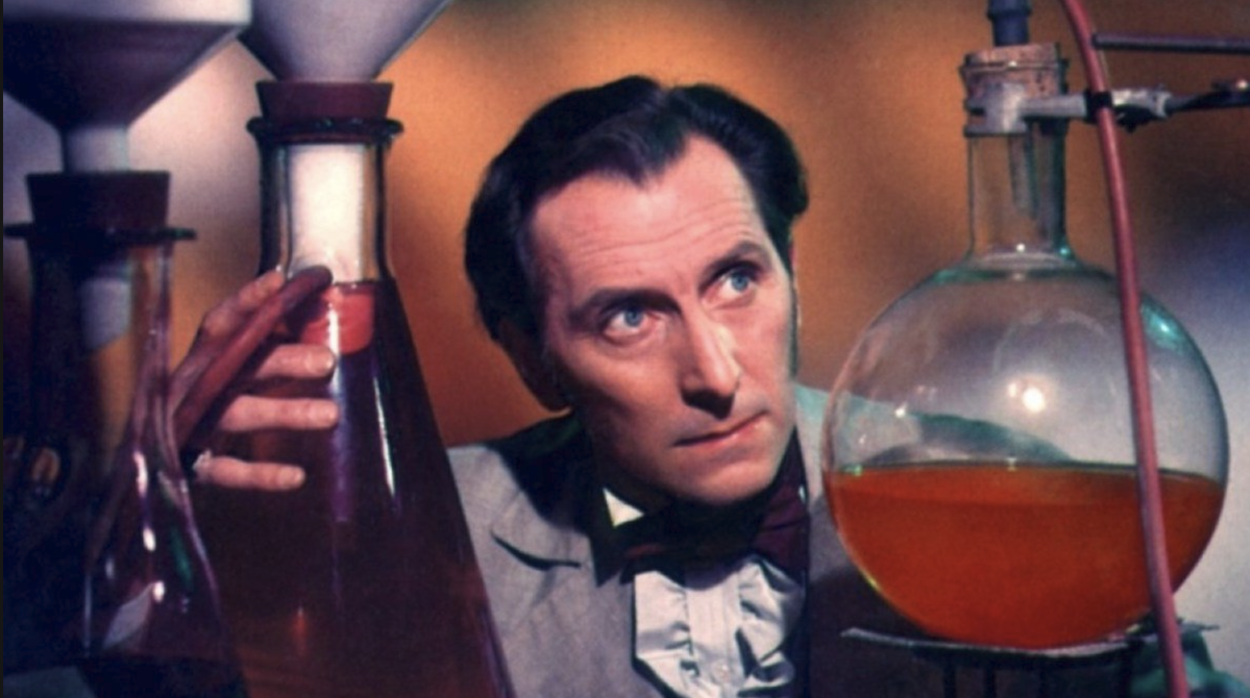
Hammer horror is one of those rare British film institutions whose identity has become almost synonymous with specific images, such as Christopher Lee in a cape, Peter Cushing surrounded by scientific paraphernalia, crumbling castles, bright-red Technicolor blood, and a dark sense of irony. For a studio that made well over a hundred films, however, these recognisable tropes only represent a fraction of Hammer’s total output.

Part of the problem is that the studio’s greatest successes have become so iconic that they risk overshadowing the stranger corners of the studio’s output. Hammer’s unique takes on Dracula, Frankenstein and The Mummy tend to dominate conversation, while dozens of fascinating films sit just beyond the canon: experiments in science fiction, mythology, social horror, gender politics and psychological unease.
These aren’t necessarily forgotten masterpieces nor are they all entirely obscure. Some are well regarded among Hammer devotees, while others long dismissed as oddities or late-period curiosities. But each reveals something unexpected about the studio; that Hammer were far more subversive and adventurous than its reputation allows.
Rediscovering 5 Unsung Gems of Hammer Horror
5. Twins Of Evil
By 1971, Hammer was competing in a horror marketplace that was becoming increasingly explicit, sexual and exploitative. Their later films were accused of being sensationalist, lurid and barely distinguishable from softcore pornography, and Twins of Evil is a film that has frequently been lumped in with them.
And, to be fair, it is lurid. The casting of Playboy Playmates the Collinson twins makes its exploitation credentials difficult to ignore, and there is considerably more nudity than Hammer would have dared a decade earlier.

But there is a lot to commend, not least Peter Cushing‘s central performance as vampire hunter Gustav Weil. Rather than making him sympathetic, Cushing’s Weil is a tyrannical fanatic, relentlessly pursuing vampires with a puritanical fervor and religious absolutism that is almost as terrifying as the creatures of the night themselves.
With his gaunt appearance and piercing blue eyes, he makes for one of Hammer’s most interesting characters because the moral lines are so deliberately blurred. The supposed hero is abhorrent in his treatment of his nieces, while the central villain is charming, charismatic and seductive.
This is what makes Twins of Evil more than simply a piece of late-period Hammer exploitation. Beneath the nudity and blood is the same fascination with repression and sexuality that runs through much of the studio’s work, only considerably more explicit.
4. The Gorgon
In many respects, The Gorgon is business as usual for Hammer. Christopher Lee and Peter Cushing are both on hand, Terence Fisher is in the director’s chair, and there are castles, fog, doomed romances, mysterious deaths and an ancient supernatural evil. The difference comes from the unique monster at the story’s centre.
The studio rarely ventured outside its bailiwick of Gothic horror, and this was their attempt to bring Greek mythology into the Hammer formula, with the studio’s first female monster. It’s effectively Jason and the Argonauts meets Dracula, pitting Hammer’s familiar Van Helsing archetype against Medusa.

The result is one of the studio’s strangest monster movies, precisely because it takes a world that doesn’t naturally belong to Hammer and transposes it into the studio’s Gothic aesthetic. Visually, The Gorgon itself is a surreal presence compared to Hammer’s more tangible, physically threatening monsters. There’s something ethereal about this monster, and the idea of people wandering around a decaying European village knowing that somewhere in the forest is a woman who can turn them to stone is particularly eerie.
Hammer’s own description now calls it one of the company’s “most complex and intriguing” films of the period, which supports the idea that it’s more interesting than its reputation suggests. The Gorgon demonstrates just how far Hammer’s formula could stretch before it began to repeat itself.
3. X The Unknown
Described by the BFI as “An atmospheric fusion of science fiction, post-war anxiety and horror,” X The Unknown is a particularly under-appreciated Hammer horror film, sitting at a pivotal point in the studio’s history.
Made in 1956, it arrives between The Quatermass Xperiment and The Curse of Frankenstein, effectively representing Hammer’s last hurrah of science-fiction horror before they discovered the Gothic formula that would define it. Intended as another Quatermass film, Nigel Kneale refused permission to use the character, leaving Jimmy Sangster to create a substitute in Dr Royston. In some ways, this works to their advantage. Dean Jagger gives Royston considerably more personality than the scientists and army officers in The Quatermass Xperiment. He is irascible but sympathetic, which offers the film a human centre amid all the radioactive horror.

There are also some spectacular special effects from Phil Leakey that are incredibly nasty. The famous sequence in which radiation victims’ flesh begins to dissolve is genuinely grisly for 1956, and helped push the film towards the adult horror territory Hammer would become famous for. The fact that the film is shot in black and white almost makes the imagery more disturbing; there is something horribly clinical about watching its victims disintegrate.
The film is unusually bleak, too. Set around the Scottish moors and an atomic research facility, its monster is an amorphous radioactive force emerging from beneath the earth. Where The Quatermass Xperiment gives us the memorable physical transformation of Richard Wordsworth‘s astronaut, X the Unknown goes in the opposite direction, making its threat much harder to comprehend.
It doesn’t quite measure up to the Quatermass films, but that isn’t really the point. X the Unknown is Hammer before Hammer had worked out what Hammer was going to be. Overshadowed by the following year’s The Curse of Frankenstein, it is nevertheless an important glimpse of the studio in the process of discovering its identity, and already contains the willingness to push the boundaries of British horror that characterised them.
2. The Plague Of The Zombies
The only Hammer film to properly delve into the subject of zombies, The Plague of the Zombies is now relatively well regarded. With many considering it one of Hammer’s strongest later films, it isn’t quite the forgotten masterpiece that its position on a list like this might suggest.
It is however a supremely odd film in the midst of Hammer’s filmography. Released two years before Night Of The Living Dead, rather than using the zombies for apocalyptic horror, this is much more of a traditional folk horror, with the zombies simply folded into the studios traditional Gothic setting.
What really sets it apart, however, is its allegorical side. There is a surprisingly potent social commentary running through the film, perhaps more explicit than in almost any other Hammer production.

The zombies aren’t simply undead monsters: they are effectively exploited workers, resurrected by a wealthy landowner to work in his tin mine. This gives the film a class dimension which is unusually explicit for Hammer. And that’s not even mentioning that extraordinary nightmare sequence, with the terrifying visual of the zombie with all-white eyes.
The Plague of the Zombies isn’t just Hammer’s attempt at a zombie film. It is a story about exploitation, class and industrial capitalism disguised as a piece of Victorian Gothic – a surprisingly modern idea hidden inside one of the studio’s most traditional-looking productions.
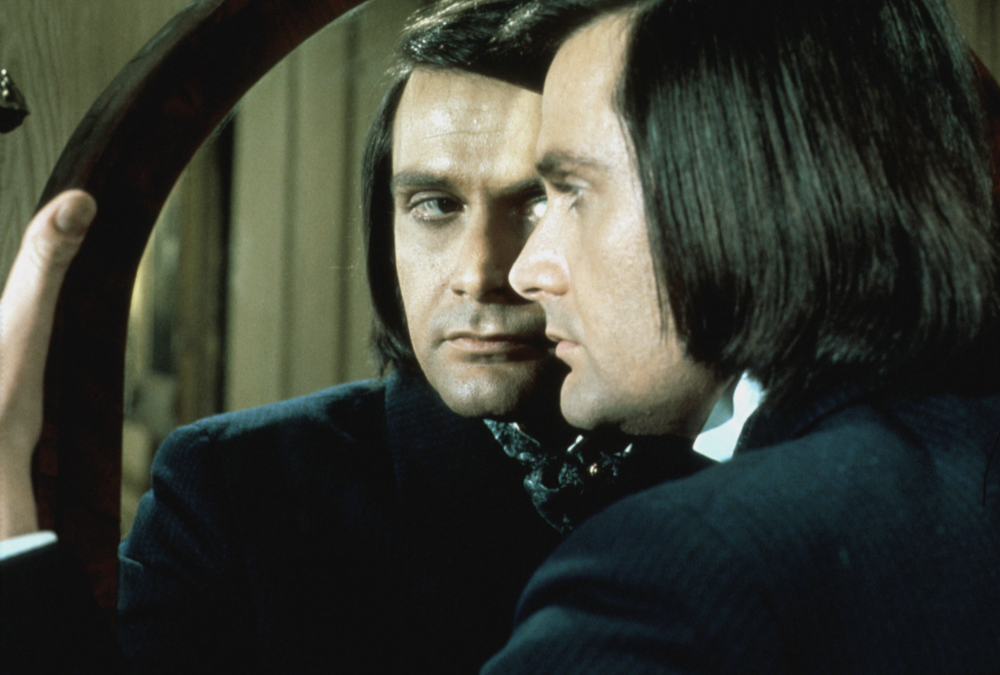
1. Dr. Jekyll and Sister Hyde
Potentially Hammer’s strangest attempt to bring its Victorian Gothic into the sexual revolution. On paper, Dr. Jekyll and Sister Hyde sounds like the studio embracing its seedier, more exploitative side, but in practice Roy Ward Baker‘s adaptation of the Robert Louis Stevenson novella becomes one of the best embodiments of Hammer’s more iconoclastic instincts.
The premise is so simple that it’s a wonder it hadn’t been attempted before: take Dr. Jekyll’s transformation and alter it so that he changes into a woman. Then throw in Jack the Ripper, Burke and Hare, Victorian London and a healthy dose of Hammer sleaze, and you have a bona fide horror classic.

The script (by Jimmy Sangster of course), alongside great performances and beautiful production design elevate what could easily have been a gimmick, while Ralph Bates‘ uncanny physical resemblance to Martine Beswick makes the transformation particularly convincing, the film even emulates the no-cut trickery of the 1931 Fredric March adaptation. As Jekyll becomes Sister Hyde, the change takes on a new dimension to that of the original story.
It’s not monstrous, but seductive. His female identity becomes something he desires, while simultaneously threatening the identity he has spent his life constructing. The film makes gender itself part of the horror. It isn’t simply about a man becoming a monster; it is about discovering a part of yourself that society has taught you to repress.
This makes Dr. Jekyll and Sister Hyde a fascinating bridge between two eras of British horror. It retains the Victorian Gothic world Hammer had perfected during the 1950s and ’60s, while embracing the increasingly sexually liberated, exploitation-oriented cinema of the early 1970s. And this is perhaps why it deserves reconsideration. Beneath the nudity, violence and salacious premise is one of Hammer’s most subversive ideas: horror as a conflict between repression and desire.










Leave a Reply