Hammer horror has had a productive year so far, launching the Hammer Presents range with a series of incredible restored releases. These are films that aren’t part of the studio’s output but feel spiritually related, and could quite easily sit alongside its more esoteric output. Their distinct combination of Gothic horror, sensationalism, a cruel sense of irony, British locations and distinctly adult preoccupations proved remarkably influential, while rival studios were producing films that explored much of the same territory.


This is a two-part list. First up is 5 Hammer-adjacent films that demonstrate the breadth of the world the studio helped create. These are films from Hammer’s shadow: productions made elsewhere, but ones that reveal how far the studio’s influence extended, and how broad the world of British horror was. I’ve tried to avoid the most obvious picks, so while The Wicker Man, Theatre Of Blood, Witchfinder General and The Blood On Satan’s Claw are all phenomenal, I’m targeting films you may not have heard of before.
Some are almost indistinguishable from Hammer at first glance; others took its ideas somewhere entirely different. I’m a big fan of Hammer (if you wanted to read a more comprehensive overview of Hammer itself, here is something I wrote earlier), but now seems like as good a time as any to look beyond the usual Dracula, Frankenstein and Mummy films, and explore some of the films that occupy Hammer’s shadows.
Revisiting 5 Forgotten Gems of British Horror
5. Crucible Of Horror
While Hammer mainly focused on period settings and gothic horror, contemporary British cinema was looking at much more domestic, psychological horror stories, like Twisted Nerve, And Soon The Darkness, and drawing inspiration from European horror. The sleazy, frenetic Corruption is a modern take on Eyes Without A Face, while Crucible Of Horror feels at least partly influenced by Les Diaboliques.
Crucible Of Horror finds ways of making the familiar incredibly disturbing. Director Viktors Ritelis takes the archness of Gothic horror and moves it somewhere much more recognisable: the family home, resulting in a psychological horror that leaves its audience throughly disquieted.
Michael Gough plays a sadistic, domineering patriarch who pushes his wife and daughter to the point where they plot to kill him. What follows is a strange, increasingly abstract piece of domestic psychological horror, culminating in a trippy finale that is deliberately disorientating and nightmarish.


The film is particularly interesting because it comes at a time where British horror was evolving, whereas Hammer were struggling to keep up with increasingly abstract, arthouse horrors. Gone are the Gothic castles and literary monsters, replaced with middle-class interiors, and much more pervasive inner demons – here manifested in family resentment and psychological control. The house itself becomes a prison, and something as inoffensive as Gough listening to a record becomes incredibly sinister.
Crucible of Horror is British Gothic moved into a modern suburban environment. It may be rough around the edges, and its finale is more confusing than it probably intends to be, but that strangeness is precisely what makes it worth revisiting.
4. The Asphyx
Potentially the film that is most often confused for a Hammer production, The Asphyx is a delightfully macabre film about two scientists (Robert Stephens and Robert Powell) attempting a potentially fatal experiment. The central idea is that at the point of death, a person’s Asphyx, or death spirit, manifests, and can be captured – leading the scientists striving to attain immortality by imprisoning their own Asphyx.
The combination of Gothic horror and science feels uniquely related to Hammer, particularly the studio’s Frankenstein films, which really emphasise the hubris, callousness and arrogance of Frankenstein himself. There is something wonderfully old-fashioned about the idea of scientists treating the supernatural as a problem that can be solved through experimentation, while the Asphyx itself is a particularly eerie piece of supernatural imagery, with a truly disturbing scream.

Haunting, melancholy and very creepy in a way that never feels like it is chasing scares, The Asphyx is one of the more mature British horrors of its period. It has practically everything associated with late-period Hammer: a Victorian setting, scientists dabbling in forbidden knowledge, elaborate Gothic interiors, death, resurrection, supernatural mythology and a very British sense of morbidity. It also seems just as interested in the effects of obsession on the main characters as the scares themselves.
If anything, its restraint is occasionally frustrating. The premise is eerie, and the twists genuinely unexpected and grisly, but there are moments when a little more of Hammer’s Kensington Gore might have benefited the film. Even so, it might be the best Hammer film that Hammer never made.
3. Cry Of The Banshee
What initially appears to be something of a Witchfinder General knock-off quickly takes on a life of its own in this film, released as part of Roger Corman’s Edgar Allan Poe series despite not being based on any Poe story. This British production from AIP UK stars Vincent Price as an aristocratic landowner whose cruelty brings supernatural revenge upon himself and his family.
It’s full of the things that make Hammer interesting in retrospect: aristocratic cruelty, rural superstition, revenge, violence, the supernatural and an old order beginning to collapse. It may not be as iconic as Witchfinder General or Theatre of Blood, but it is a thoroughly eerie and uncanny folk horror, which leaves a distinctly nasty taste in the mouth.


There is also something particularly British about its sense of place. The countryside isn’t pastoral or comforting; it is ancient, superstitious and threatening, a landscape in which the privileges of the ruling class can become a source of horror.
Hammer have since embraced Cry Of The Banshee and gave it the honour of making it the first film to be released under the restored Hammer Presents range. Hammer may not have made it, but it’s easy to see why the studio would eventually embrace it.
2. Death Line
It is difficult to think of a film further removed from Dracula than Death Line. The castles, urbane vampires and Victorian melodrama is replaced with a notably seedy, gritty aesthetic, where the London Underground plays host to cannibalism, urban decay and social abandonment. And yet there is something about the film that feels intrinsically linked to the wit and social commentary of Hammer horror.
This story of a series of murders on the Underground heavily influenced An American Werewolf In London, and is a favourite of Edgar Wright, who described Donald Pleasence‘s wonderful central performance as resembling something from a Pinter play, and that strange mixture of mundane realism and darkly comic Britishness is central to the film’s appeal.


Pleasence is incredible as a cynical detective investigating the disappearance of an MP last seen on the Underground. The abductions and cannibalism taking place on the underground offer a not-particularly-subtle bit of social commentary, acting as an allegory for the seedy underbelly lurking beneath London’s veneer of respectability. Hugh Armstrong gives an incredibly layered performance as the ostensible villain, especially considering his only lines are “Mind the doors!“
Class is everywhere in Death Line. The monsters live beneath London because they have been forgotten by the society above them, and the working-class Pleasence is comprehensively condescended to by the plummy-voiced MI5 representative played by Christopher Lee. The Underground becomes a subterranean Gothic space, but this is not a fantasy version of Britain – it is recognisably modern London, dirty and decaying.
If Hammer found Gothic horror in Britain’s past, with ruined houses, aristocratic families and ancient curses, then Death Line found it beneath Britain’s present, lurking underground.
1. From Beyond The Grave
Following the template established by Ealing masterpiece Dead Of Night, Hammer’s main rival spent much of the 1960s ad ’70s producing some of the creepiest anthology films ever made. From the blind sanatorium of Tales from the Crypt to the strange tailor of Asylum, Amicus made the portmanteau film one of the defining forms of British horror, and this wouldn’t be a horror list, if I didn’t include at least one!
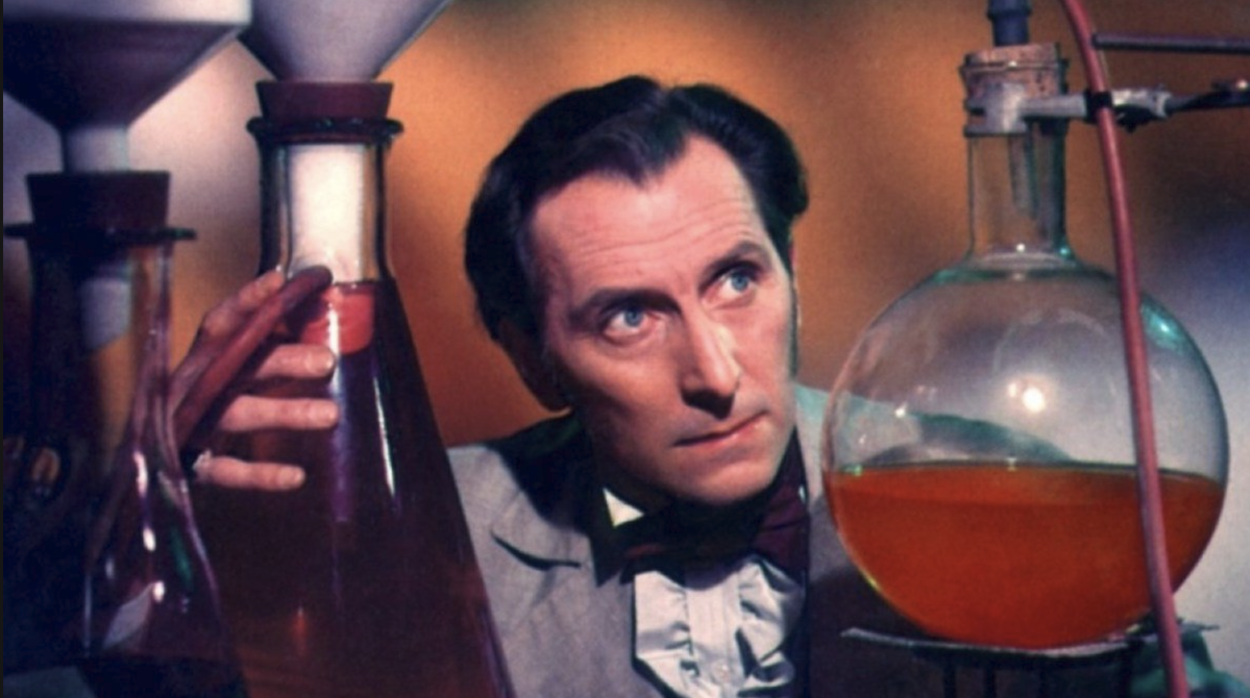
From Beyond The Grave is the final and best of these films, based on the work of ghost-story writer Ronald Chetwynd-Hayes. The individual stories vary, but its greatest strength is its linking narrative, which gives the whole thing the feeling of a particularly nasty Victorian morality tale. Peter Cushing stars as enigmatic pawnbroker The Proprietor who knows more about his customers than he lets on, and seems to have a preoccupation with karma, punishing those who attempt to cheat, trick or steal from him, by allowing them to take home more than they bargained for.

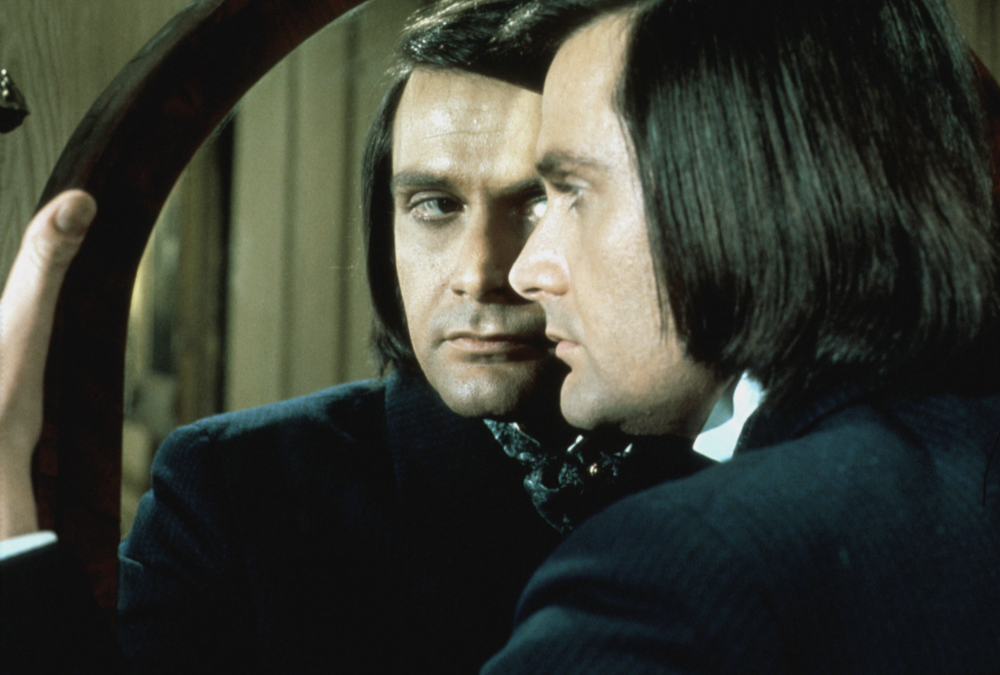
The best of the stories are “The Gate Crasher”, with a wonderfully amoral David Warner and a haunted mirror, and “An Act of Kindness“, which is the perfect examination of human weakness, following Ian Bannen as a weak-willed ex-army officer who comes under the malign influence of a working class veteran (Donald Pleasence).
There is something macabrely satisfying about the whole collection, and Cushing’s performance is both charming and terrifying. It’s perhaps the purest distillation in British horror of punishment being meted out for moral transgressions, and a horror utterly distinct from Hammer.













Leave a Reply