Fatherland was one of the LFF films I wasn’t entirely sure I was going to like. A semi-fictionalised account of author Thomas Mann’s road trip through post-war Germany, accompanied by his daughter Erika, sounds like it could easily become a rather dry biopic. Thankfully, with Paweł Pawlikowski at the helm, the result is a far more visually inventive, moving, and fleet-footed film than the premise might suggest.
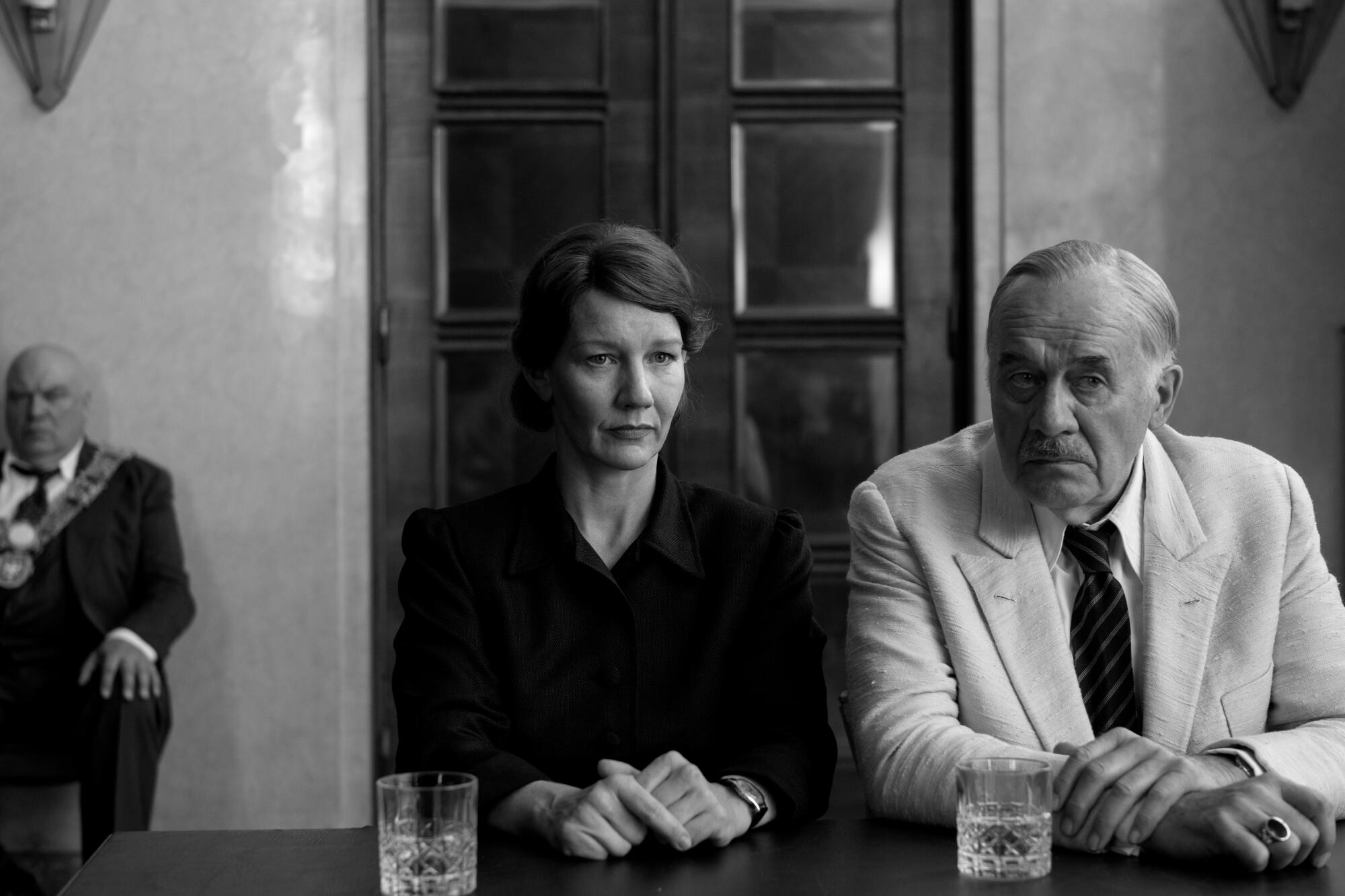
The film follows Thomas Mann (Hanns Zischler) as he returns to West Germany after 16 years, to accept the Goethe Prize in Frankfurt, accompanied by his daughter and effective tour manager Erika (Sandra Hüller). When they learn that he has also been awarded a second prize in Weimar, in the East, their journey takes an unexpected detour. Along the way, news of the suicide of Mann’s son Klaus (August Diehl) casts a shadow over their travels, bringing the family’s grief and emotional distance to the surface.
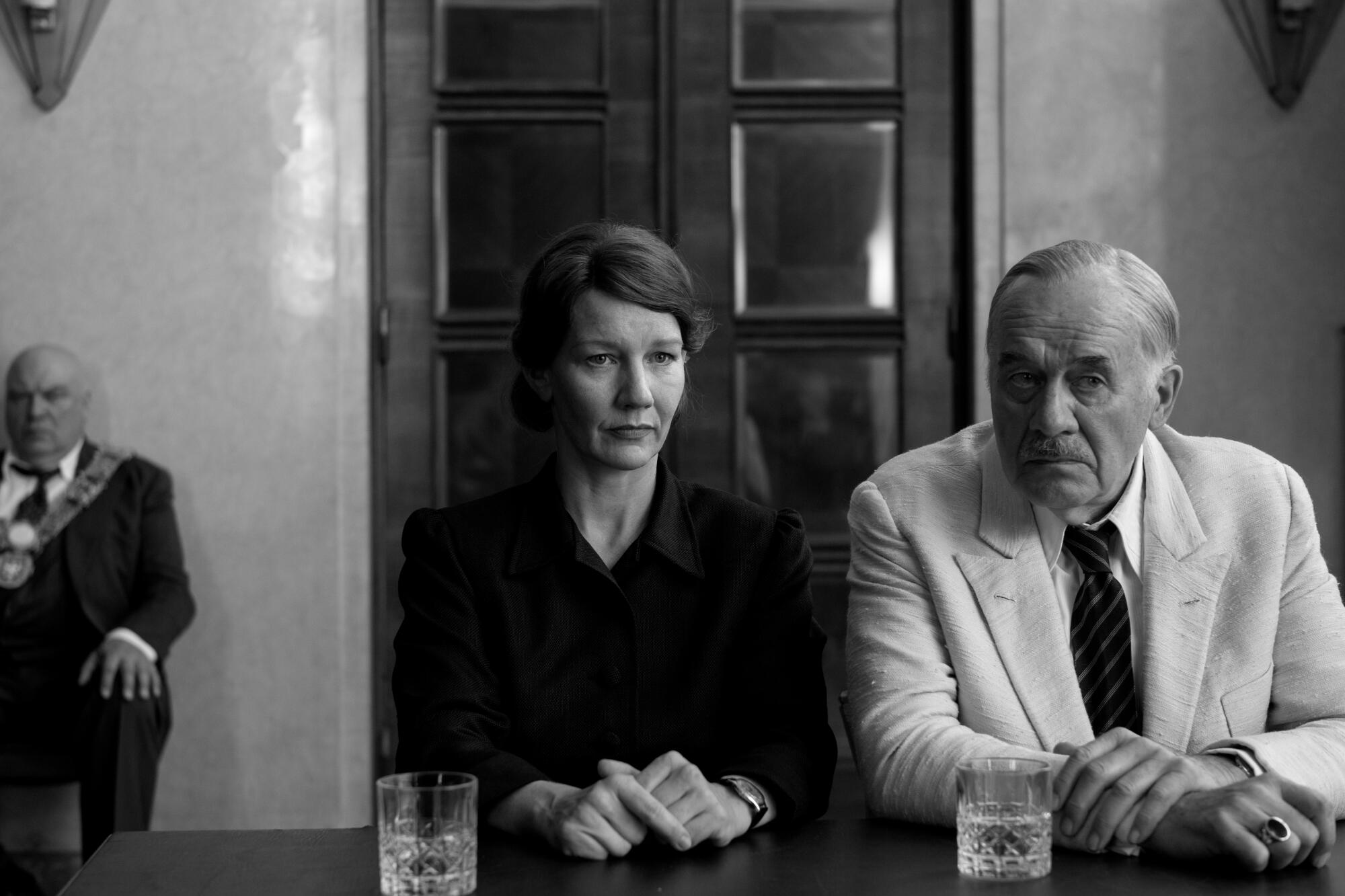
Following Ida and Cold War, Fatherland continues Pawlikowski’s exploration of Europe’s troubled history, turning his attention to a Germany still struggling to come to terms with the devastation of the Nazi era. Mann’s return from exile to be celebrated by the very country whose recent history he can barely stomach provides a fascinating starting point, raising questions about national identity, guilt and whether a nation can ever truly separate its cultural legacy from the atrocities committed in its name. Mann himself remains refreshingly forthright, as shown in an early scene where he is approached by the grandchildren of Wagner about attending a classical music festival, and instead vehemently rejects them and tells them the hosting venue should be burnt to the ground.
If the film had been exclusively a historical biopic though, I don’t think I would have enjoyed it half as much as I did. What makes it worth watching is the much smaller scale, human story of a daughter desperately trying to connect with her father on a road trip – it feels a little reminiscent of Ingmar Bergman’s Wild Strawberries in its depiction of an ageing academic whose public achievements sit uneasily alongside his shortcomings within his family life. But while Wild Strawberries provides a clearer path towards self-reflection and understanding, Pawlikowski is more interested in the silences and unresolved tensions within family dynamics.
Hüller is terrific as Erika, balancing genuine vulnerability with a dry, acerbic wit that provides some of the film’s sharpest humour. Her hostility towards those associated with the old regime (including her ex-husband, in a brilliant interaction) gives her a welcome bite, but beneath that outward toughness is a daughter desperate for her father to show some emotion. The distance between the two is often as painful as their shared loss. Zischler himself brings a reserved, almost weary dignity to Mann, conveying the conflict of a man who remains culturally attached to Germany while struggling to reconcile that attachment with what it has become. Diehl also does a lot with a little in his brief appearance as Klaus, brilliantly embodying the vulnerability and disillusionment that inform his fateful decision. His presence hangs over the rest of the film, as Erika sees apparitions of Klaus in various locations.

There are scenes here that are among the most striking of the entire festival, painting a vivid portrait of a family torn apart by grief, and a daughter desperately longing for her father to show emotion. Other scenes serve as a primer of sorts for Mann’s oratory skills, faithfully recreating speeches from this period of his life.
The connecitve tissue that links these scenes doesn’t always sustain this impact though. Although relatively short, it has stretches where the journey feels longer than it needs to be. There is also something slightly awkward about the balance of its ambitions: it never digs particularly deeply into Mann himself, while the relationship between him and Erika doesn’t always receive enough room to develop. The film can feel caught between a portrait of a celebrated writer and a more intimate family drama.
Yet when Pawlikowski brings those strands together, the results can be extraordinary. The final scene, where the father and daughter pull into a ruined old church and quietly listen to an organist playing Bach is among the most moving sequences of the festival. There is no grand declaration or reconciliation, just a shared moment of stillness in which their grief seems, briefly, to bring them closer. It is beautifully observed, and a reminder that Fatherland is at its best when it looks beyond Mann’s literary stature to the complicated bond between two people who struggle to express what they feel.
The film’s greatest strength, though, is its visual inventiveness. Łukasz Żal’s stark, almost expressionist cinematography gives the journey a suitably haunted atmosphere, while Pawlikowski’s directorial flourishes lend it a vivid personality. Klaus’s eerie appearances in the background of scenes, as though he is literally haunting Erika’s thoughts, are particularly effective. His absence becomes an emotional presence that Erika cannot escape, giving a visual shape to the grief the characters struggle to articulate.
Fatherland is a sharp, intelligent, surprisingly touching film – it’s a little uneven in places, and its pacing occasionally works against it, but its visual imagination, sharp performances and moments of profound tenderness make it a must watch.

Fatherland is in UK cinemas from 23 October










Leave a Reply