If you’re new to Mike Flanagan, showrunner and writer for this 8-part TV adaptation of Stephen King’s debut novel, Carrie, I also recommend his previous TV work with the likes of The Haunting of Hill House, Midnight Mass, and The Fall of the House of Usher on Netflix, as well as the theatrical releases of Doctor Sleep and, more recently, The Life of Chuck.
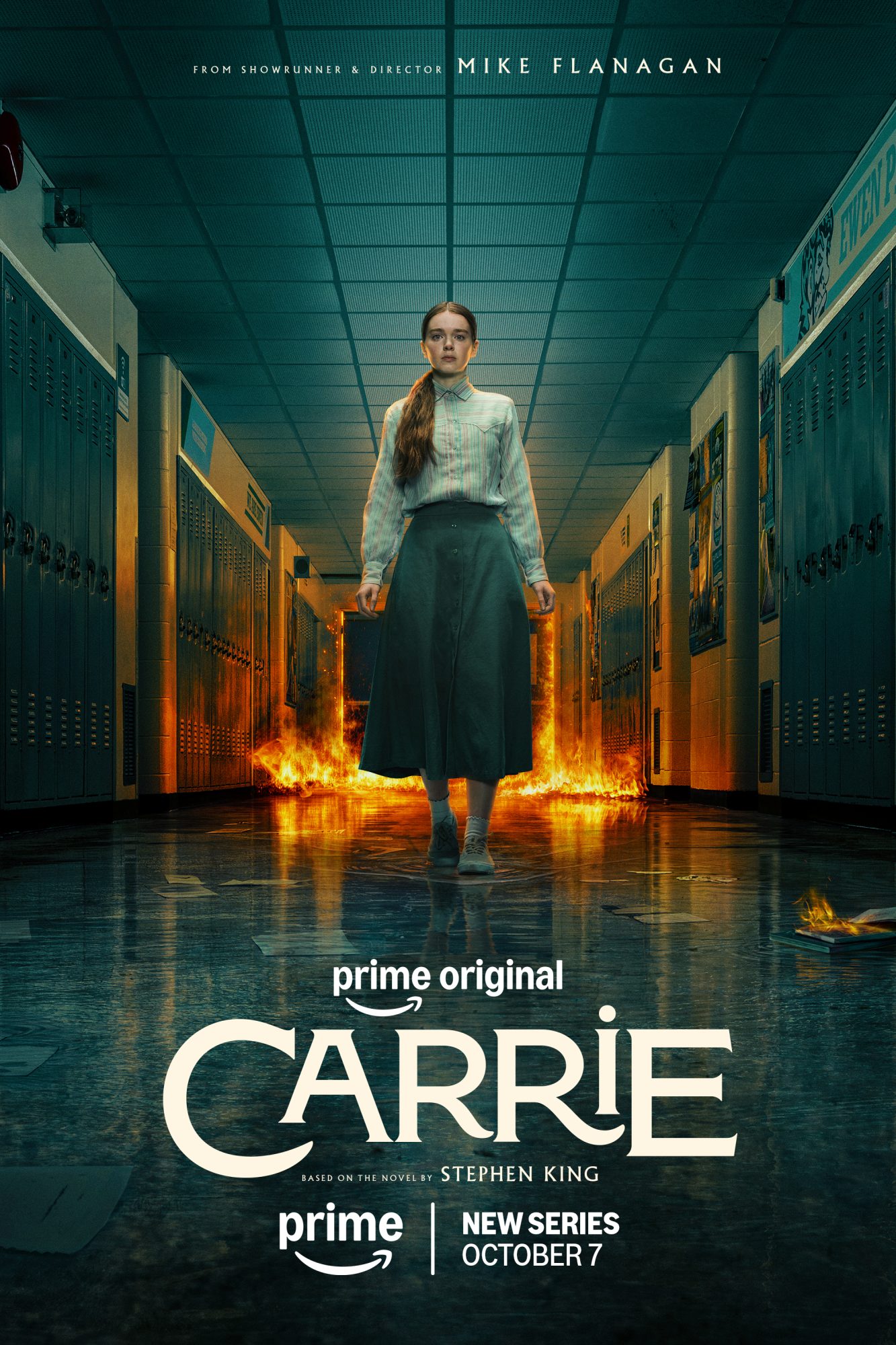
Stephen King, who doesn’t need much introduction, is a master of world-building and iconic characters, if you’ve only seen TV or cinema adaptations of his work, then his novel Carrie is a perfect place to begin. While Brian De Palma’s 1976 movie – starring Sissy Spacek as the titular character – focused in on the blood and horror of the story, Flanagan’s 8-part account, streaming on Prime Video from 7 October, retains the central premise and then develops every character’s story, with sincere astuteness and progression.
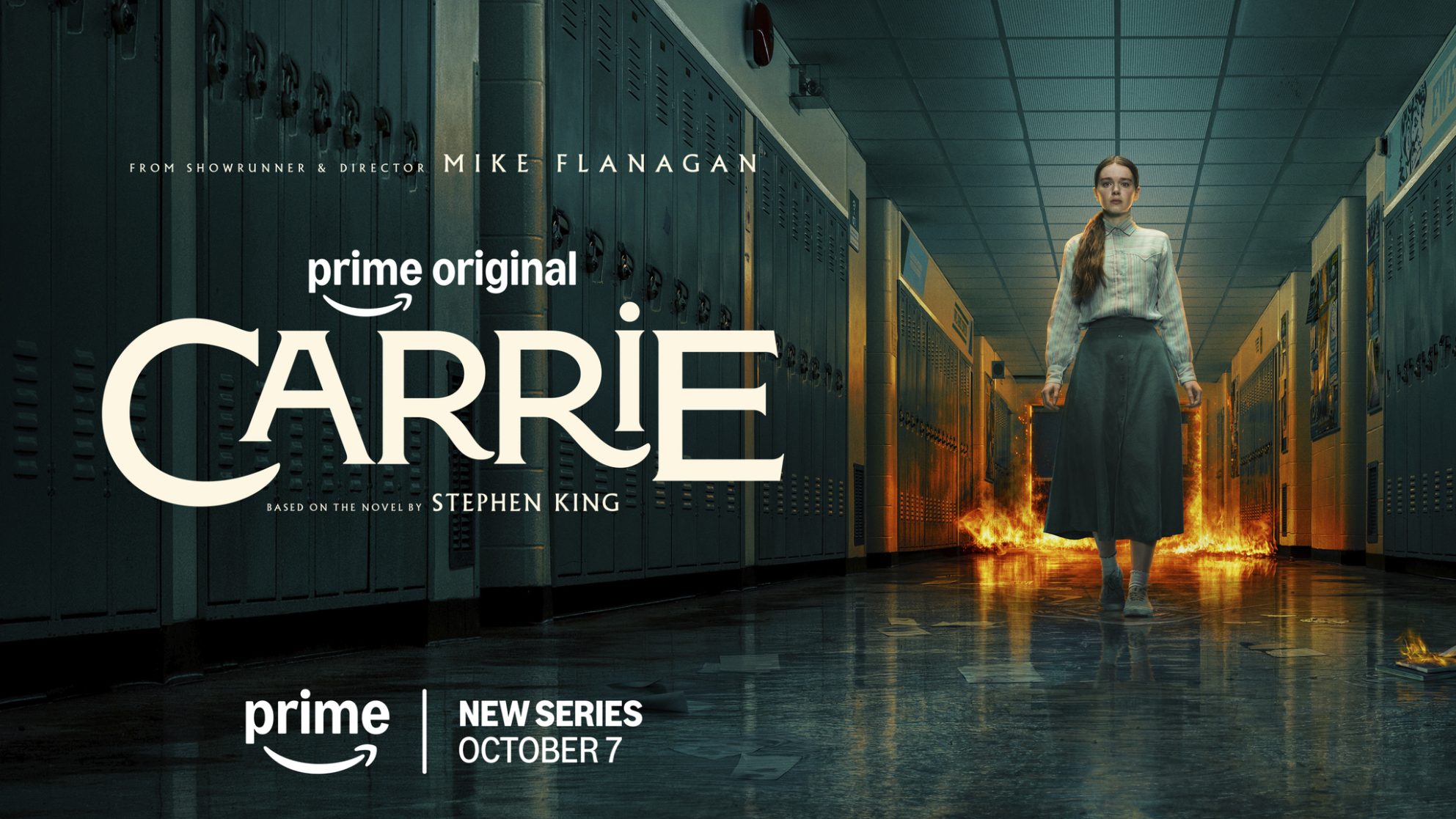
2026’s Carrie arrives in a contemporary, tech-heavy existence. We live in an era that seems to be fighting the principle of reality, alongside a dissociation of ‘every day’, often through a camera lens that slips into our pocket without a second thought. In this situation, Carrie White’s life isn’t just affected by what happens via those small screens, but Flanagan’s series is certainly charged with that mobile phone fuel, as well as the symbolic ghosts that haunt her sheltered family day-to-day happenings.
Anyone who knows the story will know that Carrie White is bullied to the point of what occurs on that fateful Prom Night, and the series opens with the visual fallout, as we see the town of Chamberlain, Maine on fire, via news reports. We also get a snippet of an interview with Siena Agudong’s Sue Snell, a key character, who gives us an authentic reaction of what’s to come, alongside the devastating scale. This series sets us up slightly differently to the source material, with Ralph White (Tahmoh Penikett) being around into Carrie’s teenage years. When we first meet her, her life is indoors and contained. She’s home-schooled and also shares her home with her Mum, Margaret White (Samantha Sloyan), but Ralph is taken out of the picture – akin to the book – in a tragic work accident. And it’s not long before Carrie and her Mum are found hiding in their house by the Police, and after a turn of events, she ends up having to go to High School.


Flanagan’s series keeps the fundamentals in place, with the critical components still a part of what’s to come and, vitally, Carrie is certainly centre of everything. Her innocence of the outside world remains, but she’s warmer and more open to hope than previous incarnations, initially anyway. Summer H. Howell’s Carrie is a breath of fresh air, and while her early naivety could be seen as simple, it’s portrayed as kindness, and that element of her personality is beautifully depicted, highlighted quite sensitively in one than situation. The gradual balance between hope, love and hurt is something that Howell understands, and when she’s distressed, you comprehend her reactions, and you can see how all those feelings develop as the episodes move forward.
What I particularly enjoyed about Flanagan’s version is the growth of each character, where they’re all given evolution and are much fuller for it. Samantha Sloyan’s Margaret remains strong and embedded in her beliefs, but she’s so much more nuanced. Sloyan is extraordinary, and when the casting was originally announced, I felt it was perfect but Sloyan took it beyond my expectations, as a mother trying to protect her daughter in a world that feels disturbed, and you can recognise why she does the things she will.

Key characters like Sue Snell (Siena Agudong) and Christina Hargensen (Alison Thornton) stay important, but their stories and family worlds are also expanded, with Snell’s world certainly being considerate and kind to Carrie, along with her boyfriend Tommy (Joel Oulette). Chris Hargensen’s homelife is investigated to reveal a dysfunctional, detached and money-entitled existence, which is ripe with estranged relationships. This is a significant factor, as it offers a complex character among many, and one that makes you appreciate her pull towards bad boy Billy (Arthur Conti), another big part of what’s to come, no matter how bad that choice may be.
As a whole, every character is offered a palette to play with, which also includes Josie Totah as Tina, Thalia Dudek as Emaline, with the teaching faculty including Amber Midthunder as Miss Desjardin, Rahul Kohli as Mr. Peist, a touching performance from Tim Bagley as Peter Morton, plus Matthew Lillard’s brilliant Principal Grayle, endeavouring to positively encourage change, in a vicious situation.
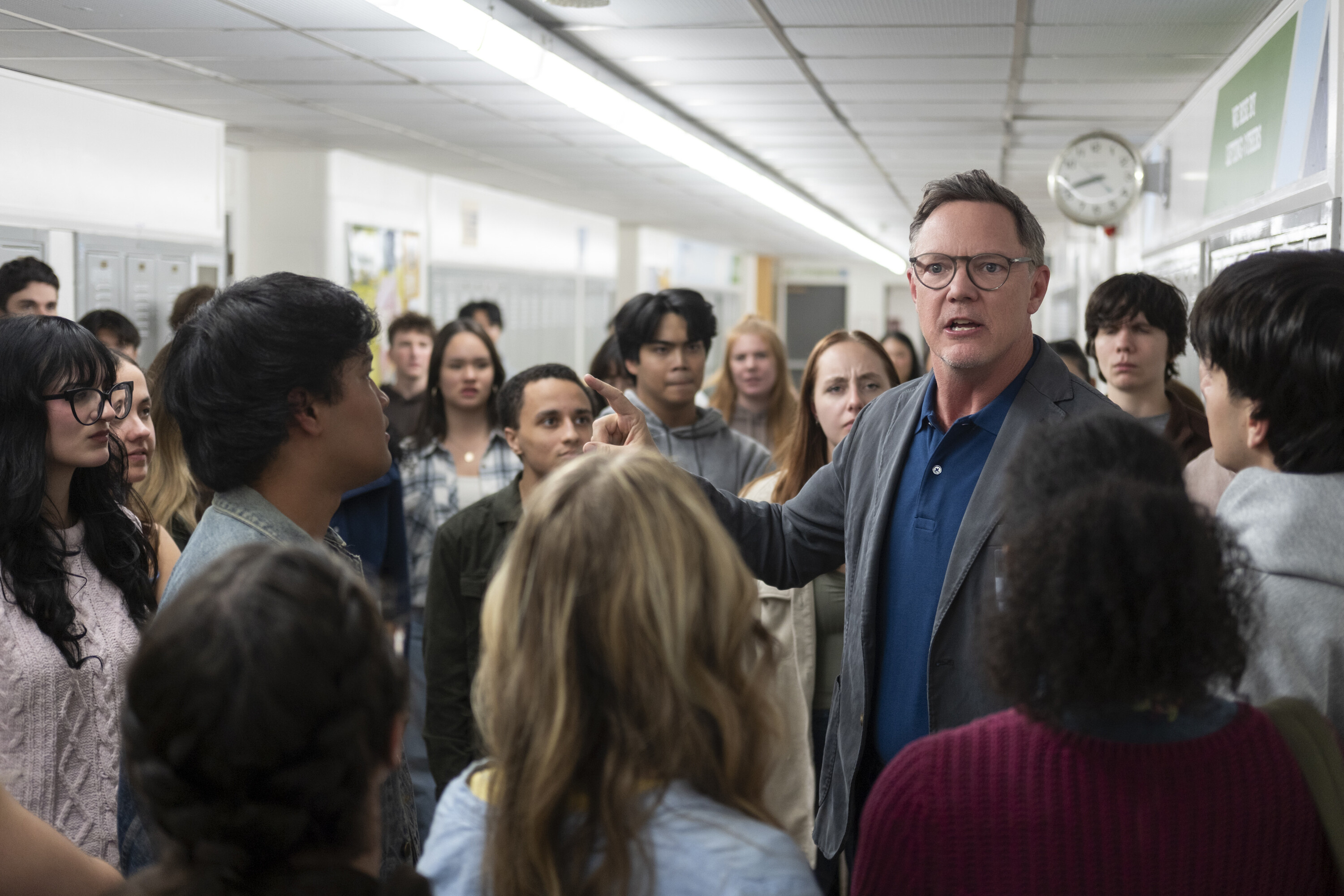
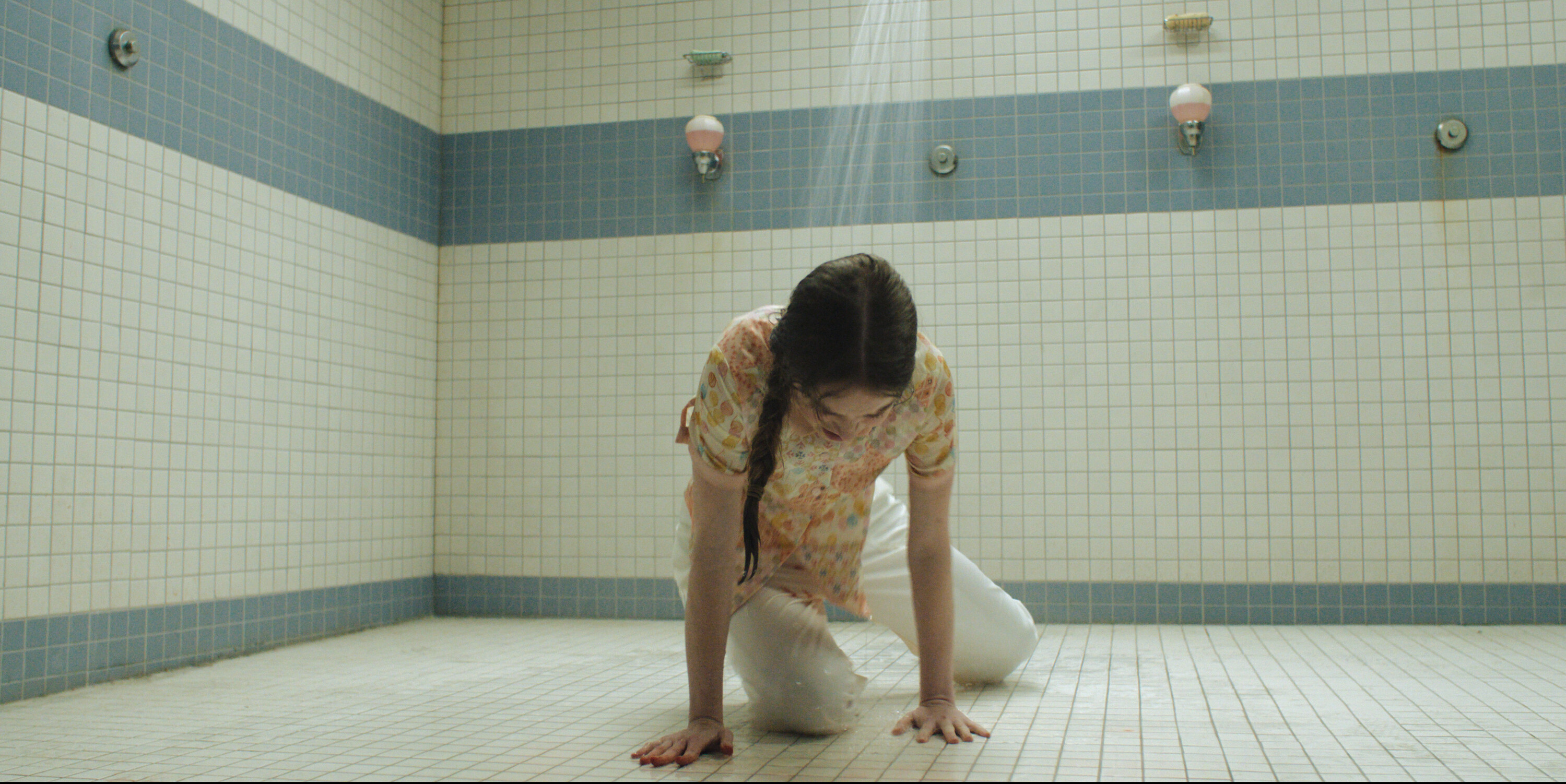


As a whole, and this is spoiler-free, Mike Flanagan’s Carrie does sporadically veer off its own set path, but I feel like its central message outweighs any little unbalance. When it thrives, it does it effectively. It’s perceptive but never preachy, it raises important questions about why anywhere would run school shooter drills over educating, why money for books is being cut for computer screens, and why we allow our world – even beyond school – to be run by social media, when often its main objective seems to be hatred and cruelty over compassion.
With little essences of Donnie Darko and Scream in its ambiance and atmosphere (facilitated by cinematographer by Michael Fimognari), there’s many music-tracked scenes which help with its contemporary vibe, because this story really is all about now, and Carrie’s path towards that infamous fateful night.
For me, much of this series was an empathetic explosion. This is a brutal, beautiful, terrifying and super smart insight into the world of women and people like Carrie White, who might feel unassuming to start with, but is also a representation of all the hope we have, and what happens when society loads on and tries to extinguish it. Nothing good can ever come from trying to contain a burning flame with the fuel of hatred and power games, and Flanagan’s smart, contemporary take is one to reflect upon and embrace.
The episodes are written by Mike Flanagan, Elizabeth Padden, Justina Ireland, Dani Parker, Elan Gale and Alexandra Magistro, and Rebecca Leigh Klingel.
Flangan directs episodes 1, 2, 7 and 8, with additional directors Kate Siegel, Axelle Carolyn, Kyra Sedgwick and Hiromi Kamata directing episodes 3, 4, 5, and 6, respectively.










Leave a Reply