Lee Chang Dong‘s much-anticipated follow up to the excellent Burning has been eight years in the making, yet well worth the wait. A touching, incisive look at class divisions in South Korea, told through the prism of a real-life 2008 factory strike and its brutal suppression, Possible Love is a deeply humane film, with four excellent performances at its heart. It’s also an elusive, quietly unsettling piece of cinema, which leaves you thinking about it for days afterwards.
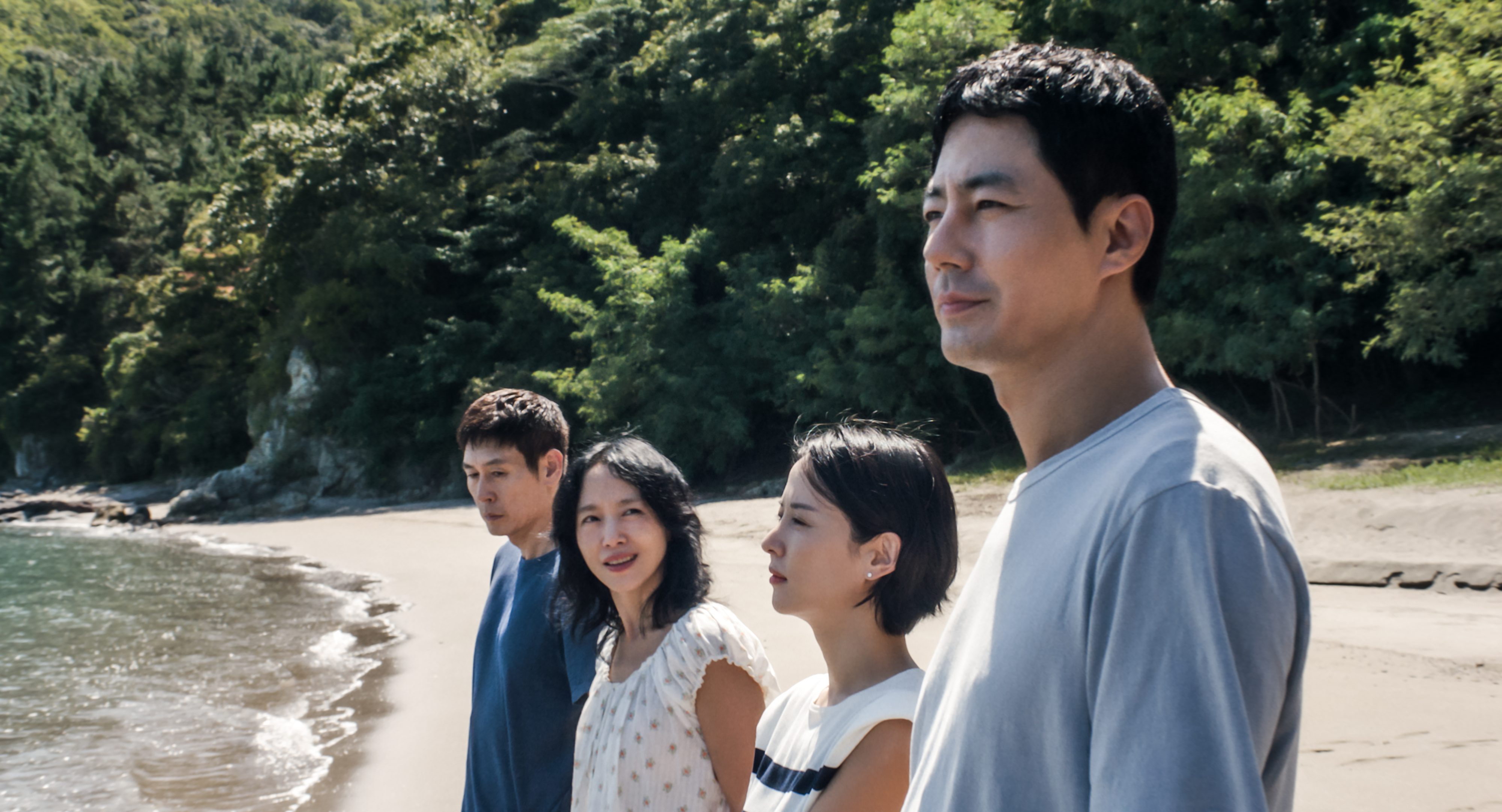
On the surface, it’s a simple film about the gulf that lies between different social classes as we follow a working-class family, who find themselves the subjects of a documentary about the aftermath of a factory strike, during which workers were brutally beaten by police. Filmmaker Lee Ye-ji (Cho Yeo-jeong) is particularly drawn to Ho-seok (Sul Kyung-gu), a sullen former factory worker who has isolated himself completely in the wake of the strikes.

Although he is reluctant to be part of the documentary, Ho-seok’s wife Mi-ok (Jeon Do-yeon) is drawn to Ye-ji’s apparently kind nature and insistence on becoming friends. As the documentary and their friendship develops, Mi-ok also finds herself drawn to Ye-ji’s wealthy husband, Sang-woo (Zo In-sung). The film culminates in Ye-ji inviting Ho-seok, Mi-ok and their introvert son Cheol to her luxurious holiday home, where simmering tensions are brought to the surface.
It’s a return to the same incendiary social commentary Dong first explored with A Single Spark, about a factory worker who sets himself on fire as a protest against the exploitation and poor working conditions of Korean factory workers. But where that film focused on the act of resistance, Possible Love is more concerned with the aftermath; the psychological damage suffered when a fight for justice fractures friendships, destroys relationships, and steals something fundamental from the people involved.

As Ho-seok, Sul Kyung-gu is at once miles away from his renegade cop in the Public Enemy films, and yet still deploys his dry, stoic facial expressions to elicit a completely a different response from the audience. His taciturn, morose performance initially makes him seem like a cold, distant character, but small acts of kindness reveal him to be much more complex, and the scenes where he finally breaks down, revealing himself to be utterly broken inside, are some of the most emotionally devastating of the festival.
Similarly, Jeon Do-yeon is a breath of fresh air as Mi-ok. Refusing to play the character as self-pitying or passive. She is resolutely not a victim, making Mi-ok a confident, friendly character who knows who she is. She might become infatuated with Sang-woo, but it’s never clear whether it’s him she is falling for, or the lifestyle she has been exposed to. A less interesting film might suggest that the couple’s marriage is failing, but despite the pressure surrounding them, and Ho-seok’s brusque personality, the relationship between him and Mi-ok feels authentic and affectionate.

As the wealthy, attractive couple, Cho Yeo-jeong and Zo In-sung manage to portray both their warmer side and also the obliviousness that comes from immense privilege. Lee Ye-ji and Sang-woo are presented as nuanced characters, even as their attitude to those less fortunate than themselves borders on callous at times, and yet their relationship is both cynical and, in the final scene, shown to be much colder and less loving than the one they have been observing. Lee treats both couples with remarkable even-handedness though, refusing to suggest that money alone determines someone’s capacity for compassion or happiness. Neither are depicted as heartless or cruel, but there is a distinction shown between innate human kindness and empathy. Ye-ji and Sang-woo are capable of small, thoughtful gestures, helping Mi-ok search for her wedding ring, for instance, and treating them to dinner, but the power imbalance is always present.
There is an uncomfortable suggestion of poverty tourism in their fascination with the couple’s lives, as though their struggles offer the wealthy pair a glimpse into a more authentic existence. Sang-woo even congratulates his wife on her “method acting” in her performance of empathy, a remark that leaves Ye-ji visibly unsettled, as she seems to silently question herself on whether her friendship with Mi-ok is exploitative. Yet Lee refuses to offer easy answers. It’s never clear just how cynical Ye-ji’s documentary project is, or whether her friendship with Mi-ok might have endured beyond the film’s completion. What is evident though, is how her determination to capture a compelling story seems to blind her to the emotional consequences of her own actions, (shown in the one scene that provoked a gasp from the audience, as she is shown filming Ho-seok in a particularly vulnerable moment) as well as her husband’s growing interest in Mi-ok.

At points it feels like Parasite directed by Hirokazu Kore-eda, a comparison seemingly invited by the casting of Yeo-jeong in a very similar role to the one she played in Bong Joon-ho‘s film. It’s decidedly more elegant, and less heightened though, full of the quiet humanism you associate with Kore-eda, particularly in films like Broker and Like Father Like Son. Yet Possible Love is more restrained than either comparison might suggest, trusting its audience to sit with uncomfortable contradictions rather than spelling out its themes.
Partly a cautionary tale about the dangers of befriending those in a higher social echelon than yourself, alongside being a story about the endurance of love, and also a document on the deep psychological damage that can be inflicted by both sides of an ideological campaign. Never trite or heavy-handed, often to the extent where the true meaning is a little elusive, Possible Love is a poignant, quietly compelling character study, that feels grounded in reality. It’s a beautifully tender film and, despite the lengthy runtime, keeps you engrossed from start to finish.














Leave a Reply